



—
Starting a vending machine business can be a highly rewarding path toward achieving passive income and financial independence. It offers a scalable model that requires relatively low overhead compared to many other small businesses. This comprehensive 10-step guide will walk you through the entire process, from initial research to securing your first location and making that crucial first sale. By following this checklist, you can lay a solid foundation for a profitable and sustainable enterprise. Successfully negotiating a vending machine contract is one of the most exciting initial steps toward establishing your presence in a profitable location.
Step 1: Conduct Thorough Market Research
The first and most critical step is understanding the vending landscape in your target area.
- Analyze Demand: What types of products are in high demand? Snacks, cold drinks, coffee, healthy options, or specialized items (like electronics or PPE)? Demand varies significantly by location.
- Identify Competitors: Where are existing vending machines located? What do they sell, and what are their prices? Your goal is not just to compete, but to find underserved locations or offer a superior product selection or service.
- Target Locations: Think about high-traffic areas:
- Office buildings and industrial parks
- Hospitals and medical centers
- Schools and universities (check local regulations)
- Hotels and apartment complexes
- Malls, laundromats, and large retail stores
Thorough research helps you niche down your focus and select the most profitable machine types and inventory.
Step 2: Define Your Business Structure and Secure Funding
Every successful business needs a solid legal and financial foundation.
- Choose a Legal Entity: Decide whether you will operate as a Sole Proprietorship, an LLC (Limited Liability Company), or a Corporation. An LLC is often recommended for liability protection.
- Register Your Business: Register your chosen name and structure with your state and local government. Secure the necessary business licenses and permits.
- Secure Funding: Determine your startup costs, which include machine purchases, initial inventory, maintenance tools, and operating capital. Explore financing options such as personal savings, small business loans, or equipment financing. A single new machine can cost between $\$2,000$ and over $\$10,000$, so budgeting is essential.
Step 3: Select the Right Vending Machines
Your machine selection is paramount to your operational efficiency and profitability.
- Machine Type: Do you need snack machines, beverage machines, combo machines, or specialized machines? Consider factors like refrigeration, size, and capacity.
- New vs. Used: While used machines can save initial costs, they may require more maintenance. New machines offer warranties and the latest technology.
- Technology Integration: Prioritize machines with features like credit/debit card readers, mobile payment options (Apple Pay, Google Pay), telemetry (remote monitoring of inventory and sales), and energy-efficient operation. Cash-only machines severely limit potential sales in the modern market.
Step 4: Source Quality Inventory
The items you sell directly impact your customer satisfaction and sales volume.
- Identify Bestsellers: Start with a mix of familiar, popular brands. As you gather sales data, adjust your stock to focus on the highest-performing items.
- Explore Wholesalers and Distributors: Purchasing in bulk from wholesale clubs or dedicated vending distributors will significantly lower your cost of goods sold (COGS) and increase your profit margins.
- Consider Trends: Healthy options and specialty snacks are growing in popularity. Offering a few unique or premium items can set your machine apart and justify higher prices.
- Manage Shelf Life: Pay close attention to expiration dates, especially for perishable items, to minimize waste and ensure product freshness.
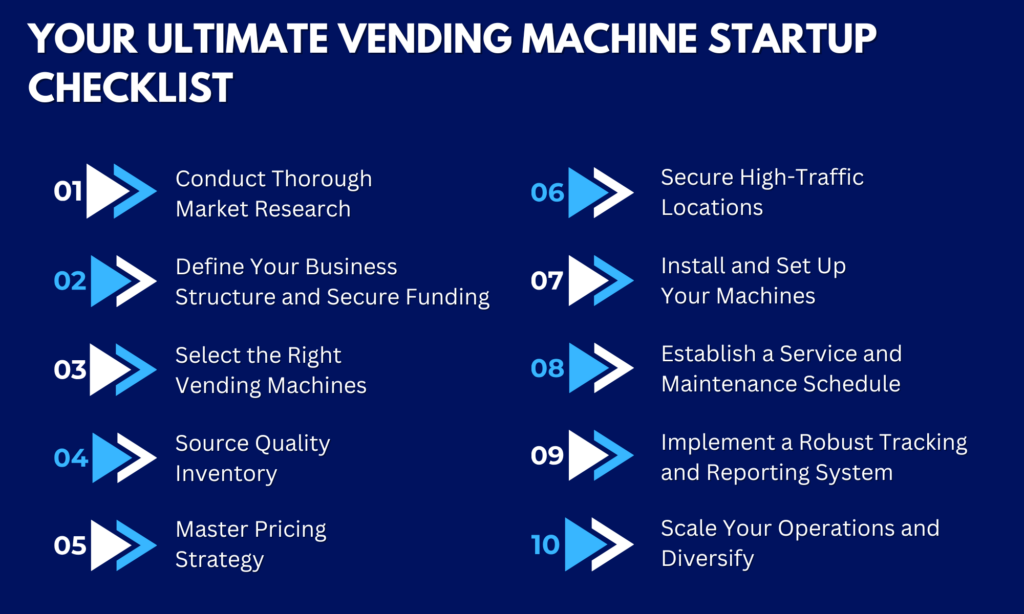

Step 5: Master Pricing Strategy
Finding the sweet spot between competitive pricing and healthy margins is crucial.
- Know Your Costs: Calculate your true cost for each item, including the product cost, delivery, and a portion of your operational overhead (fuel, maintenance, etc.).
- Determine Markup: A common markup in the vending industry is often 50% to 100% of the wholesale cost, depending on the location’s captive audience.
- Competitive Analysis: Check the prices of similar items in nearby convenience stores and existing vending machines. You want your prices to be perceived as fair value for the convenience offered.
- Location Influence: Machines in high-demand, non-competitive locations (like a hospital waiting room) can often command higher prices than those in highly competitive public spaces.
Step 6: Secure High-Traffic Locations (Vending Machine Placement)
Location, location, location. This is often the single biggest predictor of success.
- Create a Pitch: Prepare a professional, concise proposal detailing the benefits of having your machine (convenience, no cost to the business owner, potential commission structure).
- Cold Contact: Systematically approach business owners and facility managers in your target areas. Personal visits or phone calls are often more effective than emails.
- Negotiate Terms: Discussions will center around the exact location, accessibility for servicing, and whether you will pay a commission to the business owner (typically 5% to 15% of gross sales) or a flat monthly fee for the space. This is where negotiating favorable contract terms becomes vital.
- Sign the Agreement: Formalize the terms with a written contract that specifies the duration of the agreement, commission/rental rate, utility responsibility, and maintenance access.
Step 7: Install and Set Up Your Machines
Once the location is secured, it’s time to go live.
- Delivery and Placement: Coordinate the delivery of your machine. Ensure the site has the necessary electrical access and enough space. Use a dolly or hire professional movers, as machines are heavy.
- Stock and Test: Load the machine with your initial inventory. Calibrate the coin mechanisms and bill validators, and ensure the card reader is connected and functioning correctly with your merchant service provider.
- Clear Signage: Add clear and attractive branding, contact information for service requests, and instructions for using the payment systems.
Step 8: Establish a Service and Maintenance Schedule
Reliability is key to customer retention and maximizing uptime.
- Restocking Route: Develop an efficient route plan. Use your telemetry data to determine the optimal restocking frequency for each location, minimizing unnecessary trips.
- Routine Maintenance: Schedule regular preventative maintenance. Check and clean cooling units, inspect for wear and tear, and update software for payment systems.
- Emergency Repairs: Have a plan for quick response to breakdowns. Build a relationship with a reliable repair technician or learn to handle common repairs yourself. Downtime is lost revenue.
Step 9: Implement a Robust Tracking and Reporting System
Data-driven decisions are the foundation of scaling a successful vending business.
- Use Telemetry: Invest in machines or attachments that provide remote sales data. This is invaluable for tracking which products sell best, identifying peak sales times, and knowing exactly when to restock.
- Financial Software: Use accounting software (like QuickBooks or specialized vending software) to track all income (sales), expenses (inventory, fuel, commissions), and profits.
- Analyze Performance: Regularly review reports to identify your most profitable machines and products. Use this data to eliminate slow-moving items and double down on proven winners.
Step 10: Scale Your Operations and Diversify
Once your initial machines are running smoothly and turning a profit, it’s time to think about growth.
- Reinvest Profits: Use the profits from your first machines to purchase additional equipment, securing more locations, and building your fleet.
- Systemize Operations: Document your entire process, from stocking to maintenance. This creates a playbook that makes it easier to hire employees or technicians in the future.
- Diversify Machine Types: Consider adding different kinds of machines to your portfolio. If you started with snacks, explore cold beverages, coffee, or even specialized retail machines to tap into new markets.
- Customer Feedback: Actively solicit feedback from location owners and customers to continually improve your product selection and service quality. A positive reputation will lead to more placement opportunities through referrals.
Conclusion
Launching a vending machine business is a marathon, not a sprint. Success hinges on meticulous planning, smart location choices, reliable service, and a willingness to embrace data for continuous improvement. By diligently following these 10 essential steps, you transition from a business hopeful to a successful vending machine entrepreneur, actively generating that desirable passive income stream.
—
This content is brought to you by Hussain Ali
Photos provided by the author Hussain Ali

