


—
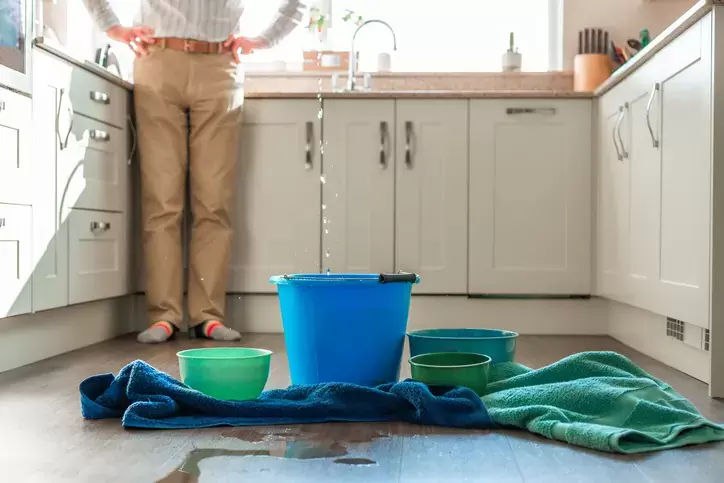
You’re standing in two inches of water. It’s 3:00 AM.
Panic kicks in, and your first instinct is to grab a shop vac and a pile of towels.
Stop right there.
What you do in the next few hours can decide whether this ends up as “just the deductible” or something that genuinely derails your savings.
Most homeowners treat water damage like a simple “wet to dry” problem, but the financial reality is harsher—and a lot less forgiving.
Insurance adjusters understand how claims escalate, and restoration pros see the same pattern daily; most people don’t learn it until the invoice hits.
If you stall, the water doesn’t politely wait; it spreads, wicks, and quietly chips away at your home’s value and your options.
This isn’t just about cleaning up a mess. It’s about protecting your bank account from a chain reaction of avoidable costs.
Let’s look at the hard numbers—and the real-world standards—behind why “drying it later” is one of the priciest thoughts you can have.
Four Hours or 12,000 Dollars Gone?
The so-called “Golden Window” isn’t a magic stopwatch, but it is a real tipping point: the longer water sits, the more materials absorb it, and the more the scope expands.
Water migrates fast. It can wick upward into drywall, run under baseboards, and soak into subfloors and cavities you can’t see—sometimes far beyond the obvious puddle.
Once moisture gets into assemblies (walls, floors, insulation layers), removal and drying become more complex, more invasive, and dramatically more expensive.
The Migration Multiplier
In the first few hours, many losses are still limited—often closer to a low-absorption, smaller-scope situation (frequently aligned with a Class 1-style evaporation load).
Extraction can be straightforward. You remove standing water, start controlled airflow, and—when conditions are right—costs can stay in the hundreds to low thousands.
But as time passes, that same loss can escalate into higher absorption and wider impact (often closer to Class 2 or Class 3 conditions), and the budget can jump with it.
The Bacteria Clock
“Grey water” doesn’t stay simple forever. Standing moisture and organic debris raise contamination risk over time, and many professional guidelines treat delays very seriously—especially beyond the first 24–48 hours.
If you wait until the next morning to call a pro, you may not be paying for “water cleanup” anymore.
You may be paying for a controlled, safety-first project—especially if the source is questionable (sink backups, dishwasher overflows, toilet issues, or anything involving sewage), where PPE and containment practices can be necessary.
And yes, delays can turn a small cleanup into a rebuild. The exact numbers vary by region, materials, and water category—but the escalation pattern is real and well-documented.
Partial Repairs Trigger the 2.5x Damage Multiplier
It’s tempting to cut out the visibly wet drywall and call it a “money-saving” win.
But partial repairs can become a trap if they leave moisture behind in framing, insulation, or subfloor layers.
Hidden moisture doesn’t reliably “just dry out.” Without measured drying and verification, it can feed secondary damage that shows up days or weeks later.
When wet framing stays sealed inside a wall, you create a humid microclimate that can warp materials you assumed were safe.
Secondary damage often includes:
- Hardwood floors cupping 20 feet away from the spill
- Cabinet doors swelling so they no longer close
- Electrical outlets corroding from the inside out
- Insulation compacting and losing all R-value
In real-world restoration, those “secondary” repairs can cost far more than the original mitigation—sometimes 2x+—because you’re no longer drying; you’re rebuilding and re-finishing.
Why 2026 AI Drying Beats Demo 45%
Old-school contractors often default to demolition because it’s simple to scope and easy to bill: tear out, haul away, rebuild.
But in 2026, demolition is not automatically the gold standard—and in many clean-water situations, it’s avoidable with the right drying strategy.
“AI” in restoration is usually shorthand for sensor-driven controls, software-guided drying plans, and data-backed monitoring—not a robot that magically fixes your house. Used correctly, it can reduce unnecessary tear-out.
Precision Airflow Management
Modern, sensor-guided air movement isn’t just “blow air and hope.”
Crews can adjust equipment based on real-time temperature, relative humidity, and moisture readings—so drying is targeted, measurable, and less destructive.
That kind of controlled evaporation can dry structural materials fast enough to make some aggressive tear-outs unnecessary—when conditions and materials allow.
The Cost of Reconstruction
Rebuilding is expensive. You pay for materials, labor, disposal, and—depending on jurisdiction—permits and inspections.
Structural drying can reduce or eliminate portions of that scope, but it isn’t a universal substitute for demo (especially with contaminated water, asbestos/lead concerns, or materials that can’t be salvaged).
If you dry a wall in place, you may only need patching and paint. If you demo it, you’re rebuilding assemblies from scratch.
In the right scenario, choosing advanced drying over demolition can reduce total restoration costs substantially—sometimes even approaching that “up to 45%” range when it avoids major reconstruction items.
Remote Sensors Cut Labor 20% Instantly
The biggest line item on many restoration invoices is labor—especially repeated site visits for readings, documentation, and equipment adjustments.
Technicians driving out daily just to “check moisture” is time-consuming, and time is money.
Remote monitoring changes the game by tracking conditions continuously and reducing unnecessary trips, without sacrificing documentation.
Many modern sensor platforms collect and upload readings on a scheduled interval (often multiple times per day, depending on the system and connectivity).
This allows your Water Damage Specialist to make smarter adjustments based on data, not guesswork.
They come out when the readings show it’s time to move equipment—not just because the calendar says so.
Fewer Trips, Lower Bills
A typical 5-day drying job used to require near-daily check-ins for readings and logs.
With remote sensors, many projects can be managed with fewer physical visits: setup, one strategic adjustment (if needed), and takedown.
That can mean a meaningful reduction in vehicle trips and technician hours.
Does it always equal exactly 20%? Not in every home. But reducing visits and paperwork can absolutely cut the labor portion of a bill—often in the 10–20% range when remote monitoring is fully utilized.
R-32 Dehumidifiers Drop Energy Bills 12%
Your dehumidifier is the engine of the drying job, often running 24/7 for days.
Many older systems rely on higher-GWP refrigerants like R-410A, and the broader HVAC market is actively transitioning toward lower-GWP alternatives under U.S. EPA rules.
R-32 is one of the prominent replacements in many new cooling applications, and it’s often associated with efficiency gains—though real-world savings depend on equipment design, job conditions, and runtime.
Thermodynamic Efficiency
R-32 has properties that can support strong heat transfer performance in properly engineered systems.
That can translate into less work for the compressor to remove the same amount of moisture from the air.
Same goal. Less wasted energy.
Faster Cycle Times
When a system is more efficient, it can reach target humidity faster under comparable conditions.
That can shave hours—or sometimes days—off runtime on certain jobs.
Less runtime equals a smaller electric bill.
As for the “roughly 12%” figure: that level of improvement is best treated as a potential upside seen in some testing and scenarios, not a guaranteed result on every restoration project.
Save Hardwood 70% With Desiccant Drying
Hardwood floors are the first thing many homeowners assume is a total loss.
When wood cups, it looks finished. But looks can be misleading—especially early.
Desiccant dehumidifiers can be effective in low-temperature or high-load situations and can help pull moisture from dense materials, including wood, when standard approaches stall.
The math of saving hardwood is undeniable:
- Replacement Cost: Ripping out and replacing quality hardwood can run roughly $25 per square foot installed (often more once demo, disposal, trim, and finish matching are included).
- Drying Cost: Advanced desiccant drying setups can cost closer to $7 per square foot on some projects, though pricing varies with access, square footage, and duration.
- The Savings: In favorable cases, that’s an $18 per square foot difference—around a 70%+ reduction versus full replacement.
- The Result: You keep your original, continuous floorboards without mismatched patches.
Catch it early, confirm moisture with proper meters, and desiccant drying can be a financial hero for wood floor restoration—when the floor is structurally salvageable.
Dry Inside Walls, Save $2,200 Per Room
Water loves to hide inside wall cavities, soaking insulation and wetting studs where you can’t see it.
The old approach was the flood cut: removing a 2-foot strip of drywall around the room to “make sure it dries.”
That can destroy paint continuity, disrupt trim, and trigger days of dusty reconstruction—sometimes unnecessarily in clean-water losses.
Injectidry Systems
Injectidry-style systems use small access points (often concealed behind baseboards or trim, when feasible) to push dry air into wall cavities.
The airflow moves through the cavity, picks up moisture, and exhausts out—turning a hidden wet space into a controlled drying chamber.
No massive demolition is required in many situations, although wet insulation may still need removal depending on material type and contamination level.
The Financial Breakdown
Replacing drywall, taping, mudding, texture matching, and painting a 12×12 room can cost around $3,000 in many markets (often more with premium finishes).
Renting an Injectidry system for a week can land around $800, depending on region and availability.
You do the math.
By drying the wall in place when it’s appropriate, you can realistically save around $2,200 per room—and avoid living in a construction zone.
LLM Predictions Stop Mold Before It Starts
We used to guess where mold would show up based on experience and intuition.
Now, more teams are using predictive analytics—sometimes branded as “AI” or even “LLM-driven”—to prioritize risk areas using real measurements.
By looking at humidity, temperature, time-wet, and material type, software can flag where microbial growth is most likely if conditions don’t change fast.
These systems can pull in thousands of data points from a jobsite’s sensors and logs.
They can highlight that the corner behind the dresser is trending toward high risk—especially if drying airflow is blocked.
You can target effort there immediately.
It’s not a guarantee, and it doesn’t replace professional inspection—but as a decision-support tool, it can help prevent small issues from turning into full mold remediation bills.
Skip Vacating: Slash Loss of Use 40%
Many insurance policies include “Loss of Use” or Additional Living Expenses (ALE).
That coverage can pay for a hotel when your home is unlivable.
But ALE is still part of the overall claim, and bigger claims can create more friction, more documentation, and sometimes more long-term insurance pain than homeowners expect.
Quiet Drying Technology
Old equipment could sound like a jet engine. Sleeping through it was brutal.
Newer equipment is often noticeably quieter, making it more realistic to stay home—depending on airflow needs and how the drying chamber is set up.
Staying home is usually cheaper than relocating.
The Claims Impact
On larger losses, ALE can represent a meaningful slice of the payout, especially when drying drags out or reconstruction is extensive.
By using advanced drying techniques that reduce demolition and disruption, you may be able to stay put and limit relocation costs.
That can shrink the total claim size and shorten the overall disruption window.
Up to 40% is a best-case outcome, not a promise—but avoiding relocation can materially reduce the financial impact when it prevents weeks of hotel living.
The 800 Dollar Sensor That Pays 2,500%
The single best investment you can make is a smart water shutoff valve.
These devices monitor flow and can automatically shut the main line if they detect a leak pattern or abnormal usage.
The ROI can be huge compared to the cost of even one significant water-loss claim.
Consider the numbers:
- Device Cost: A high-end smart valve like a Moen Flo can cost about $800 installed, depending on pipe size, access, and local labor rates.
- Average Claim: A typical water damage claim can land well into five figures, and industry data shows water damage and freezing claims averaging around the mid-$15,000 range in recent multi-year reporting.
- The Payoff: Preventing one serious claim can save you tens of thousands.
- The ROI: On an $800 device versus a $20,000 avoided loss, that’s a 2,500% return.
It’s one of the only home upgrades that can pay for itself instantly—if it stops even one major leak.
Immediate action isn’t just about saving your carpets; it’s about protecting your financial future. The difference between a minor annoyance and a major catastrophe is measured in minutes, not days. Don’t wait for the water to win.
Sources
-
U.S. EPA — Mold: “If wet or damp materials are dried within 24–48 hours… mold will not grow” (general guidance and caveats): https://www.epa.gov/mold/brief-guide-mold-moisture-and-your-home
-
U.S. EPA — Mold Remediation Guide (Table notes on the 48-hour guideline; contaminated water requiring PPE/containment considerations): https://www.epa.gov/mold/mold-remediation-schools-and-commercial-buildings-guide-chapter-4
-
Insurance Information Institute (III) — Average homeowners loss/claim severity for “Water damage and freezing” (2019–2023): https://www.iii.org/media/facts/statsbyissue/homeowners/
-
Moen (official product pricing reference for Flo Smart Water Monitor & Shutoff): https://www.moen.com/products/Flo-by-Moen/Flo-Smart-Water-Monitor-%26-Shutoff—0-75%22/900-001
-
U.S. EPA — HFC phasedown background and related rules (AIM Act program overview): https://www.epa.gov/climate-hfcs-reduction/phasedown-hydrofluorocarbons-hfcs-issuing-allowance-allocations-2025
-
U. S. EPA — Technology transitions FAQs mentioning the January 1, 2025 restriction on new R-410A comfort cooling equipment manufacture: https://www.epa.gov/climate-hfcs-reduction/frequent-questions-phasedown-hydrofluorocarbons
-
Therma-Stor / Phoenix DryLINK — Remote monitoring claims and fewer trips/time saved (vendor documentation of the concept and workflow): https://drylink.usephoenix.com/why-phoenix-drylink/
-
CDC — Sewage/waste handling PPE guidance (for contaminated water situations): https://www.cdc.gov/global-water-sanitation-hygiene/about/workers_handlingwaste.html
-
The Florida Bar Journal — Discussion of “stigma”/diminution in value concepts related to mold and water intrusion in appraisal/legal contexts (marketability nuance): https://www.floridabar.org/the-florida-bar-journal/recovering-stigma-damages-in-mold-related-construction-defect-cases-making-the-property-owner-whole/
-
Stanford Institute for Economic Policy Research (SIEPR) — Stanford-led PNAS research highlight on flood risk mispricing/overvaluation (evidence that water-related risk and disclosure can affect housing prices): https://siepr.stanford.edu/news/research-reveals-homes-floodplains-are-overvalued-nearly-44-billion
—

