



My mother’s room was on the third floor at Sunrise Senior Living.
The third floor is the memory care unit because everyone living there has some form of dementia, except my mother. Her body was shriveled up and mostly frozen from late-stage Parkinson’s disease, but her mind was sharp.
When we first moved to Nevada and I was choosing an assisted living community for my mother, Sunrise Senior Living stood out as the most beautiful and professional. But they only had two rooms available—one on the second floor, and one on the third floor.
My wife, a hospice nurse, recommended we select the third-floor unit.
“But that’s the memory care unit. Everyone there has dementia or some form of memory loss,” I told my wife.
“I know, but that means the staff-to-patient ratio will be higher. And since she can’t walk or leave her room, she’ll see the staff more. You know how social your Mom is,” my wife said.
My wife is brilliant.
We chose the third-floor room, and sure enough, Mom loved it. There were views of the mountains outside her bedroom window, and the staff loved visiting with her because she was outgoing and of sound mind.
I frequently visited Mom and brought her cupcakes, snacks, and new books to read. And when she could no longer hold books, I hired a woman to come and read to her. Then she and the woman became good friends and often spent an hour chatting, which was fine with me.
All I wanted was for my mother to be comfortable and happy.
We’re both still here, for now
In the last year of my mother’s life, she loved to reminisce and talk about the past.
Sometimes it’s unhealthy to wallow in the past or romanticize days gone by with rosy retrospection. You can get stuck there, and forget how to live in the present. But when your life is reduced to a bed and four walls, sometimes the past is all you can escape into.
Mom would tell me about the old haunts in Long Island where she grew up and used to play at the beach. I’d bring my iPad during our visits, look up those old places, and show Mom photos and videos. This delighted Mom, and soon we were looking up her old friends, “to see if they’re still alive,” Mom would say with a laugh.
We found one of her childhood friends, Elsie, and even located a phone number. We called, and amazingly, Elsie answered.
For the next thirty minutes or so, Mom and Elsie traversed the landscape of their early days and all the fun they had in the sun and surf of Long Island, New York. As they spoke, I envisioned the sunny skies and seagulls flying over them. I heard the surf crashing on the beach not far from their blanket on the sand where their picnic lunch included sandwiches, sodas, and laughter.
Eventually, my Mom and Elsie said their goodbyes.
After the phone call, Mom became a bit quiet and reflective. Then she looked at me and said, “You don’t know how wonderful those years are until they’re gone. Most everyone disappears.”
“Well, we found Elsie. She’s still here,” I said.
Mom nodded in agreement, looked out the window, and said, “We’re both still here, for now.”
Freshen up your feelings about being alive
On the shelves in my home library are several books by the late author Jim Harrison, perhaps best known for his novella, “Legends of the Fall,” which became a movie starring Anthony Hopkins and Brad Pitt.
Harrison was a friend of the late painter Russell Chatham, whose beautiful tonalist paintings adorn the covers of many Harrison novels. Harrison and Chatham appeared once in an episode of Anthony Bourdain’s popular television series, “Parts Unknown.”
In the episode, the three talked about food and life, as they enjoyed an amazing home-cooked meal and loads of wine. Sadly, Harrison died not long after that episode.
On his website, Bourdain wrote the following about Jim Harrison:
Shortly after the filming of this episode, Jim passed away, only a few months after the death of his beloved wife of many years, Linda. It is very likely that this is the last footage taken of him. To the very end, he ate like a champion, smoked like a chimney, lusted (at least in his heart) after nearly every woman he saw, drank wine in quantities that would be considered injudicious in a man half his age, and most importantly, got up and wrote each and every day—brilliant, incisive, thrilling sentences and verses that will live forever. He died, I am told, with pen in hand.
Recently, a thoughtful reader of my work sent me an email with a link to a documentary titled, “All That Is Sacred.” IMDb.com described the film as follows:
In the late 1960s, poets, writers, and musicians descend upon Key West to pursue their love of literature and fishing (and cocaine and acid). Tom McGuane is soon joined by friends Jim Harrison, Richard Brautigan, Russell Chatham, and Jimmy Buffett. They create some of their generation’s best art.
Watch the documentary trailer below.
It’s a wonderful documentary with interviews and footage from long ago when all these writers and artists were young, full of life and promise. But we also see a few of them, those still alive, wistfully reflecting on those earlier days of fun and friendship.
And then the film shares the following quote from Jim Harrison:
We go through life with a diminishing portfolio of enthusiasms.
Harrison adds that we must seek, “jolts of enormous electricity,” to “freshen up your feelings about being alive.”
In other words, don’t melt into your couch and stop living. Don’t give up on life just because your portfolio of enthusiasms has diminished. There are always ways to squeeze more out of life, even if you’re old and less able to do things you used to.
We have to make the special moments count.
The astonishing thing about growing old is that everyone disburses
My mother never let Parkinson’s disease or her contorted body stand in the way of enjoying a great conversation or buttercream cupcakes and cheesecake.
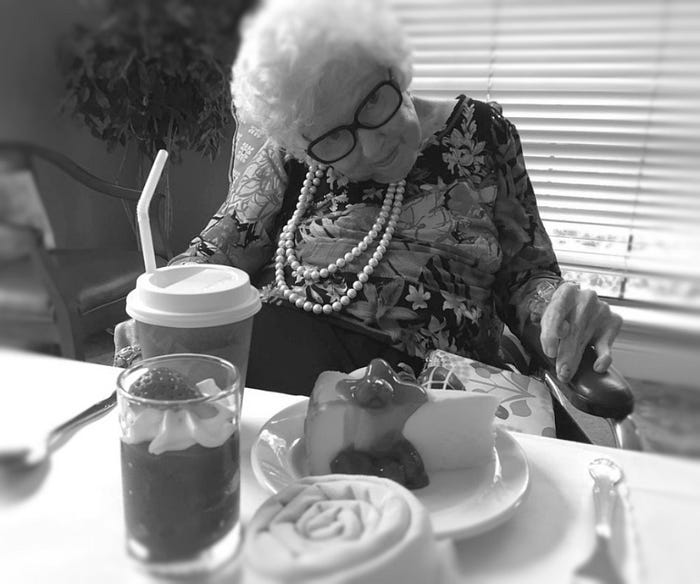
Mom kept up on the news, enjoyed discussing politics and books, and often dispensed life lessons and advice for the young assisted living staff members who came to her to share boyfriend problems or other worries.
No doubt, Mom probably confronted her diminishing portfolio of enthusiasms, but she always bounced back. She made new friends, even though so many of her old friends were disappearing.
In the “All That Is Sacred” documentary, writer Thomas McGuane says the following:
The astonishing thing about growing old is that everyone disperses.
Sadly, I have found this to be true.
Retirement and aging mean that people often move. Some pass away. Others lose touch because their lives have changed, and new priorities emerge, like grandkids, doctor appointments, and commitments.
What do we do when confronted with this diminishing portfolio of enthusiasms and everyone disperses?
We follow Jim Harrison’s lead. We make new friends. We enjoy good food and drink. We celebrate the great outdoors. We continue loving those close to us, including our animal companions.
And most importantly, we continue to embrace our creative passions, to the best of our ability.
Jim Harrison, despite his aging and decrepit body, got up every day to write by hand. On his last day, before a heart attack ushered him beyond the veil, he was seated at his writing desk with pen in hand composing a poem.
Now that’s the way to go out.
Before you go
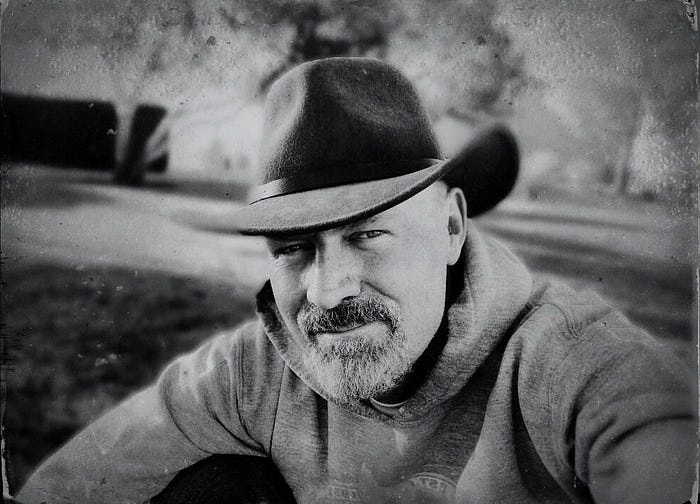
John Patrick Weiss writes stories and essays about life, often illustrated with his black and white photography. Visit JohnPatrickWeiss.com.
—
This post was previously published on Medium.com.
—
The Good Men Project is a mission-driven men’s media platform. A major platform for stories about men, identity, fatherhood, and emotional intelligence—and a trusted home for the national conversation about masculinity.
The Good Men Project accepts paid guest posts and provides bulk guest post packages for SEO agencies and resellers.

If you believe in the work we are doing here at The Good Men Project, please join us as a Premium Member today.
All Premium Members get to view The Good Men Project with NO ADS.
Need more info? A complete list of benefits is here.
Photo credit: Selfie of me and my mother

