



Apparently I had missed one over the past several years, a policy that an increasing number of elementary schools are implementing to ban the use of the words “best friend” in an attempt to avoid creating feelings of exclusion and isolation among those that don’t have a “best friend.” Studies have shown that children grow up to be more well-adjusted if they have larger, more diverse social groups when they are young. As they advance in grade some schools even will go so far as to purposefully separate friends so that they will be encouraged to make new ones.
It’s a concept that makes just enough sense to allow well-meaning people to feel confident that they are raising empathetic, inclusive future members of society and less narcissistic psychopaths. I would even agree that it’s a good idea for pre-school and kindergarten age children.
Older than that and I think it ignores and even inhibits a child’s social growth. Some children are more outgoing than others, to purposefully take away somebody that they feel comfortable with or to make them feel that it’s a bad thing to have those feelings for their friend seems to risk creating the feelings of alienation and loneliness that we are trying to avoid. We are all different and connect or don’t connect with different people in different ways. To ignore this basic human truth or to simply take away the phrase used to label those they like better than others seems to underestimate a six or seven year old’s already developing understanding of this.
My daughter is one of the friendliest, most outgoing people that I know, but she’s now coming to understand that not everyone needs to be her friend, that even though she should try and be nice to them, there are going to be some kids that she just doesn’t get along with as well as others. At some point she’s even going to come across somebody that for whatever reason doesn’t particularly care for her, as crazy as that sounds, or that doesn’t invite her to their party. Developing the skills necessary to cope with that potential disappointment is an important part of preparing her for the future.
We may inadvertently be hastening the development of that skill in several of her classmates this year. Her own birthday party is approaching soon and for the first time she has decided that she doesn’t want to invite her entire class. It’s going to be in our backyard, there is no limitation given to her on the amount of friends that can attend, she just doesn’t want all of her classmates there on her “special day”, including the little boys that have recently taken to calling her names.
I think that’s OK. If it was only one or two that she was excluding we would have a talk about why she felt that way and how it would make them feel to be left out, but a full half of her class failed to make the cut. She is in Girl Scouts, dance class and plays softball. There are still kids from past years who’s parents we have friendships with now. School is no longer the only place where she has social interaction.
I was surprised by the amount of time and energy that she put into drafting her squad, equally surprised by the “thinking cap” that she deemed necessary for such important decision making. She has several “best friends”, a term that we will continue to use, but less than she used to, a trend that I’d imagine will continue. In the end a pattern emerged, one that should make it easier for those left out to manage their disappointment.
She only invited all the girls.
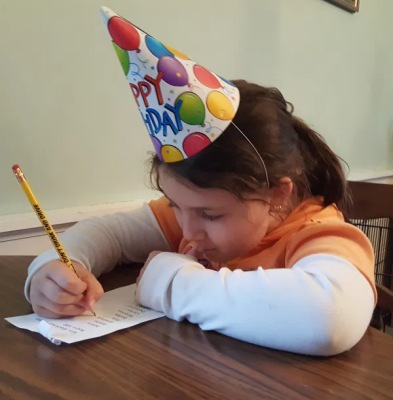
making her list, checking it twice
—
This post was previously published on Thirsty Daddy.
***

If you believe in the work we are doing here at The Good Men Project and want a deeper connection with our community, please join us as a Premium Member, today.
All Premium Members get to view The Good Men Project with NO ADS. Need more info? A complete list of benefits is here.
—
Photo credit: iStock

