



By Salina Arredondo, Public Health Watch
This is one of two stories examining extreme heat in California’s San Joaquin Valley. The project was a collaboration between public radio station KVPR and Public Health Watch.
SAN JOAQUIN VALLEY, California — Every year, Lisa Gluskin dreads the onset of summer.
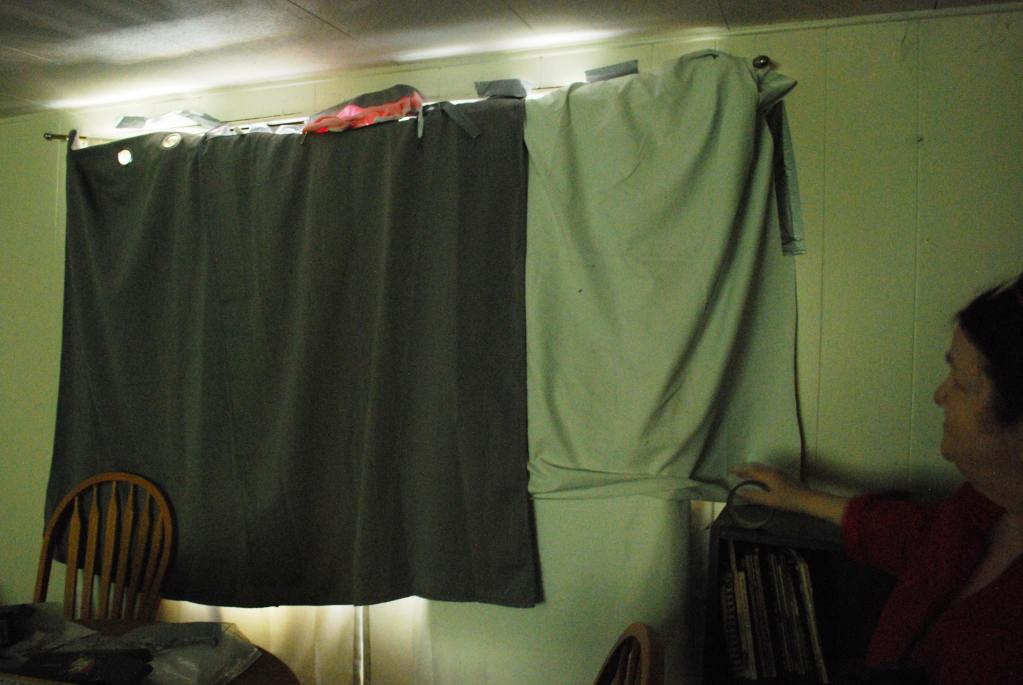
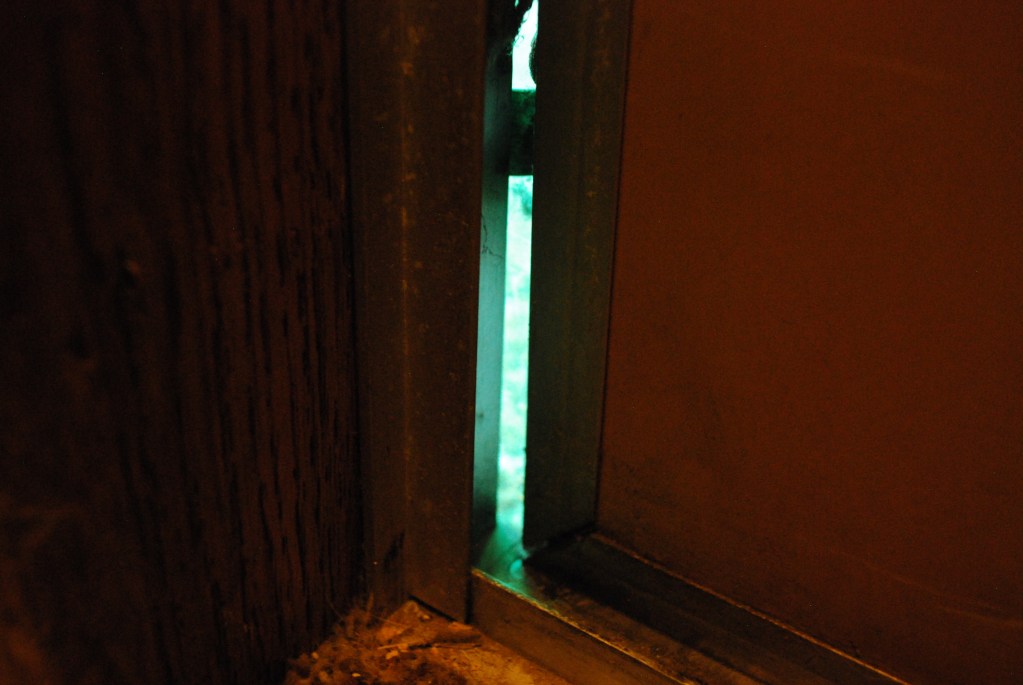
She tapes her windows shut. She packs her door frame with foil. She hangs blankets to block out the sun.
The punishing heat, though, still permeates her mobile home.
“You can feel the hot air blowing in,” she said. “Because the mobile home itself is just falling apart.”
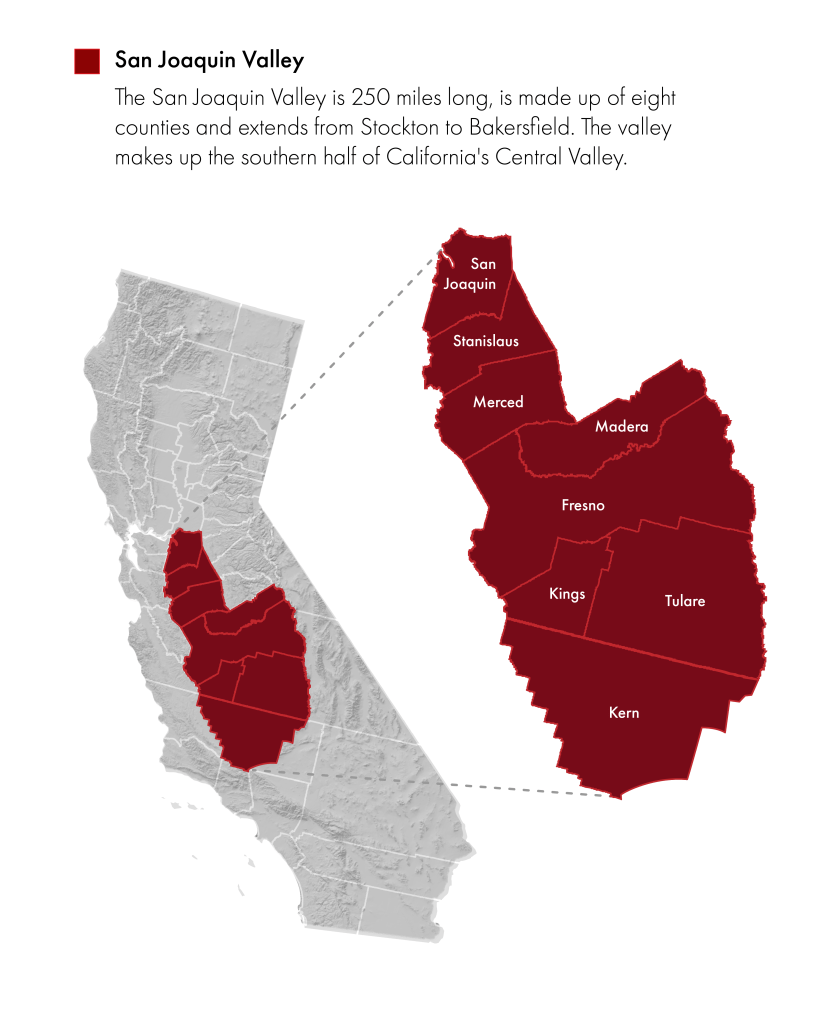
Gluskin, 68, lives in one of the hottest and most rapidly warming regions in California: the San Joaquin Valley.
This agricultural stretch of land — locked between California’s two great mountain ranges, the Sierra Nevada and the Coast Ranges — endures an average of 106 days per year with temperatures at or above 90 degrees and 40 days per year with temperatures at or above 100 degrees, according to the San Joaquin Valley Air Pollution Control District.
 Credit: Isabel Simpson
Those prolonged periods of extreme heat are the deadliest forms of weather in the country, killing more Americans each year than floods, tornadoes or hurricanes.
They’re especially dangerous for older adults, who make up an oversized share of heat-related fatalities.
In the San Joaquin Valley, adults aged 65 and over account for 12% of the population but 28% of all heat-related deaths since 2020, according to provisional data from the Centers for Disease Control and Prevention. Unlike other age groups, older adults have sweat glands that are less active, a muted sense of thirst, a higher rate of chronic conditions and — most notably — a more fragile heart. When the body’s core temperature rises, the heart beats harder and faster to redistribute heat from the internal organs to the skin. That strain on the aging heart increases the likelihood of heart attacks, heart arrhythmias or heart failure. The body’s muted sweat glands and thirst receptors also increase the risk of dehydration, heat exhaustion or heat stroke. By the time seniors are thirsty, they’re often already in the early stages of dehydration.
That’s a significant issue, says Kai Chen, an associate professor of epidemiology at Yale and the lead author of a February study on age and climate mortality published in Nature Communications. “We’re not in a scenario where only climate is changing. The world is facing another public health challenge — aging,” he said. As the U.S. population grows older, the prospect of climate-related deaths looms larger. “Each additional bit of warming, the health consequences are substantial,” Chen said. “We’re not talking about the next generation.”
Over the next three decades in the San Joaquin Valley, the annual average maximum temperature is expected to rise by 4 to 5 degrees, according to California’s latest climate change report.
Gluskin, 68, is one of the Valley’s roughly 550,000 senior residents. She hopes to get her mobile home fixed before the climate gets any warmer.
 Lisa Gluskin’s mobile home in Tulare County. Credit: Salina Arredondo
“I’ve tried and tried, you know, to get help,” Gluskin said. “I just can’t seem to get anybody to help me.”
Since purchasing her mobile home in Tulare County in 2017, the side door has started to sag and the windows have gotten drafty. The old evaporative cooler propped in her living room window doesn’t work anymore. When it was working, the device — also called a swamp cooler — drew hot outside air across a wet filter to lower the room temperature. The cooler now acts as a conduit to usher the heat inside, turning Gluskin’s home into a sweltering box in the summer.
Gluskin’s air conditioning unit doesn’t help much, either.
Because of the home’s insulation problems, it’s impossible to keep it cool — even with the functional AC unit she has. The cold air it blows is lost to the constant flow of hot air streaming in. Every time she turns on her AC, she’s “burning money” she can’t afford to spend, Gluskin said.
Since being diagnosed with breast cancer in 2018, her life savings have been depleted by medical bills. The little money she has left goes toward a second health insurance plan to cover the costs that Medicare doesn’t.
“Being broke, it sucks,” Gluskin said. “But I’ve accepted that. Being stuck inside, hot, is more miserable.”
The San Joaquin Valley is home to seven of the 10 most disadvantaged communities in the state, according to the California Office of Environmental Health. The state’s average cost of energy has increased nearly 16% since last year alone, according to the Energy Information Administration. Welfare initiatives like the California Alternate Rates for Energy program, or CARE, only cover 30% to 35% of monthly electric bills.
 Electrical lines run across remote byways in the San Joaquin Valley. Credit: Salina Arredondo
Gluskin turned to her energy provider, Southern California Edison, for help. She applied in March of 2023 to the company’s energy saving assistance program, which covers the cost of insulation problems in low-income households.
In the weeks that followed, representatives of Southern California Edison told Gluskin her request was being processed. They never provided updates.
Two months after she submitted her application, Gluskin was hospitalized for dehydration.
“I wound up in the hospital for five days,” she said. “I thought I was drinking lots and lots of water.” Until her hospitalization, Gluskin hadn’t thought of herself as a senior who needed to pay extra attention to her health during extreme heat days. “I try to be really good about that now … it’s hard to accept. No matter what age you are, in your mind you feel like you’re still 35 years old.”
As of August 2024 — nearly a year and a half after submitting her application — Southern California Edison still hadn’t followed up on Gluskin’s request for assistance.
In a statement, an Edison representative said that due to the “high volume” of applications, the energy saving assistance program is backlogged. But the utility is “in contact with the customer and working to expedite their enrollment.”
Gluskin’s dilemma isn’t unusual in the Valley.
Edison provides coverage to roughly 12 million people across Southern California, and public demand for its energy saving assistance program has been surging for years, according to the utility company. But despite the backlog and risk of heat exposure, there are no other options for people like Gluskin, except one.
—
This article was originally published by Public Health Watch, a nonprofit investigative news organization. Find out more at publichealthwatch.org . 
***
You Might Also Like These From The Good Men Project
 |
 |
 |
 |
Join The Good Men Project as a Premium Member today.
All Premium Members get to view The Good Men Project with NO ADS. A $50 annual membership gives you an all access pass. You can be a part of every call, group, class and community. A $25 annual membership gives you access to one class, one Social Interest group and our online communities. A $12 annual membership gives you access to our Friday calls with the publisher, our online community. A complete list of benefits is here.
—
Photo credit: The sun sets behind a rural home in California’s San Joaquin Valley. Credit: Salina Arredondo

