


There is something slightly improper about inherited money. It doesn’t sit cleanly in your hands. It’s yours, but not entirely. It carries a residue—of someone else’s habits, appetites, mistakes.
My father died recently. With him came money. A fair amount, though that’s not really the point. What matters is that it was his before it was mine, and that fact doesn’t disappear just because the paperwork says otherwise.
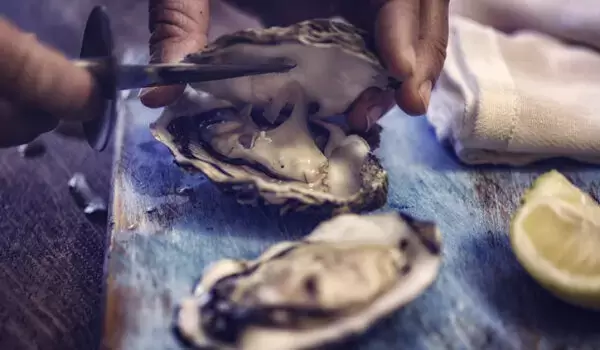
Today I went to the Sydney Fish Market—the new one. And it really is something. Vast, theatrical, almost absurd in its abundance. The seafood looks overgrown, overfed, as though the ocean itself had been pushed to excess. Oysters piled up like offerings. Lobsters thick and heavy. Everything plump, glistening, unapologetically alive right up until the moment it isn’t.
I sat down and ordered oysters. Then more. Then lobster. I ate quickly at first, then more deliberately, aware the whole time that I was paying for it with money I hadn’t earned.
There’s a voice—my brother’s, really—that sits behind all this. The idea that inheritance should be handled carefully, even anxiously. That it should be preserved, invested, made to grow. That to spend it freely is, in some sense, a failure of discipline.
And he’s not wrong. Or at least, he’s not irrational.
But my father wasn’t that kind of man.
He was ravenous. Not just for food, but in temperament. He could be angry, argumentative, impatient in a way that made life around him unpredictable. But when it came to food—especially seafood—there was a kind of purity to it. He loved it without restraint. Oysters in particular. He didn’t savour them in the refined sense. He ate them greedily, quickly, with a kind of physical urgency, as though the pleasure might vanish if he didn’t take it immediately.
Sitting there, eating oysters bought with his money, I realised something that felt, at first, slightly perverse: this might be the closest thing to honouring him.
Not by being prudent. Not by converting his life into numbers that accumulate quietly somewhere. But by repeating the act itself. By collapsing the distance between his appetite and mine.
There’s something about that which resists sentimentality. I’m not remembering him in the usual sense. I’m not softening him, or turning him into something gentler than he was. He wasn’t gentle. He was difficult. But he was also alive in a very direct way, and that aliveness expressed itself most clearly in moments like this.
When I eat the oysters, I’m not thinking about him. Not really. I’m doing what he did.
And that raises a strange question: what, exactly, survives a person?
We tend to think in terms of memory—stories, images, softened versions of who they were. But memory is thin. It abstracts. It edits. It turns people into something more coherent than they ever were.
This feels different.
The act itself—eating, tasting, enjoying—is unchanged. The structure of the experience is identical. I am sentient in the way he was sentient. The oyster hits the tongue the same way. The same immediate, unmediated pleasure. No distance, no interpretation.
In that sense, something of him isn’t being remembered. It’s being repeated.
Not his personality. Not his anger, his arguments, the things that made him hard to live with. Those are gone. But this—this direct engagement with something physical, something immediate—that remains available. It can be entered into again.
The money becomes a kind of conduit. Not a resource to be maximised, but a link. It allows the act to occur under roughly the same conditions, stripped of abstraction.
My brother would say this is exactly the wrong way to think about it. That money should move forward, not backward. That its purpose is to secure something that doesn’t yet exist.
But sitting there, finishing another oyster, it felt as though its purpose, at least in this moment, was to complete something. To allow a gesture that began with him to find its way, briefly, into the present.
Not as tribute. Not as performance.
Just as continuity.
There’s no comfort in it, exactly. No neat resolution. He is still gone, and in many ways that’s a relief as much as a loss. But there is something oddly precise about this—this small, contained repetition of his appetite.
For a moment, the distance between us narrows.
Not because he returns.
But because I do what he did, in the only way that ever mattered to him—directly, greedily, without much thought for what comes next.
And in that moment, he is not entirely absent.
He is there in the act.
And so, briefly, am I.
—
This Post is republished on Medium.
—
Photo credit: iStock

