



Anxiety truly is one of the killers of happiness in life. With the onset of the pandemic, every other person I know suffered an anxiety attack. I got a few too. Here’s how I coped.
Disclaimer- I’m not a professional, this is my own journey on coping with anxiety.

Photo by Priscilla Du Preez on Unsplash
1. Do not shy away from seeking professional help
Anxious people tend to think of themselves as lesser than others. They think that everyone around them is going to judge them and hence, refrain from sharing their thoughts and emotions with other people. They overthink and create scenarios in their head, that only they’re aware of. This drags them inside a pool of insecurity, under-confidence, and a messed-up mental state.
A professional can guide you through this and help with coping mechanisms that suit your lifestyle and you. Prolonged therapy also results in tracing your trigger points and heal better in the long run.
Americans aged between 18 to 23, also known as adult Gen Z, are reporting the highest stress levels of any generation in the country, according to a poll. Gen Z adults were also more likely to say they were experiencing common symptoms of depression.
2. Writing an Anxiety journal
Therapy, though useful, can be extremely expensive for some people, especially in countries where healthcare isn’t free. An anxiety journal helps since you vent your thoughts or what your actual trigger points are, thus helping yourself heal. It helps you express your emotions, bring out what you’re feeling, and improve your mental health.
3. There’s no point in stressing over things you can’t control
If there’s one mantra that I’ve learned to live with, it’s the aforementioned statement. There is absolutely no reason to stress over things you can’t control. These things will drag you into a spiral of your own thoughts and you will end up overthinking and having more panic attacks.
I practically repeat this in my head unconsciously all the time to get through my rough days.
4. A gratitude journal
If you’re the kind that doesn’t believe in writing in an anxiety journal, then a gratitude journal can definitely be an easy way out. Every night before hitting the bed, take 5 minutes to write about things you’re grateful for. Some days will be heard and you will not be able to find things to write but keep up and write absolutely basic stuff like, “I’m thankful to my legs for not giving up on the 50th squat today” or “I’m grateful to be literate enough to write this.” Again, no one is reading them for you, you just have to write it and then maybe read it out aloud.
Alternatively, reading “The magic” by Rhonda Byrne, can also be an easy way to learn how to practice gratitude.

Photo by Gabrielle Henderson on Unsplash
5. Positive self-talk
I cannot emphasize enough the importance of this. Positive self-talk is as important as brushing your teeth or taking a dump. It genuinely goes a long way.
A common practice by people is to negative self talk themselves several times a day. Some usual examples could be looking in the mirror and criticizing your body, hair, etc or guilt-tripping after eating a junk meal, or maybe pushing your body to do more at the gym because it’s fat.
Take my advice and do the opposite. Your body hears your thoughts. Maybe just do this as an experiment and start saying positive things to yourself. It doesn’t have to be only when you land that large deal at work, it could be as simple as controlling your urge to eat that extra candy or looking into the mirror and smiling at your face and body. This is the one habit that will take you places and definitely help in lessening your anxiety because you no longer need outside validation.
6. Limit your time on social media
The toxicities of social media aren’t unknown to anyone. Using social media for a little too long can make you unhappy and isolated in the long run. Constant comparisons, imposter syndrome, existential crisis and pushes one into a deep state of self-doubt. The constant barrage of perfectly filtered photos that appear on Instagram is bound to knock many people’s self-esteem, while obsessively checking your Twitter feed just before bed could be contributing to poor quality of sleep.
I was so surprised when I noticed that I was spending over 2 hours together on Instagram and Twitter. I immediately set the timer for both of them to be 30 mins. Now, when you first do this, 30 minutes will end before you even realize. But slowly, you will consciously make an effort to not increase the 30 to 40, which will help in reducing social media altogether.
An alternate yet dramatic idea is to also delete the application for a few days every month, which definitely reduces your screen time and your addiction to these applications.
According to another study highlighted in the Journal of Social and Clinical Psychology in 2018, people who decreased their regular use of social media, limiting it to 30 minutes a day (10 minutes each on Facebook, Snapchat, and Instagram), reported reduced levels of depression and loneliness and felt better after three weeks.
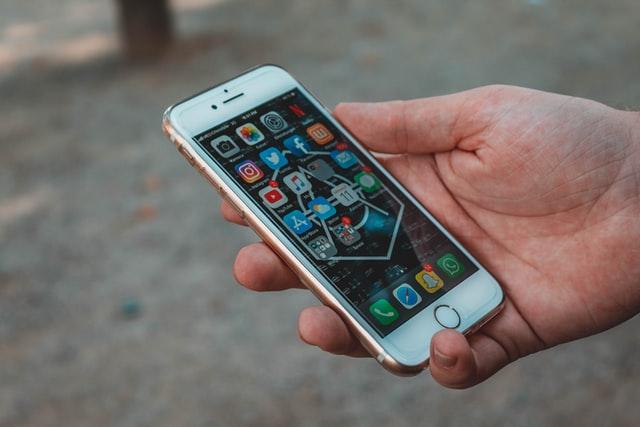
Photo by Sara Kurfeß on Unsplash
These were some things that genuinely helped me in becoming a less anxious person. 2020 has been very very rough for everyone and some small habits can help make big things easier. Let me know if you practice any of these, and how they work out for you! 🙂
—
This post was previously published on Medium.
***

If you believe in the work we are doing here at The Good Men Project and want a deeper connection with our community, please join us as a Premium Member today.
Premium Members get to view The Good Men Project with NO ADS. Need more info? A complete list of benefits is here.
—
Photo credit: Priscilla Du Preez on Unsplash

