


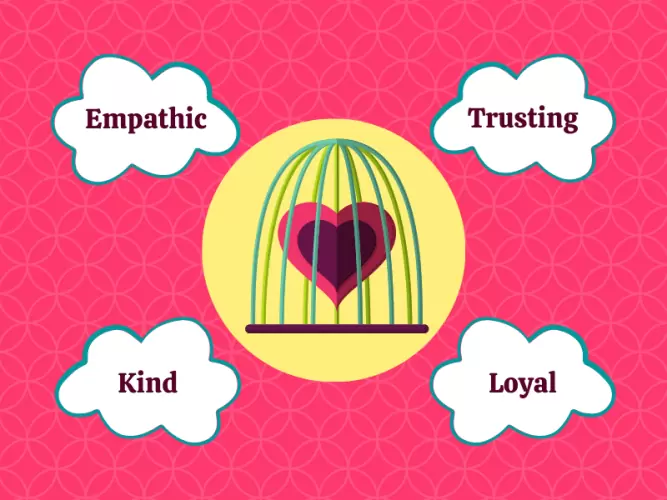
After many months in a traumatic relationship with someone who turned out to be a predator, I finally escaped. In the aftermath, I promised my shattered self that I would learn and grow from the situation. To better guard my heart and mind in the future, I searched for understanding.
Why did I stay in a damaging connection with someone who repeatedly abused my kindness?
Why did I give the best of myself to someone who intentionally harmed me?
Why was it so hard to walk away from someone who showed me his true, awful nature and who eventually threatened me and stalked me?
Initially, I believed something fundamentally wrong with me kept me stuck in the toxic relationship. Perhaps I was weak, gullible, or suffering from an inferiority complex. Maybe I was naive or foolish.
I needed answers, but I wasn’t prepared for the surprising insights I learned through therapy, research, and self-reflection: My best qualities, not my worst traits, bonded me with a dangerous personality.
My empathy, trust, kindness, and loyalty cemented me in an abusive relationship for far too long. These positive qualities are gifts in many circumstances but did not serve me well in the hands of an abuser. Abusers coercively control their targets through grooming behaviors, including intense courtship, fear, emotional abuse, and isolation. According to Lisa Aronson Fontes, Ph.D., grooming is “a predatory tactic that is meant to build a deep emotional connection.” Grooming is a prelude to abuse.
I was trapped in the toxic relationship because my abuser exploited my best qualities through grooming.
By nature, I offered my care and support with abandon in the toxic relationship. My abuser concealed his true nature early on and projected a thoughtful, warm, and genuine personality. He systematically mirrored me: The things I liked most about him were just my best qualities that he reflected toward me. He gained my trust. By the time the abuse started, I was emotionally glued to his fake persona.
My abuser intentionally cultivated fear by repeatedly alluding to ending the relationship for no apparent reason. He randomly alternated between disappearing and engaging. His warmth toward me morphed into cold criticisms and put-downs about my values, appearance, and identity that insidiously chipped away at my self-esteem. Because he isolated me from friends and family, my world became small, and his influence loomed largely. The stalking started before the relationship ended.
Off-balance and out of touch with my sense of self, the grooming was complete. I was emotionally and psychologically unguarded against the coercion, threats, and constant monitoring that followed. I couldn’t see the relationship clearly, and using my best qualities, I compensated for and dismissed abusive behaviors. As published in The Howard Journal of Crime and Justice:
The greater the void of character and conscience my abuser revealed to me, the more I tried to fill it using my strengths. In a dichotomous dance to regain his approval, I compensated for his ruthlessness with my empathy, his disregard with my trust, his selfishness with my kindness, and his betrayal with my loyalty. Despite the physical, emotional, and psychological danger I faced in the relationship, my best qualities kept me entrenched.
. . .
Abusers Use Your Strengths Against You
Had my abuser revealed his predatory intentions early on in the relationship, I would have run for the hills! By hiding his machinations and using my strengths against me, my abuser gained more control over me than he could have otherwise achieved. Breaking free was a complicated, emotionally excruciating inner battle.
I simultaneously wanted to escape the situation forever and beg my abuser to put his mask of charm back on. I focused on the sporadic, good moments and disregarded the consistent bad times. I knew the relationship was toxic, but I didn’t let it go. Until I did.
With the help of a trauma therapist, I ended the relationship. In this process, I discovered an unexpected gift: the repair of my relationship with myself. My therapist guided me toward healing my childhood hurts and the template for my relationships with toxic people.
“Someone I loved once gave me a box full of darkness. It took me years to understand that this too, was a gift.”
Following are insights I learned in therapy that I wish I had known before my interactions with a dangerous personality — positive but exploitable character traits in targets of abuse.
Empathy: You sense their emotions but suffer their ruthlessness
You strive to understand others’ feelings and perspectives. You want to give to and help others. While empathy is a basis for healthy communication, empathizing with an abuser is dangerous. An abuser grooms you to focus your attention on their emotions and overlook the effects of their ruthlessness on your emotional well-being. Your empathy doesn’t affect the abusive behavior and actually keeps you stuck in a toxic relationship.
Takeaway: Your empathy is not a free pass for someone to hurt your heart.
Trust: You believe in their goodness but accept bad treatment
You see the best in others and value the comfort and safety you experience in the company of those you dearly love. Because you are trustworthy, you easily trust others; however, confidence in a manipulator is a gateway to abuse. Abusers masquerade as trustworthy people to exploit others. Once an abuser gains your trust, they begin violating your boundaries. You are more likely to ignore your intuition that the relationship is harmful because your trust blinds you to the abuser’s fakery.
Takeaway: Trust your gut when something seems off about the relationship.
Kindness: You want to make their life great but overlook that they’re ruining your world
You’re wired to shower someone you love with your care and concern. You give generously of yourself, and you prioritize the needs of others over your own. Though kindness is a valuable quality in most life situations, kindness is a weakness in abusive relationships. You may over-give in an abusive relationship because your abuser groomed you to meet their needs at the expense of your own needs. And, because you operate from a position of altruism, you may fall for the abuser’s intermittent acts of “kindness” that intensify the unhealthy bond you mistake for love.
Takeaway: Do not assume that because you have good intentions, others have good intentions.
Loyalty: You devote yourself to them but endure their betrayal
You stick with loved ones through good times and hard times, but loyalty to an abuser is true-heartedness to someone who merely feigns concern for your best interests. Abusers often lead duplicitous lives, presenting false but convincingly loving facades that suit their selfishness. By the time your abuser’s mask slips, your heart is hooked, and saving yourself is the last thing on your mind. Groomed to self-blame, you cling to the hope that you can better please the abuser, avoid their wrath, and achieve the adoration they lavished upon you at the start of the relationship. You’re not insanely loyal; you’re in survival mode.
Takeaway: You’re never obligated to stay in an abusive relationship, and you never need an excuse to leave an abusive relationship.
. . .
Parting Thoughts
Our best qualities do not serve us well in toxic relationships. Abusers groom and eventually control their targets by exploiting their targets’ strengths. Take care to share your empathy, trust, kindness, and loyalty only with others who truly deserve the best of you. And, make sure to shower your best qualities on the most important person in your life: you.
—
This post was previously published on Hello, Love.
***
You Might Also Like These From The Good Men Project
 |
 |
 |
 |
Join The Good Men Project as a Premium Member today.
All Premium Members get to view The Good Men Project with NO ADS.
A $50 annual membership gives you an all access pass. You can be a part of every call, group, class and community.
A $25 annual membership gives you access to one class, one Social Interest group and our online communities.
A $12 annual membership gives you access to our Friday calls with the publisher, our online community.
Register New Account
Need more info? A complete list of benefits is here.
—
Photo credit: Janna Lorensen
