


I was watching football last Thanksgiving, along with a sizable family contingent. The grandkids—energetic and playful—were doing their thing in the playroom, while my wife embodied the epitome of a hostess, and my sons and their wives scurried around the kitchen, arranging scrumptious dishes they’d brought to the potluck.
The talking heads on TV were offering their opinions on what NFL viewers had coming their way, prognosticating with such certainty that watching the game seemed almost unnecessary. Many of the “experts” have proven track records of being remarkably wrong in their predictions, yet somehow, they continue to be invited back annually to make them. Whatever.
After the segment on “how young quarterbacks have a lot to prove,” they tossed the reins over to their funding mechanism we all know as “commercials.” Among them are a series of advertisements that follow a conspicuous script to match the “reason for the season.” Sometimes known as the “Hometown Huddle,” they typically feature upbeat music with NFL players wearing aprons over their team gear, and high-energy interaction at a local shelter, all of which jump off my giant HD flatscreen.
These acts of community service highlighted professional athletes’ generosity and personal investment “for those less fortunate.” Players from the Cowboys or the Lions, et al, are staged serving turkey, dressing, and other traditional foods cafeteria-style, shuffling along the line as if someone had called an audible. The players are depicted as intensely focused on breaking down barriers, with footage showing them laughing, signing autographs, and having friendly conversations with guests.
Each segment’s tone is emotional, often showcasing the joy of sharing a meal and making people feel supported. Spotlighting “fans in need” or a specific community outreach, they sometimes include distributing toys to eagerly awaiting children. Occasionally, in more somber settings, players are shown handing out toiletries or blankets to those in dire circumstances.
Sometimes, the activities take place outdoors, where teams of local volunteers and professionals are building playgrounds and fitness zones at schools, assisted by iconic athletes who spend a few hours “getting their hands dirty,” yet their fingernails remain clean. Or maybe they’re hosting a football clinic centered around healthy eating and physical fitness, the virtuous alternative to sedentary activities.
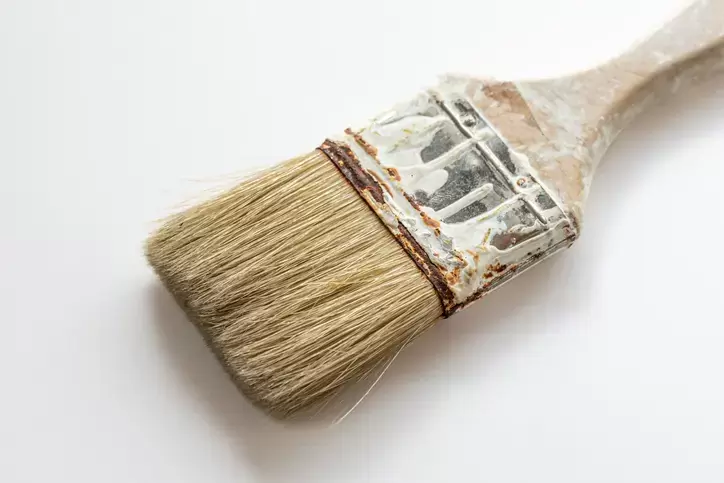
On this merry occasion, I must’ve still been carrying some unshed cynicism from the previous day’s shopping excursion—my annual hand-to-hand combat with “selfish” bargain hunters, like a Braveheart reenactment. I scrutinized the “Getting Dirty” mini-dramas with growing disaffection. There was the quarterback holding a single stick of lumber like a relic from a lost civilization. Next came the defensive lineman holding a paintbrush for a few seconds, conspicuously dry and unloaded with any paint. But that explained the absence of paint anywhere on his hands or clothes.
The mass-media version of charity barely resembles the everyday work in the trenches—the polished PSA versus the messier reality. That’s not surprising, nor is it what felt “off” to me. No, I detected something more subtle. Subtext. Subliminal, almost. What caught my ear this time had slipped past me, God-only-knows-how-many times before.
“Giving Back.”
The idea goes something like this: Giving back involves a reciprocal exchange in which givers find personal fulfillment, purpose, and deeper social connections by helping those in need. But wait! Isn’t that just “Giving”?
The dictionary tells us the definition of giving:
· to make a present of
· to provide to someone else: to put into the possession of another
Nothing controversial there. No footnotes, no reparations clause.
That seems like a sufficient understanding of what giving is, yet there it is—that tag on the end, “Back.” Why is that word necessary? What is the purpose of this intransitive preposition, as a linguistic purist might put it?
On the surface, it’s an idiomatic expression that simply describes the act of donating time, resources, or effort to support a community, organization, or cause. And who wouldn’t agree with that? However, in this context, the word “giving” is more than just a neutral term because of the particle “back.” The word “back” does a lot of work—like your neighbor who offers to help remove a tree and somehow leaves you with a treehouse for his kids instead. Uhh, thanks for the help, but that’s not what I meant. And its often-insisted-upon addition substantially changes the phrase’s meaning, shifting it from a mere description to implying a sense of reciprocity.
What results is a kind of forensic breadcrumb trail suggesting the benefactor (giver) was a participant in a system that provided them with privilege or advantage, without which their success wouldn’t have been possible.
This phrasing aligns with (and subtly promotes) narratives that reframe voluntary generosity as restitution for unearned success. In other words, generosity gets recast as something owed. It injects a reciprocal social contract that downplays individual effort, talent, luck, or personal responsibility in one’s achievement.
To be sure, many people use the phrase by rote, anesthetized by its ubiquity; my critique is not aimed at them. Still, “giving back” has become shorthand for certain modern assumptions about wealth, success, gratitude, and moral obligation. In the process, it undermines and reorients traditional notions of philanthropy and charity, which were long rooted in personal abundance, faith, or simple human kindness.
What’s more, it discourages satisfaction, threatening systems erected on grievance. By presuming debt without proof, “giving back” functions as a moral lever—one that shifts authority to those who benefit from keeping guilt unresolved and obligation perpetual. And for some, this is the ultimate goal—to protect the victimology industry at any cost, for it is its lifeblood and the source of their power.
Self-initiated generosity is often met with suspicion, framed by a moral accounting system that treats philanthropy as a passive-aggressive narrative of restitution. Offer something freely, and people will wonder what you’re apologizing for. This “giving back” framework presumes that success is a tainted, unearned benefit that requires justification, ultimately replacing the celebration of achievement with an uneasy conscience and an inherent, perpetual debt.
Eventually, implication loses its innocence. The term “back” doesn’t just modify generosity; it hijacks it. It swaps freedom for obligation and gratitude for guilt. This isn’t an unintended side effect of contemporary language. It’s a deliberate rhetorical decision—masking moral judgment as kindness and creating a sense of debt where there is none. This is not a neutral framing but a manipulative strategy.
Virtue cannot coexist with coercion. When gifts become obligatory, they cease to be genuinely charitable and instead resemble partial payments on a perpetual bond—like a revolving credit card that only accepts the minimum payment. Yet somehow, these payments never cover the accumulating interest.
When someone mentions organ donation, do you immediately think the donor is giving back? Sure, there are rare occasions when an adult offers a kidney to a struggling parent, but otherwise, we don’t imagine the donor is trying to settle a bill. We don’t think they borrowed the kidney and, upon the discovery they no longer need it, return it to its “rightful owner.”
Or what about a nursing mother? Is she giving back to her newborn? We’d consider that suggestion absurd! She’s not repaying a loan of milk she had previously extracted from her child. She is giving from her own vital, life-sustaining nourishment to another human who is entirely dependent upon her and who has had scarcely any time to become a creditor. Even if the mother considers the child a fountain of blessing and reward, it remains a pure act of unidirectional sustenance. This biological and emotional outpouring expects no invoice and acknowledges no prior debt.
The “dry paintbrush” in that PSA wasn’t ironic; it was metaphorical. The paint is missing because the work isn’t the point; the absolution is. The camera captured a transaction, not an act of love. If success is proximate evidence of injustice, then the commercial is a televised admission—like an innocent man falling on his sword for a crime no one can name.
Gift giving loses its moral vitality the moment it is conscripted to settle accounts that no one can prove exist. When language is weaponized to imply guilt where none has been established, or obligation where none was freely assumed, it is not harmless. It ceases to be descriptive. It becomes prosecutorial. The judge has issued a summary judgment—before any evidence is presented.
And that, finally, is why the words matter.
“Giving” needs no modifier.
And “Back” turns a gift into a confession.
—
This post was previously published on SUBSTACK.COM and is republished on Medium.
—
Subscribe to our Email Newsletter:
Why Subscribe? Because this conversation matters.
When you subscribe, you’re directly supporting independent, mission-driven journalism about masculinity, relationships, mental health, fatherhood, and social change. Your inbox becomes part of a movement that’s been challenging stereotypes and expanding what it means to be a good man since 2010. Plus, our newsletter is curated by humans, not algorithms — thoughtful context in an AI-flooded world.
The Good Men Project is a mission-driven men’s media platform. A major platform for stories about men, identity, fatherhood, and emotional intelligence—and a trusted home for the national conversation about masculinity.
The Good Men Project accepts paid guest posts and provides bulk guest post packages for SEO agencies and resellers. Email [email protected] for more information

If you believe in the work we are doing here at The Good Men Project, please join us as a Premium Member today.
All Premium Members help support our mission and get to view The Good Men Project with NO ADS.
Need more info? A complete list of benefits is here.
—
Photo credit: iStock

