



My friend and mentor Steve was dying of cancer, and I debated calling him one afternoon.
“I don’t want to intrude,” I said to my wife Nicole, a hospice nurse with much wisdom about life and death. “Being loving and thoughtful is not an intrusion. It’s a gift,” she told me.
So I picked up the phone and called.
It rang a few times, and part of me still wondered if I should leave him be. But then he answered and said, “Hello?”
I put the phone on speaker.
“Steve, it’s John and Nicole. We were thinking about you and wanted to say hello. What are you up to?” I said.
“Hey, you two. Let’s see, I was reading a memoir by a firefighter, and now I’m sitting outside on the patio with my beautiful wife, Sandy. It’s a lovely afternoon. We’ve been listening to the birds and watching the deer and turkeys in the woods.” Steve’s voice was less robust than usual, but he and Sandy sounded relaxed and upbeat.
We never asked about Steve’s health because sick people get tired of providing endless updates to family and friends. Instead, we reminisced, shared a few short stories, and laughed.
Steve was the police chief who hired me back in 1989, thus launching my law enforcement career. I was fresh from graduate school with a Master’s Degree but zero experience. I could talk about the etiology of crime and criminological theories, but my real police education happened in the field and under the mentorship of Steve.
I witnessed people at their best and worst with each tour of duty. I learned how to listen and talk to people, identify important details, and treat individuals on the margins of society with kindness and dignity.
Kindness and dignity were important to Steve, and he made sure the culture of our police department embraced his philosophy. Years after Steve retired and I became Chief of Police, I continued Steve’s tradition of professional excellence. And since he lived in town, he often came by the office and was an invaluable source of wisdom and guidance.
Steve and his family became cherished friends. We enjoyed many social occasions and special events over the years. Steve was like a second father to me.
Which is why losing him was so hard.
At the end of our phone call, just before we said our goodbyes, there was a brief silence, and then Steve said, “I love you guys.” I replied, “We love you too.”
A few months after our phone call, Steve slipped away.
I recently watched the film “Genius,” which tells the true story of the famous author Thomas Wolfe and his legendary editor, Maxwell Perkins. Perkins was one of the great American literature editors of the 20th century, launching the careers of Thomas Wolfe, Ernest Hemingway, F. Scott Fitzgerald, and others.
Many of these larger-than-life authors came with difficult personalities and shortcomings, but Perkins behaved like a father figure, seeing past their weaknesses and guiding their efforts to publication.
Perkins tamed Wolfe’s long, unwieldy first manuscript. He and Wolfe disagreed over revisions and what to cut, but “Look Homeward, Angel” was eventually published to great commercial success. The two men became close friends, and Perkins spent years editing Wolfe’s second novel, “Of Time and the River.”
Sadly, Wolfe’s tempestuous personality destroyed their relationship, and he moved on to a new editor. Perkins was devastated. Time passed, and Wolfe fell fatally ill with tuberculosis of the brain.
Yet remarkably, before his death, Wolfe found the strength to write a beautiful letter to Perkins. He wrote of his travels, new insights about life, wanting to see friends again, and his desire to live.
He ends the letter with a sweet reminiscence:
Whatever happens — I had this ‘hunch’ and wanted to write you and tell you, no matter what happens or has happened, I shall always think of you and feel about you the way it was that Fourth of July day three years ago when you met me at the boat, and we went out on the café on the river and had a drink and later went on top of the tall building, and all the strangeness and the glory and the power of life and of the city was below.
Yours always,
Tom
It was the last letter Wolfe wrote before his death.
In some ways, Perkins was like a father figure to Wolfe. And no doubt, receiving Wolfe’s deathbed letter was a tremendous gift to Perkins.
Because, between the lines, the letter says, “I love you.”
In the film, Perkins sheds tears after reading the letter. And I was in tears, too. Thomas Wolfe’s poignant letter made me think of my phone call with Steve.
Especially Steve’s last words, “I love you guys.”
Thank God I listened to my wife and made that last phone call to Steve. It allowed us to reminisce, laugh, say goodbye, and express our mutual affection. That last phone call is a memory I’ll always cherish, just like Max Perkins must have cherished Thomas Wolfe’s deathbed letter.
Don’t put off important things.
Visit ailing loved ones if you can. Make that phone call. Write that letter. You never know which interaction will be the last. There’s never a time not to say the words that transcend this world and eternity.
I love you. Three words. They cost nothing to express.
Yet they can heal hearts, comfort souls, and celebrate all that is good and beautiful in the relationships that grace our lives.
Before you go
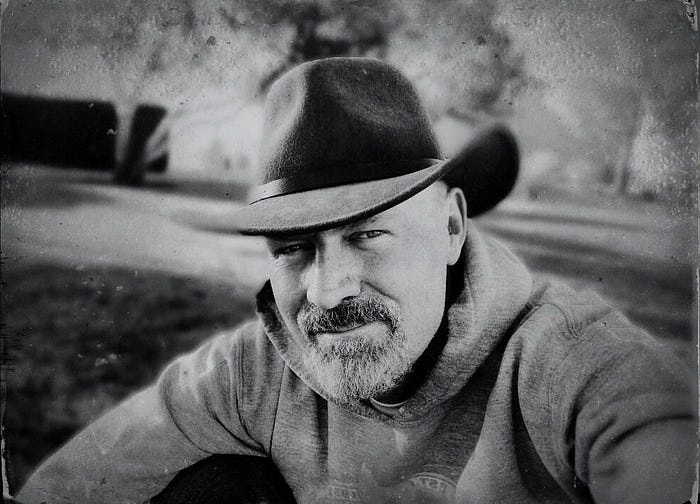
John Patrick Weiss writes stories and essays about life, often illustrated with his black and white photography. Visit JohnPatrickWeiss.com.
—
This post was previously published on Medium.com.
—
The Good Men Project is a mission-driven men’s media platform. A major platform for stories about men, identity, fatherhood, and emotional intelligence—and a trusted home for the national conversation about masculinity.
The Good Men Project accepts paid guest posts and provides bulk guest post packages for SEO agencies and resellers.

If you believe in the work we are doing here at The Good Men Project, please join us as a Premium Member today.
All Premium Members get to view The Good Men Project with NO ADS.
Need more info? A complete list of benefits is here.
Photo credit: Wendy Scofield

