



When your time is wasted on conversations that appear meaningful but fail to push a relationship forward, you may begin to feel confused.
There’s more than enough time to know someone. You have a lifetime.
Some people don’t understand this and still demand to know everything about you on a first date, the 20th date, or when casually sitting on the couch at home.
And if they don’t feel a “connection” in the first 5 minutes, they’ll toss you aside and move on to someone else.
Have you ever wondered why people do this?
Who’s likely to expect too much too soon?
There are specific kinds of people who do this, mostly insecure or immature people.
“Julie”, a previous girlfriend of mine, was always trying to have the deepest, most intimate conversations imaginable with me.
She was a good person, but Julie wouldn’t shut up. She was a bit crazy, but, she was kind, smart, and nurturing.
When we met, I fell for her. She was my kind of “weird,” funny, and sexy.
In short, nothing was “wrong” with her. But, her communication expectations might have been too high, and she didn’t give the relationship a chance to grow.
People end relationships early. They do this because they’re not aware of the dynamics at play. There are many unconscious things we do that we can’t control until we are aware of them.
Which is why it’s vital to know what attachment theory is.
To summarize attachment theory, both partners try to “complete” each other with the personality traits of the other person they have repressed themselves.
For example, if you’re self-absorbed, and even a bit narcissistic, you’ll likely gravitate towards “warmer” individuals who focus on others over their own needs.
Both people sort of “play” off each other in a push/pull dynamic, and their behaviors usually trigger each other. Without working on this, the relationship can become real toxic, real quick.
Everyone has a blend of several different attachment styles, but every person has a primary one. For me, I’m anxious-preoccupied.
In short, there are a few different types:
Anxious Preoccupied
- Preoccupied with other people’s behavior.
- “People-pleasing”, they try too hard to be a caretaker at times.
- They can seem needy, clingy, or anxious.
- May find it difficult to realize self-love.
Dismissive Avoidant
- Appear to be distant, closed off, or emotionally unavailable.
- Prefer, shallow, casual, or long-distance relationships.
- Mostly focused “inward” on themselves, self-absorbed.
- Like a fearful avoidant, they’re usually an “enabler” to an anxious preoccupied individual.
Fearful Avoidant
- Difficulty trusting other people.
- Quick to withdraw from a situation or relationship.
- Poor self-image, they fear “not being good enough”.
- Struggle to self-regulate their emotions.
“Avoidants” appear independent or self-sufficient at first, but they have deep-seated childhood wounds. These wounds give them just as many insecurities as anxious preoccupied individuals.
Julie was a fearful-avoidant.
Fearful avoidant partners are like a mix between a dismissive avoidant, and an anxious preoccupied. They’re very flighty.
As someone with an “anxious” relationship attachment, I’m drawn to “avoidants”. It didn’t matter who it was. Relationships with women who had an FA attachment style always “burned” the brightest. But, usually days or weeks later they come to a quick end.
They pull away if they feel their freedom is threatened. They’ll also withdraw when they feel their trust has been broken.
Why are fearful avoidants this way?
They fear getting hurt, and thus their need for control and reassurance is high. What better way to control a relationship or feel safe than to “know everything” about you?
Like someone who developed an anxious preoccupied attachment style, a fearful avoidant person had to learn to “overread” their neglectful parents or primary caregivers to survive.
I didn’t know this at first about fearful avoidants.
But, after I met Julie and she left, it all made sense. She had experienced A LOT of traumatic things. She needed to know that she was in a safe, consistent, and reliable environment.
This manifests in romantic relationships as a need to know everything to “survive”. Their aim with these conversations is certainty, safety, and consistency, but their relationship to this desire or need is toxic.
When I first met Julie online, she was very chatty. Even in the very early parts of our dating, I grew attracted to her outgoing personality. This was true even if it was through text messaging.
I felt like someone cared about me. But was there more to “getting to know me” than genuine curiosity?
As time went on throughout the relationship, there were many times we’d “trauma dump”. We would share ALL the bad things we’d experienced throughout our lives.
This is fine… but it was a bit too early. She would monopolize our conversations and then interrupt me when I spoke about my past.
It’s not bad to have deep conversations, in fact, without them, you would never be able to get to know someone and fall in love. If all you ever had were casual, water cooler talks, both people would get bored.
Yet, on the other side, long-winded deep conversations are taxing and can get stale as well. We need a balance.
What happens when they obsess over intimacy?
Julie got frustrated or annoyed with me several times when I would struggle to “open up”.
She would ramble for minutes, and then stop, and ask me “So…tell me something.”
My mind would go blank from the pressure. I would struggle to come up with a topic on the spot because I felt like I had to “perform”. Conversations need a natural “ebb” and “flow”, not a one-sided tirade.
You can’t fault her for her annoyance.
When this relationship ended, I realized she and I had room to grow. She needed to relax, and I needed to express a bit more.
I had already taken steps to have more to talk about on our next date.
Unfortunately, that chance never came, which made it even more frustrating.
I can speculate, but Julie left the relationship for reasons unknown after a time without much of an explanation. The same person who desired openness, transparency, and honesty failed to deliver on much of a reason other than “I’m not ready to date anymore.”
A charismatic, outgoing individual isn’t a great communicator by default.
Emotional intelligence is the foundation of crucial conversations.
Remember how fearful avoidants struggle to regulate their emotions? Their first instinct in conflict is to flee, avoid, or stonewall because they feel “suffocated” in a relationship or conversation.
They do this because hard talks need access to their feelings. They struggle to get it.
If you don’t know how to self-reflect on how you feel, you can’t communicate well.
I don’t mean to be rude or point fingers, but it’s my honest observation.
Someone loud, outgoing, and charismatic, like Julie, is not necessarily able to handle important relationship talks.
They want to have deep conversations. But, when it matters (at least from my experience), they won’t give you the info you need. They clam up, even if they say they appreciate clarity and truth.
Sometimes it’s best to limit deep conversations
I’ve poured out my heart, my fears, and my traumas to Julie and a few other women who shared similar “love styles”.
It’s a betrayal.
You go with the flow, try to be kind and open to someone, tell them everything, and then they run away. I’ve learned that it’s important to be vulnerable, but only when it’s appropriate.
If you are always vulnerable in the relationship, people are likely to take advantage of you.
You have to be willing to practice mindfulness and learn how your body feels. If not, you’ll struggle to set boundaries in the moment (i.e. if someone on a first date wants to know all about your childhood).
No matter who it is, they’re not entitled to all of you at once.
They don’t need to know every story. They don’t need to know all the intimate details of why your past relationships ended.
There’s plenty of time to talk about all that as time goes on and you spend more time together.
It’s more important to know who the person is HERE and NOW, and where they are headed, rather than who they were in the past. Like many other girlfriends, Julie could tell me EVERYTHING about her past, but she was indecisive about her future.
…
The reason people need to “know everything”.
Real communication requires:
- Embracing and accepting all your feelings for the most honest communication.
- Knowing yourself and what you stand for.
- Practicing empathy for someone else, and making sure the dialogue is safe. (Pressuring someone to speak and getting frustrated at them is antithetical to safety.)
A casual, surface-level conversation doesn’t require deep feeling, understanding, or relating for it to go too smoothly.
“Trauma dumping”, overloading someone with details about your childhood, or talking about interesting things isn’t a deep conversation.
This only happens if there’s mutual reciprocation and, you’re using high emotional skills to communicate.
People in general sometimes want all the details or to know all about you, because they’re afraid. They’re afraid that if they don’t know, they will lose control.
Are you interested in more advice like this?
Subscribe to my Substack and unlock weekly exclusive insights that inspire, challenge, and transform.
Let’s grow together. Sign up now!
…
If you liked this article, follow me here on Medium.
I post new articles 2 to 3 times per week.
—
This post was previously published on medium.com.
***
From The Good Men Project on Medium
 |
 |
 |
 |
***

Join The Good Men Project as a Premium Member today.
All Premium Members get to view The Good Men Project with NO ADS.
A $50 annual membership gives you an all access pass. You can be a part of every call, group, class and community.
A $25 annual membership gives you access to one class, one Social Interest group and our online communities.
A $12 annual membership gives you access to our Friday calls with the publisher, our online community.
Register New Account
Need more info? A complete list of benefits is here.
—–
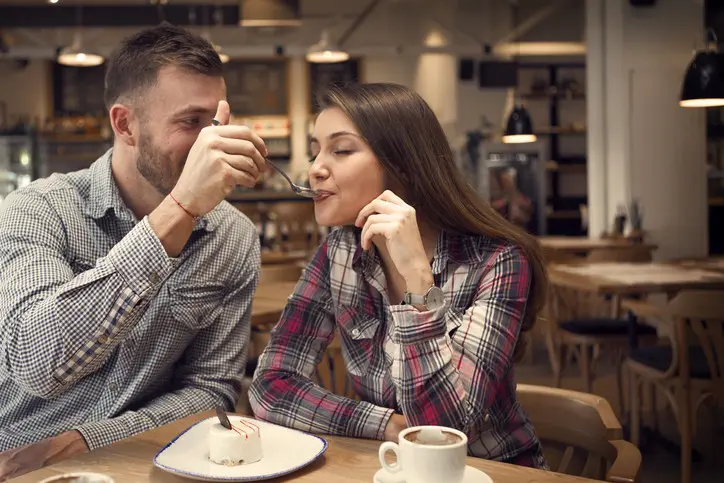
Photo credit: Brooke Cagle on Unsplash on Unsplash

I relate so much to your story, it felt almost like mine.. My gf just broke up with me after a 3 month relationship and I figured out recently that she was fearful avoidant.