



We miss the warning signs. It’s an unfortunate trend these days. Many people who wanted more from their partners have unknowingly fallen into one. Unless you’re not worried about wasting your time, you’re better off being single.
To briefly summarize, a “situationship” is an uncommitted relationship.
It’s casual to one person, but serious to the other. Or both people consider it casual. In short, a “situationship” lacks clear boundaries, expectations, or progress.
Or there may be unrequited love, ambiguity, and uncertainty.
The SIMPLE reason we let them happen
When we go back to “Why don’t we realize what they are until it’s too late?”, there’s a simple explanation.
Lack of boundaries.
But the lack of boundaries is on YOU. Not the other person. This isn’t about controlling what your partner does or doesn’t do. It’s about what you are okay with and tolerate from someone else.
When I realized that I was in a “situationship”, it wasn’t the other person’s fault. It was mine. I let it happen, but the deeper question is why did I let it happen?
Before I give away the secret, we’ll dive into a few consequences of “situationships”.
The consequences of imbalanced “relationships”
This can vary. Love has trouble developing, or love becomes an unbalanced, one-way affair. There’s wasted time, energy, and money involved, or neither person truly feels fulfilled.
As an example, I have a colleague named “Sarah” (a pseudonym).
She has a best friend, “Diana”, who used to work at our company and got Sarah the job there. Sarah’s friend quit later. I knew Diana and we were occasionally put on group projects together.
Diana is in a “situationship” with a man she’s known for quite some time.
Diana has used this man for food, sex, and companionship, but she has no desire for a committed relationship. Sarah relayed to me how disappointed she was in her friend’s behavior.
As I know it, her friend explained to this man that she had no intention of ever committing to him, nor did she desire to be his girlfriend.
Sarah told me he cried because he was in love with her.
Her behavior reminded me of a previous girlfriend.
Being discarded by this ex (who I thought cared about me) was an eye-opening experience.
I let myself get carried away by my feelings. But at the same time, my “relationship” with “Julie” (a pseudonym) appeared to be promising and I truly believed it had potential at one point, but I was painfully mistaken by the end.
However, she let me down. At one point in our journey together, she pulled away, ghosted me, and discarded the relationship for little reason. I got a few brief, vague answers, from her, but that experience opened up a new set of wounds.
I felt betrayed. How could someone who seemed to have cared about me do this?
It was a jab to the gut. For some people, an experience like this can become very personal, because they do not know how to handle their feelings or they do not know how to re-frame the narrative.
The “breadcrumber” is partly responsible
Considering her “dating resume” I never thought of her as someone who would do this, because her past suggested she stuck to monogamous, long-term relationships rather than shallow, short-term ones.
But as I’ve learned, a long-term relationship does not automatically mean it is healthy or intimate. Just because something looks good on paper does not mean it actually is.
I don’t wish to convey that dating should be a “serious business”, but we should not be “out there” (especially on dating apps) unless we’re ready to take accountability. Someone might develop feelings for us.
We must be accountable for ourselves and the feelings of others.
If we’re unknowingly (or not) leading others on when our actions don’t align with our true desires, there is blame on our part. Like the stories I mentioned, these two women (and men are just as guilty), at least Diana knowingly used — and continues to use this man for her gain.
To him, he feels like she truly loves him.
Here’s why:
If someone is “love-bombing” you with kind, lovely, and thoughtful gestures, the natural outcome is you will develop feelings for someone. It’s not rocket science. During sex and intimacy, a hormone called oxytocin is released.
To quote Healthline.com
Known as the “love” or “happy” hormone, oxytocin can strongly impact your emotions… Researchers in one 2012 study found that couples in the first stages of romantic attachment had significantly higher levels of oxytocin than their unattached counterparts.
But oxytocin is tied to more than just new love. It’s also released during sexual activity and linked to the intensity of orgasms.
Why is it not safe to assume that someone would develop a connection to someone when their partner says this:
“I think I like you…no… I definitely like you!”
Or they give you sentimental gifts or make plans with you. I don’t think it’s wrong to believe there’s genuine interest. When two people regularly discuss the terms of a relationship— like it was with Julie and me, all the evidence suggests long-term commitment.
But when it all collapses, feelings we have for someone are not something we “just get over and move on” from. No matter what someone might say, letting go, and processing emotions is a habit we must commit to.
Why we use each other
Sometimes “situationships” emerge for various reasons. Sometimes it’s for sex, “love”, companionship, food, validation, approval, or whatever else.
To others, it’s an elaborate coping strategy, which, from my view, has been the objective for most of the women I’ve dated.
…
As a side note, audit what your partner has going on in their lives when you meet them. Many women I’ve dated had recently re-entered the “dating world” after some form of hardship or emotionally tumultuous event.
Often, dating is their means of escape. The experiences with these women were short-lived because the pressure of their life events made it nearly impossible for them to continue dating.
…
Whether a person is trying to cope with a terrible breakup or other life events, a relationship is a “useful method” for rebounding from “uncomfortable” or “bad” feelings. I’m not wrong. Humans will do anything to avoid pain. It’s easier to rebound than it is to deal with emotional wounds.
Unfortunately, rebounding into something new without addressing the previous pain will only exacerbate and prolong our suffering.
And I don’t think this was too different from Julie’s circumstances. While she may not have intentionally meant to use me, this is the most plausible explanation for her lack of commitment.
From what I could tell, it seemed like she had been in a deep state of depression and limbo from the failure of her last long-term relationship.
I ignored the warning signs for too long.
One day, we were out running errands together, and she said to me that she had started to “feel more like herself recently.” When I asked her if it had anything to do with me, she replied “Yes.”
A Freudian slip from Julie disturbed me. “Oh, well you’re a single guy.” The context of the conversation is lost to me, but this was after we agreed to a “relationship”.
She re-framed what she meant to me as “a guy living by himself.” I brushed it off as just some stupid remark, but as I looked back, the signs were there.
I was concerned by another comment. It was rather cheeky and light-hearted, but there was a hint of truth.
“Oh, I can’t keep sleeping with you, I’ll catch feelings for you!”
Once I “reawakened” her, my usefulness came to an end.
For weeks after the discard, I reflected on her words, “I think we’re already in a relationship” and how Julie casually dumped me. This is not how mature adults end relationships.
If a relationship ended in a unilateral, one-way discard, it was never a real relationship.
Why we allow Situationships to happen
Like many of us who end up in “situationships”, I missed the warning signs for a simple reason. I did not care about myself.
When I asked Julie to be my girlfriend, she responded, “I’m terrified of a relationship… I don’t want to build a life with anyone right now.”
I glossed over this glaringly obvious red flag for one reason. I only saw the good in her. I wanted to, but often ignored the disturbing truth about this person and her emotional baggage because I feared abandonment or being single.
We’ll “cut off our hands to avoid the pain of losing an entire arm.”
Those who have an empathic personality may think they can change someone. We want to take care of someone and show them how “good” we are in the hopes of being accepted.
We create fantasies.
Instead of seeing them for who they are at that moment, we believe, “One day we’ll be happily ever after.”
Despite the warning signs, her toxic behavior, and the several failed relationships for someone in their 30s, I thought, “This time she’ll be different. I’m not like the other men she’s dated.”
But as I reflect, it didn’t matter. If someone hasn’t healed, is unwilling or incapable of a relationship, they will never fully invest in us. They’ll lead us along and we’ll begrudgingly accept a “situationship” for breadcrumbs.
Why do we create these fantasies? I cannot say for sure, but perhaps part of us hopes to find consolation in the familiar. We seek out partners to break the cycle. That cycle has been going on since our childhood.
But it will never work. It cannot. Another person is not responsible for us breaking the cycle and letting go of whatever haunts us.
For example, I have always wanted my parents (specifically my mother) to be “more” for me. On the rare occasion, when I call her, part of me hopes:
“Maybe today’s the day she’ll finally understand how I feel and she’ll actually listen to what I have to say instead of deflecting the conversation to something else.”
That day has yet to come. It will never happen.
When I was a kid, my father had visitation rights on the weekends, so my mother wasn’t around. He stayed up late at night doing drugs or whatever shady shit he was doing while we slept.
Since he was up late at night, he mostly slept during the day. My brother and I were left to ourselves when he wasn’t available.
I waited for him to wake up. I needed him. I wanted him to participate in my life and to be there for us. I hoped to spend time with him on the weekends, but he let me down.
When I did get attention from him or the other adults in my life, it felt like I had finally been “chosen”. When we are subjected to this kind of conditional love and acceptance as children, we’ll continue to seek the same familiar patterns in adulthood.
This time it’s just with a partner or a friend. Even if the person is emotionally distant or physically unavailable, we’ll chase after breadcrumbs because that’s all we think we’re worth.
While Julie definitely stood out to me compared to the other women I dated, part of me believed “This is it, this is the person and she’s my only chance. I better take this opportunity before it passes by.”
I let it happen. This is why we let our boundaries get trampled on.
…
Remember,
It’s time to realize that no one is worth sacrificing our wants, needs, and boundaries. True, loving relationships involve reciprocity, commitment, open communication, and authenticity.
If a relationship ends, it’ll only end when both parties have exhausted their efforts to re-establish a thriving, loving relationship. “Situationships” and casual “relationships” do not support reciprocal love and commitment to develop, and they will always end in a discard.
…
Are you interested in more advice like this?
Subscribe to my Substack and unlock weekly exclusive insights that inspire, challenge, and transform.
Let’s grow together. Sign up now!
…
If you liked this article, follow me here on Medium.
I post new articles 2 to 3 times per week.
—
This post was previously published on medium.com.
***
From The Good Men Project on Medium
 |
 |
 |
 |
***

Join The Good Men Project as a Premium Member today.
All Premium Members get to view The Good Men Project with NO ADS.
A $50 annual membership gives you an all access pass. You can be a part of every call, group, class and community.
A $25 annual membership gives you access to one class, one Social Interest group and our online communities.
A $12 annual membership gives you access to our Friday calls with the publisher, our online community.
Register New Account
Need more info? A complete list of benefits is here.
—–
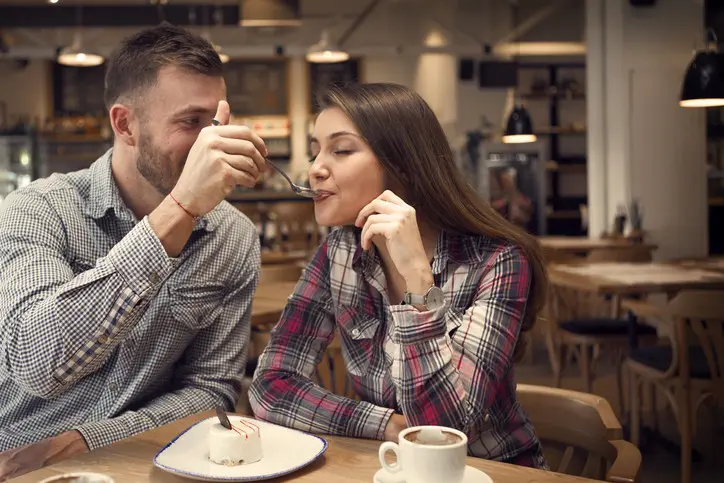
Photo credit: Image created by AI tool Freepik
