


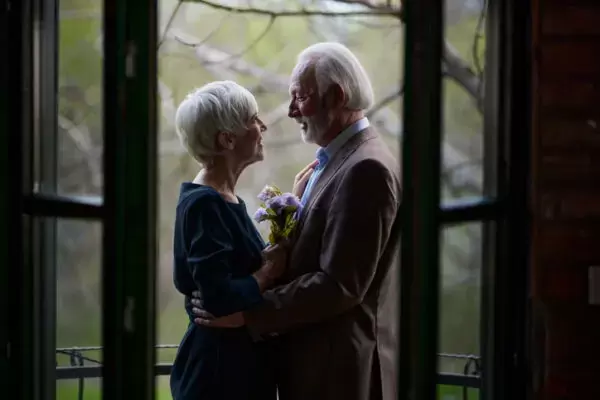
James W. Gaynor interviews Rabbi Dr. Jo David, (aka Regency Romance writer Nola Saint James) about an unusual Valentine’s Day gift.

Rabbi Jo: The meaning of Valentine’s Day and the way it is expressed within a relationship usually changes over time.
James: Does that mean that the kind of gift you give to a lover in the early years of a relationship may not be desired or appreciated as a couple spends more time together?
Rabbi Jo: Exactly. For example, in the first year of marriage, two dozen long-stemmed roses may make the recipient feel cherished. In year ten of the marriage, that same person’s response to receiving the same gift might be, “How could you spend so much of our money on roses that will die in a few days when we need to pay….?” Not exactly the response the giver was expecting. My suggested radical Valentine’s Day gift is what I believe is the most loving gift that one partner can give to another. Much better than roses.
James: Better than roses? Tell me more.
Rabbi Jo: There are many commercials about couples doing financial planning so that they can achieve their dreams. Maybe they want to buy real estate or travel to exciting places. These all require setting aside a considerable amount of money.
None of these ads address the issue of planning for end-of-life needs. Whether or not to buy a house or go on a vacation is choice. Dying is not. Everyone is going to die eventually. Where will the money come from to buy a funeral plot or pay for a cremation? How will the funeral will be paid for? How will unpaid debts be managed? If there is an estate, who will make sure it is properly administered?
James: There are companies that sell burial insurance. Wouldn’t that be sufficient to cover all those expenses?
Rabbi Jo: If you are young, you can buy a fairly substantial whole life insurance policy which will cover those expenses. You will need to pay the premium until you die. Some people can do that. For many people, for a variety of reasons, this is not an option. Insurance policies aimed at senior citizens are expensive and do not provide enough money for all the various things involved in a funeral.
James: What do you suggest?
Rabbi Jo: If you are in a committed relationship, depending on your financial situation, give your partner the gift of a consultation with an estates and trust lawyer, an elder care lawyer or a member of the clergy who consults on end-of life planning. You will, of course, do this together!
James: At what point in a relationship should a couple do this?
Rabbi Jo: The best time to start this discussion is during a pre-nuptial agreement planning session. A “pre-nup” usually deals with property and agreements about how to handle the possibility of a divorce. A couple is about to pledge themselves to a life-long commitment, should also be discussing end-of-life issues.
From a practical standpoint, it’s extremely difficult to get couples who are engaged to even think about negotiating a pre-nup unless there is a great deal of property involved. Therefore, if there is no pre-nup, I would suggest that a couple plan an initial consultation about end-of-life issues following the Valentine’s Day after their first wedding anniversary.
James: Can’t a couple just work all this out by themselves?
Rabbi Jo: Most people dislike talking about their inevitable demise and will find reasons to delay or completely avoid such a conversation. I say this with absolutely no judgement. This is just so overwhelming for many people that they just can’t do it. Trying to tackle this without someone to guide and mediate usually ends in no positive actions being taken.
James: How does a couple decide whom to consult?
Rabbi Jo: If a couple has a lawyer, I’d start there. If you like your lawyer, it can be helpful to begin with someone you know. If your lawyer doesn’t deal with end-of-life planning, ask for a referral.
The drafting of paperwork relating to end-of-life issues, a will, advance health directives (your wishes for your healthcare if you can’t speak for yourself,) and the appointing of health care proxies for each person is something that most general practice lawyers can handle. If you have considerable financial assets, it might be best to begin with a lawyer who deals with trusts and estates. Seniors should consult an eldercare lawyer even if they have a “regular” lawyer. Eldercare lawyers will be up-to- date on changes in the law in the state in which they practice.
James: You mentioned consulting a clergy person. Why? And if you don’t belong to a house of worship, where would you find someone?
Rabbi Jo: When it comes to the practical side of end-of-life issues, no one knows more about this than a clergy person who has experience doing funerals:
- What happens when a loved one dies?
- How do you figure out what you want to happen to your body after you die?
- If you want to be buried, how do you find a cemetery?
- How do you buy a burial plot?
- If you want to be cremated, what happens to the ashes?
- What will all this cost?
James: How do you find the right clergy person?
Rabbi Jo: If you belong to a house of worship, speak to your clergy person. If you are not religiously affiliated, talk to friends and family about their relationships with members of the clergy. You can also ask your general practice lawyer, trusts and estates lawyer or eldercare lawyer for a referral. As a last resort, make an appointment with the clergy person of a local house of worship. If they don’t do this sort of work, they will be able to give you a referral to someone who does.
James: This sounds like an expensive undertaking.
Rabbi Jo: Most lawyers and clergy who work as consultants in this field charge an hourly fee. This fee varies depending on local norms and the experience of the provider. Someone starting out may charge less than someone who is well-known in the community.
James: Getting back to Valentine’s Day — you’re suggesting that a partner give another partner an initial meeting with an end-of-life advisor? How does this show love?
Rabbi Jo: Loving someone means supporting them in areas where you are more comfortable than they are. In a good relationship, this is a shared responsibility. With most couples, one of the individuals is somewhat more able to deal with end-of-life issues than the other. That person has the responsibility to get the end-of-life discussion going and supporting the other partner until they both can deal with this together.
James: What I’m hearing is that for someone in a committed long-term relationship, arranging an initial end-of-life discussion with a lawyer or clergy person is a perfect Valentine’s Day gift.
Rabbi Jo: Absolutely! It’s the ultimate expression of love. Presenting the idea over a romantic dinner would be a great idea.
#

—
iStock image
