


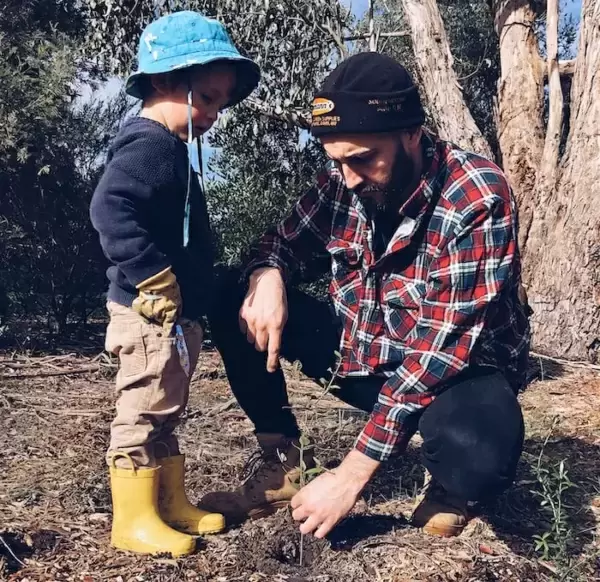
Little boys are meant to want to be like their fathers. Little boys are meant to grow into men who still want to be like their fathers. Well, perhaps until now.
…
The Social Sciences are pretty united in the idea that our earliest days of socialization shape us as people. Many of us become critically aware of how our upbringing has influenced our paths; how they’ve helped or hindered us in terms of achieving goals.
We become aware of how the people in key roles in our lives dictate how we view those roles. How it might either persuade or dissuade us from undertaking those roles ourselves. We might opt out of teaching roles after poor experiences with our own educators. Conversely, it might prompt us to take on the role with a better approach.
That’s becoming increasingly common as we think about the ways we are socialized within our gender roles. “Toxic masculinity” being a key term to describe the specific way cis men are conditioned to perform their male identity.
We now understand how even the good guys in previous generations had views that are aligned with archaic values which ultimately perpetuate inequality. This includes our fathers.
“I know men with the type of father who wanted to be different but didn’t know how”
Many of us have fathers who, for the most part, were admirable guys. They did their best by us, even if their best efforts presented more challenges for us than intended. Many of us have fathers who provided examples of the role of parent, partner and human that we want to emulate. I’m among those people.
Alas, some of us have fathers who had very little we want to mirror in our own relationships. It might not have been that they were violent or predatory in other ways. They could have just lacked the ability to develop the type of attachment their loved ones crave from them. That typically manifests somewhere between apathy and callousness, inevitably infecting everyone around them. It’s cruel.
I know men with fathers like this. I know men with the overtly abusive type of father. The father who means to abuse. And I know men with the type of father who wants to be different but doesn’t know how.
I know how most of these men aim to be nothing like their fathers. They spend their lives ensuring they do not. Maybe through their careers, ensuring they can provide. Maybe by being the most involved father they can possibly be because they experienced absence.
But in their efforts, they often become the man they never wanted to be.
“Me? I’m Unconventional Dad.”
That dad who thinks he’s just “hands-on” smothers his children with his expectations, shaming them when their ideals and desires do not align with his.
Just like his dad, he threatens absence when it doesn’t go his way. He reminds everyone that he is just sparing them the horrors he faced growing up without the security of a fatherly presence.
His children do all they can to please him. Even when it hurts.
The guy with the Conservative, macho father becomes the Liberal Dad. He was raised by a man who votes for abortion bans and restrictions on healthcare for those who can’t buy it. The type who believes a gun is there to protect a man’s pride.
Liberal Dad becomes the type that spontaneously sends his daughters links about Mooncups, and mansplains feminism to her and her friends. He monitors his young adult son’s personal interactions with his female peers to ensure his son isn’t being the creep. Liberal Dad doesn’t realize he’s often the creepiest one in the story.
Me? I’m Unconventional Dad. Raised by a quite traditional family, thus the whole monogamous heterosexual marriage thing had to be turned on its head. I drag my kids through the type of experimental lifestyle that I never experienced myself, probably just because I can. I’m that guy.
“We’re cool Dads. We can talk about whatever.”
As modern men, we’ve learned that the cis male’s communication skills have been stunted by our inability to allow ourselves to be vulnerable. As fathers, we try and fix this by insisting on transparency with our children. As average men, we are conditioned to challenge boundaries.
We try talking to our children to live out these ideals of the transparency we lacked with our own parents. Sadly, this often looks more like leaning on our older children (mostly daughters) to perform the same type of unequal emotional labor we expect of our romantic partners. It looks like being totally oblivious to their comfort and boundaries.
We’re cool Dads. We can talk about whatever. We get you.
Even when we try to show we respect your boundaries, it often just comes off as shaming, like:
“I understand if you don’t want to talk about this thing I just thrust on you, Princess, you just tell me when you’re ready (I’ll be in my study composing a blog post about our mutual trust)”
Or
“Son, I’ve always been okay with the fact you’re not a masculine boy. I’ve never been ashamed of that (btw when we gonna stop using he/him for you, my followers want to know?)”
I’m not sure we do get it. Not when we’re trying so hard. We check in though. We ask “Beloved Child, did I make the right choices?” and our children are faithful in their response that they have come to see that we did make the right choices, even if they hurt at the time.
Our children are faithful, but not always honest to preserve that faith. They hope they’ll see in time. They can’t deny us our illusion of transparency. We’ve taught them that their truths are often a betrayal.
—
This post was previously published on medium.com.
***
You may also like these posts on The Good Men Project:
 White Fragility: Talking to White People About Racism White Fragility: Talking to White People About Racism |
 Escape the “Act Like a Man” Box Escape the “Act Like a Man” Box |
 The Lack of Gentle Platonic Touch in Men’s Lives is a Killer The Lack of Gentle Platonic Touch in Men’s Lives is a Killer |
 |
—
Photo credit: Precious Plastic Melbourne on Unsplash

