


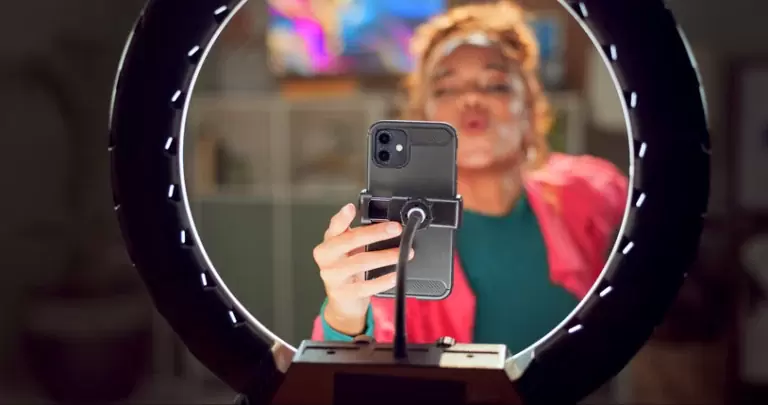
Being perceived and being alive once represented two entirely distinct concepts.
One meant you were actually there – laughing, struggling, helping, experiencing something in your body. The other meant someone else noticed.
Now, those lines are blurred.
If something isn’t seen, recorded, shared, or reacted to, it feels unfinished. Like it didn’t fully happen. Like it didn’t count.
And once you notice that feeling, it changes how everything looks.
***
The Moment Life Became Proof-Based
Think about how often you’ve seen someone stop what they’re doing in the middle of a moment. Not because they want to savor the moment, but because they feel the need to document everything.
A concert turns into something you experience through a screen.
A workout stops being about getting that pump in.
A kind gesture stops being about kindness.
Everything needs proof nowadays.
Not because people are fake (well… maybe), but because we’ve been trained to feel authentic only when we’re being witnessed.
This is the attention economy at work.
***
We Don’t Ask “Do I Want To?” Anymore
We ask:
- “Will this get views?”
- “Will people notice?”
- “Will this translate?”
That question quietly comes before intention now.
People don’t go places because they feel called – they go because it’s shareable.
They don’t help because it feels right – they help because it looks right.
The action still happens, but the reason has changed.
That shift matters more than we think.
***
When Good Deeds Become Content
This is where the discomfort really sets in.
We’ve all seen the videos:
- someone handing food to a homeless person
- giving them a haircut
- dressing them in clean clothes
The comments are full of praise. The creator gets clout. Everyone feels good.
But then what?
Most of the time, the camera turns off and the person goes right back to the street.
There’s something humiliating about that.
Looking clean and put together doesn’t mean much if you’re still sleeping on the street.
If you’re going to step into someone’s life at their most vulnerable, either change their situation or don’t turn their hardship into your content.
This isn’t about generosity as much as it is about how the moment plays on camera.
***
Living for the Reaction, Not the Experience
Here’s the part no one wants to admit:
A lot of people aren’t doing things because they genuinely want to.
They’re doing them because they want the reaction.
The applause.
The engagement.
The “you’re such a good person” comments.
And once the reaction becomes the reward, the experience itself becomes secondary.
You’re no longer living in the moment.
You’re managing how the moment will be received.
You’re there, but part of you is already thinking about how it will come across.
***
When Being Seen Replaces Being Felt
There’s a strange emptiness that comes from constantly witnessing yourself.
Instead of asking:
- “How did that feel?”
- “Did that change me?”
- “Was that meaningful?”
You ask:
- “How did that look?”
- “Did it land?”
- “Did it perform?”
This is how being perceived with being alive became interchangeable.
We stopped trusting our own experience to be enough.
***
Social Proof Has Replaced Inner Certainty
Silence used to mean peace. Now it feels like failure.
If no one reacts, people assume:
- it wasn’t good
- it wasn’t important
- they weren’t important
That’s why everything feels so loud and so hollow at the same time.
We’re surrounded by stimulation, but depth feels harder to come by these days.
***
We’re All Producing Ourselves
This is where it starts to feel like an episode of Black Mirror – not because of technology taking over, but because of what it’s doing to our behavior.
The audience isn’t always there, but it’s always assumed.
They think in clips.
They notice where the moment would start and end.
They adjust themselves mid-experience – posture, tone, timing – like they’re already editing.
Even private moments feel up in the air, as if they’re waiting to be shared later.
Life stops feeling like something you’re inside of and starts feeling like something you’re packaging in real time.
And when your life becomes content, authenticity stops feeling natural. It starts to feel risky. Messy. Just… hard to explain.
***
We’ve Confused Visibility With Meaning
This is the trade no one consciously agreed to – but almost everyone is living with.
Meaning takes time.
Visibility is instant.
Meaning grows on the backend, usually when no one is paying attention.
Visibility demands performance, timing, and an audience.
So we keep choosing visibility.
There’s no moment where it feels wrong enough to stop.
This is the kind of future Black Mirror warned us about – not with flying drones or chipped brains, but with something subtler: a world where being seen slowly replaces being changed.
***
What Happens When No One Is Watching?
This is the question that sits underneath all of it:
Who are you when nothing is being recorded?
No audience.
No proof.
No engagement.
Just you and the experience.
When a life is lived quietly, why does it sometimes feel harder to trust?
***
The Quiet Cost No One Talks About
We didn’t lose meaning overnight.
We traded it:
- for validation
- for visibility
- for being noticed
And the cost was attention.
We don’t ask, “Did this matter to me?”
We ask, “Did anyone see it?”
That’s the real dystopia.
I’m not talking about machines taking over or anything – but humans forgetting how to exist without an audience.
***
And If That Feels Unsettling…
Good.
It means there’s still a part of you that remembers the difference between being perceived and actually being here.
And that part doesn’t need to be seen to exist.
—
This post is republished on Medium.com.
—
Photo credit: iStock

