



A few years ago I taught freshmen English and composition. During down times where I wasn’t instructing (or maybe when they had tuned me out), several of my students drew cartoon or anime characters in their notebooks. A few of them were really talented, and I encouraged all of them to keep up with it.
However, one thing I noticed was that my students, who were all Black, rarely (if ever) drew black characters. This was both interesting and perplexing.
I’m inclined to surmise that there’s at least partially a technical reason for this: when drawing, you start with the blank, white page. Most of these artistic students really loved anime, and the dominant depictions in the genre are light or white skin tones. Also, when you are young, the palette that colors your imaginations is based on what you see. In Western contexts like America, most of the iconic superheroes and animated characters are generally white (or at least coded as such. For example, Clark Kent is technically an alien, but he’s coded as a white man).
But I also think it was an example of how our racialized cultural imagination makes whiteness the default; the blank canvas we project onto.
Works such as “The Dark Fantastic: Race and the Imagination from Harry Potter to the Hunger Games” from Ebony Elizabeth Thomas, or the great Toni Morrison in “Playing in the Dark: Whiteness and the Literary Imagination” talk about how whiteness has come to be the default even within our imaginary worlds. It becomes ingrained, standard, even in a creative world that is supposed to be unbounded. It becomes the singular normal from which the sublime blooms.
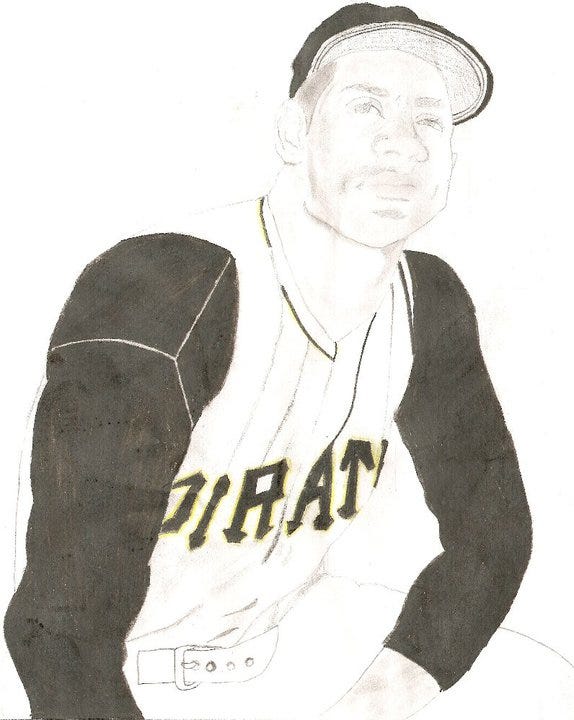
As an imaginative child, I used to draw characters and cut them out to narrate as action figures. Even when I was my freshmen’s age, I can’t say I didn’t do the same thing as they did. Aside from drawing the baseball player Roberto Clemente, I can’t recall ever drawing a Black person. I’ve succumbed to this even as an adult (was reading one of my favorite books “My Father’s Wives” by José Eduardo Agualusa, and about thirty pages in, I realized that I was imagining all the characters, most of whom were Afro-Portuguese, as white people). It made me think about why, unless it is explicitly stated, we tend to assume that the characters in books are white people.
This morning I saw these two pictures make their rounds around Twitter. One is by an artist commemorating the passing of Chadwick Boseman, the other is purportedly the new Storm icon for the game Marvel Future Fight. Neither drawings are bad in any technical sense, but fans of the characters accused the artists of whitewashing these iconic brown-skinned characters.
When I scrolled through the comments defending the drawing on the left, many people were saying that critiques were ignorant of lighting techniques in art. The rationale seemed odd, as I don’t quite understand how anyone (led alone Black people) would not have a basic sense of lighting—a concept that didn’t seem relevant anyway. For the one of the right, folks brought up pictures of how Storm is depicted across comics and various cartoons, though ironically, using them as counter-examples seems to prove the point about whitewashing.
I can’t say definitively, but I feel like what undergirds part of these defenses is a kind of assertion that that centering blackness isn’t a legitimate concern. A kind of “I have the right to not imagine blackness.” But even trying to strip this issue away from pop culture war discourse and give the artists in question the minimum artistic subjectivity, neither drawings reflect how these iconic Black people (one of which is a real person) actually look—which in art, especially in a commemoration, is typically a good thing; a thing that conveys technical ability.
It may not be all that deep to some, but I think it is a microcosm of how there are so many honestly talented artists and cartoonists who essentially never draw Black people. It makes me wonder where is Blackness in our imaginations.
—
Previously Published on Medium
—

