


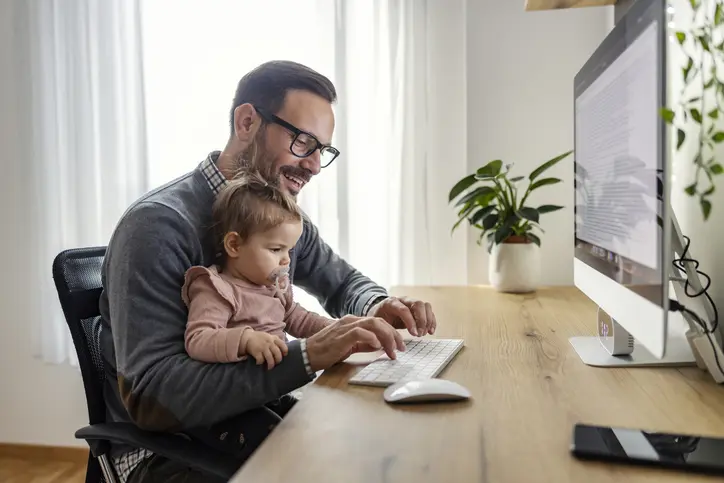
Parenting models continue to evolve, and men are driving many of the changes. Yet our attitudes about male and female parenting roles feel more rooted in the past.
As a non-parent, I won’t pretend to have firsthand expertise on the subject. The closest I came to parenting was babysitting in my younger years, when more than once I was lured outside and locked out of the house by one particular child. My frantic gestures to be let back inside in front of several of the home’s larger windows were met with laughter. For what often felt like long periods of time.
Yet I have witnessed examples of men reshaping their parental roles. My younger male friends take advantage of paternity leave if it is available to them. Most of them have been present in the hospital rooms during the delivery of their children.
A 2023 Pew Research Center study found that stay-at-home fathers who said they were there primarily to care of the children rose from 4% in 1989 to 23% in 2021. This is still a minority representation for opposing-sex marriages, and there are economic factors that influence it, but it is nearly a 600% increase in less than 40 years.
A nearly simultaneous Pew report from 2023 showed that men’s roles as breadwinners of families have decreased. In the 50 years from 1972 to 2022, men have gone from serving as the primary breadwinner in 85% of opposing-sex marriages to being the primary breadwinner in 55% of those marriages, a nearly one-third decline.
The evidence that men spend more time caring for their children than previous generations or are less likely to be their family’s sole or primary breadwinner, however, has not radically shifted how we view men’s roles. Pew found just 7% of those surveyed said society values men’s contributions at home more than those they make at work. Only 3% said they thought men would want to be the lesser earner in opposing-sex marriages. Just 2% said children were better off when the father focuses more on childcare at home and the mother focuses more on work.
Most people in the surveys favored men occupying more traditional roles as the primary family providers who leave the home for their careers. This should not be a surprise. We witness every day how the traditional traits of masculinity — even the more destructive ones — are championed by media, politicians and cultural influencers. Those who adhere to this more traditional interpretation view masculinity as fixed, not fluid. There are no alternatives to it, just forgeries.
A few years ago my friend and his disabled wife made the decision to divorce. He was awarded custody of their two young children. Before this time, he and I would attend concerts and record store events, as we shared similar tastes in music. I knew these times were over going forward.
When he finally resurfaced in public a couple of years later, I had the chance to ask in more detail how his parenting responsibilities had been going. He said he worked and took care of the kids, nothing else. Then he said something I didn’t fully understand but stuck with me, which was that he couldn’t measure his parenting efficacy because he would never know what his ex-wife might have contributed if she had been capable of spending more time with the children.
In a free society, men and women must be able to define their roles how they see fit. This does not mean men and women are interchangeable as persons or as parents.
Perhaps in expanding their roles as nurturing caregivers to children, men will need to focus less on creating another stereotypical role for themselves; maybe they will discover it is a more nuanced transformation that requires several roles.
The Pew report found most people (77%) believe that when fathers and mothers focus equally on work and raising kids at home, the children are better off. The multiplicity of parent roles and models now is worth celebrating. However, it would be absurd to suggest that the children are not what matter most in parenting.
As men experiment with the parenting roles that best fit them, hopefully they will allow what is best for the children to be their guide. The acts of parenting can inform a parent’s role, whatever it may happen to be.
—
This post was previously published on Unfinished Men.
***
From The Good Men Project on Medium
 |
 |
 |
 |

If you believe in the work we are doing here at The Good Men Project, please join us as a Premium Member today.
All Premium Members get to view The Good Men Project with NO ADS.
Need more info? A complete list of benefits is here.
Photo credit: iStock

