


—
Thermal sensors are a crucial component in modern technology, offering precise temperature measurements and enabling countless applications across industries. These sensors detect temperature changes and convert them into readable signals, which can be used for monitoring, control, and safety purposes. Thermal sensors play a vital role in ensuring efficiency and accuracy from industrial processes to healthcare devices.
A thermal sensor works by detecting heat energy or temperature changes and converting them into electrical signals. This capability makes them indispensable in fields such as automation, environmental monitoring, and consumer electronics.
For instance, in HVAC systems, thermal sensors ensure optimal performance by regulating temperature. Similarly, they are integral to smartphones, where they monitor internal heat to prevent overheating and improve device longevity.
The Principles behind Thermal Sensors
Thermal sensors operate based on the principle that materials exhibit changes in electrical properties when exposed to varying temperatures. More importantly, these changes are captured and interpreted to provide temperature readings. Common types of thermal sensors include thermocouples, resistance temperature detectors (RTDs), thermistors, and infrared sensors, each suited for specific applications.
1. Thermocouples
These sensors consist of two dissimilar metals joined at one end. When exposed to temperature changes, a voltage is generated at the junction, proportional to the temperature difference. Thermocouples are widely used in industrial settings due to their durability and ability to measure a wide range of temperatures.
2. Resistance Temperature Detectors (RTDs)
RTDs rely on the principle that a material’s resistance increases with temperature. Made from pure metals like platinum, RTDs are known for their accuracy and stability, making them ideal for laboratory and precision applications.
3. Thermistors
These sensors use ceramic or polymer materials that exhibit significant resistance changes with temperature. Thermistors are highly sensitive and often used in medical devices, such as digital thermometers.
4. Infrared Sensors
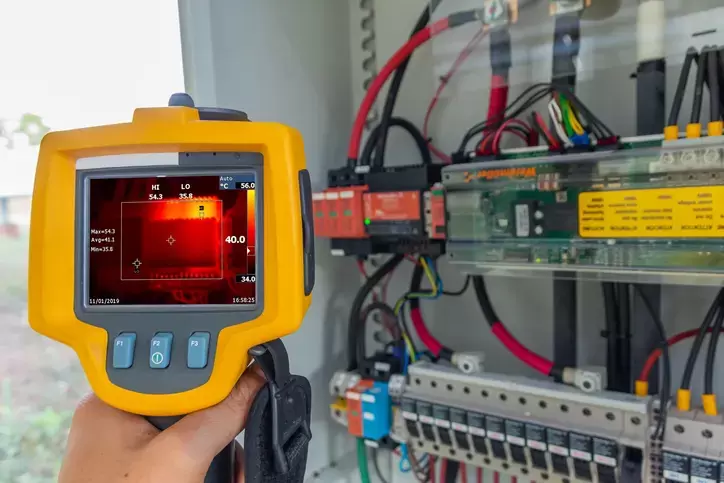
Infrared thermal sensors detect heat radiation emitted by objects without physical contact. They are commonly used in non-invasive temperature measurement devices, such as thermal cameras and remote thermometers.
Key Components of a Thermal Sensor
A typical thermal sensor comprises three main components:
- Sensing Element: The part that detects temperature changes. This could be a thermocouple junction, RTD wire, or infrared-sensitive material.
- Signal Conditioning Circuitry: Converts the raw signal from the sensing element into a usable format. This involves amplification, filtering, and digitization.
- Output Interface: Provides the temperature reading, often in the form of an analog signal, digital display, or data transmitted to a control system.
Applications of Thermal Sensors
Thermal sensors are versatile and find applications in numerous industries:
- Healthcare: From monitoring body temperature to detecting fever, thermal sensors are vital in medical devices such as thermometers and imaging systems.
- Industrial Automation: They ensure safe and efficient operation by monitoring machinery temperature and preventing overheating.
- Automotive: In vehicles, thermal sensors regulate engine temperature, air conditioning, and battery performance.
- Environmental Monitoring: These sensors help track climate conditions and are used in weather stations and green energy systems.
Advances in Thermal Sensor Technology
Recent advancements have significantly enhanced the capabilities of thermal sensors. Innovations include miniaturized designs for wearable devices, increased sensitivity for better accuracy, and wireless connectivity for integration into the Internet of Things (IoT). These improvements have broadened the scope of applications, making thermal sensors more accessible and efficient.
Conclusion
Understanding how thermal sensors work reveals their indispensable role in modern technology. After converting temperature changes into actionable data, they support a wide range of applications, from ensuring safety in industrial settings to enhancing user experience in consumer devices.
As technology continues to evolve, thermal sensors will undoubtedly remain a cornerstone of innovation, driving efficiency and precision in countless domains. Learn more about the versatility and applications of thermal sensors today.
—

