


—
By the time most of us finish a typical day, we’ve spent hours looking at screens.
We answer emails. Join video calls. Scroll through social media. Read articles. Watch videos. Manage calendars. Pay bills. Order groceries. Even many of our hobbies now happen through devices.
In some ways, modern life has become increasingly disconnected from the physical world.
We consume more than we create.
That isn’t necessarily a problem. Technology has made life more convenient, efficient, and connected in countless ways. But as our lives become more digital, many people are discovering something unexpected: they miss making things.
Not buying things.
Making them.
Whether it’s woodworking, gardening, sewing, repairing bicycles, building furniture, creating art, or designing products, people are increasingly searching for opportunities to engage with the physical world again.
And there may be good reasons why.
The Satisfaction of Creating Something Real
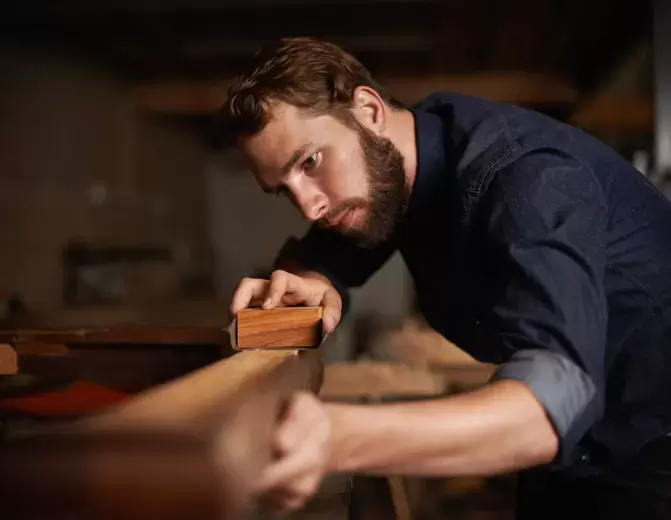
There is a unique kind of satisfaction that comes from making something with your own hands.
It doesn’t have to be perfect.
In fact, part of the appeal is that it often isn’t.
A handmade table may have imperfections. A knitted blanket may contain small mistakes. A garden may produce uneven results. Yet these imperfections often make the experience more meaningful rather than less.
When we create something tangible, we can see evidence of our effort.
The result exists outside of a screen.
In a world where so much work involves digital files, virtual meetings, and intangible outcomes, that feeling can be surprisingly powerful.
Why So Many People Feel Disconnected
Modern work has changed dramatically over the last few decades.
Many careers now revolve around information rather than physical production. We spend our days managing systems, processing data, communicating with colleagues, or solving abstract problems.
These jobs are valuable and important.
But they often lack visible results.
A teacher may influence hundreds of students without immediately seeing the impact. A manager may spend months coordinating projects. An analyst may work with data that never becomes something tangible.
This disconnect isn’t necessarily harmful, but it can leave people searching for other outlets where effort and outcomes are easier to see.
Making things provides that connection.
You build something.
You hold it.
You see the result.
Children Need Opportunities to Build, Too
This desire is not limited to adults.
Many educators and parents have expressed concern about how little time children spend creating physical objects compared to previous generations.
Kids are incredibly capable builders, inventors, and problem-solvers when given the opportunity.
Yet many of their activities increasingly happen through screens.
Technology certainly has educational benefits. Digital literacy is essential. Coding, design software, and online learning all provide valuable opportunities.
At the same time, children also benefit from experiences that involve experimenting, constructing, failing, adjusting, and trying again.
Those lessons are difficult to learn solely through observation.
They often require participation.
The Rise of the Maker Movement
One reason maker spaces, community workshops, and DIY communities have grown in popularity is that they provide opportunities for people to create rather than simply consume.
People from very different backgrounds come together to learn practical skills, share knowledge, and build projects.
Some create products for personal use.
Others start businesses.
Many simply enjoy the process.
What makes these communities particularly interesting is that they combine traditional craftsmanship with modern technology.
Someone might use woodworking tools alongside computer-aided design software. Another person might combine electronics with handcrafted materials.
The goal isn’t to reject technology.
It’s to use technology as a tool for creation rather than passive consumption.
Technology Can Support Creativity
There is a tendency to frame technology and hands-on creation as opposites.
In reality, they often complement each other.
Modern creators have access to tools that previous generations could only imagine. Digital design software allows people to develop ideas quickly. Online communities make it easier to learn new skills. Manufacturing technologies help transform concepts into physical objects.
For example, entrepreneurs, educators, hobbyists, and product designers increasingly use an online FDM printing service to create prototypes, test ideas, and develop custom projects without needing expensive industrial equipment.
What once required a large manufacturing facility can now be accomplished by individuals with a creative idea and a willingness to learn.
The barrier between imagination and execution has become much smaller.
Making Things Builds Confidence
There is another benefit that often goes overlooked.
Creating something teaches resilience.
Very few projects work the first time perfectly.
Things break. Measurements are wrong. Designs fail. Materials behave differently than expected.
The process requires patience.
More importantly, it teaches people that mistakes are not necessarily failures.
They are information.
This mindset can be incredibly valuable beyond hobbies or projects. Learning how to troubleshoot problems, adapt to challenges, and improve through iteration helps people develop confidence in their ability to navigate uncertainty.
Those skills matter in work, relationships, parenting, and countless other areas of life.
Community Happens Through Shared Creation
One of the most interesting aspects of making things is how often it brings people together.
People share advice. Teach skills. Offer feedback. Collaborate on projects.
In an era where loneliness and social isolation are increasingly discussed, these forms of community matter.
Many friendships begin through shared interests.
Building something together creates opportunities for conversation that often feel more natural than traditional networking or social events.
The project becomes the focus.
Relationships grow around it.
The Value of Being a Beginner
Adults often avoid activities where they are inexperienced.
We’re comfortable being competent.
Less comfortable being learners.
Making things forces us back into the role of beginner.
At first, the results may be disappointing.
But there is something healthy about learning a skill without expecting immediate success. It reminds us that growth is often messy. Improvement takes time. Expertise is earned rather than assumed.
In many ways, that lesson may be more valuable than whatever eventually gets built.
We Need More Builders
Not everyone needs to become a woodworker, engineer, artist, or entrepreneur.
That’s not the point.
The point is that creating things changes how we engage with the world.
It shifts us from passive observers to active participants.
Whether we’re building a piece of furniture, growing vegetables, designing a product, or teaching a child how to use tools safely, we develop a stronger connection to the effort behind the things we use every day.
In a culture increasingly dominated by consumption, that perspective matters.
Conclusion
Technology will continue shaping our lives in remarkable ways.
There is no going backward.
But perhaps the challenge isn’t choosing between digital and physical experiences. Perhaps it’s finding ways to balance both.
Making things gives us something many modern experiences do not: a direct connection between effort and outcome.
It reminds us that creativity is not limited to artists, engineers, or inventors. It belongs to anyone willing to try, fail, learn, and build.
And in a world that increasingly happens on screens, there may be something profoundly human about that.
—

