If you’ve spent even a weekend scrolling through Nepal trekking forums, you already know the problem. There are dozens of routes, hundreds of blog posts, and everyone seems to have a “best trek in Nepal” opinion that contradicts the last one they read. Some people swear by high-altitude glacier views, others want quiet village trails where nobody’s selfie-sticking in front of a monastery, and plenty of travelers simply don’t have three weeks to spare. So how do you actually pick?
The truth is, there isn’t one “best” trek — there are treks that fit different people, different schedules, and different reasons for coming to Nepal in the first place. The Everest Base Camp Trek, the Short Annapurna Base Camp Trek, and the Tamang Heritage Trek each open a different door into the Himalaya. One is about legendary altitude and bragging rights. Another is about squeezing incredible scenery into a shorter holiday. The third is about slowing down and actually talking to the people who live in these mountains. Escape Himalaya has guided travelers through all three of these routes over the years, and each one leaves a completely different impression on the people who walk it.
In this guide, we’ll break down what each trek actually feels like on the ground, who tends to enjoy it most, when to go, and how to trek responsibly no matter which trail you choose.
Why These Three Treks Represent Three Different Sides of Nepal
Nepal isn’t one experience — it’s several, depending on which valley you wander into. The Everest Base Camp Trek is the classic bucket-list adventure, the one that shows up in documentaries and Instagram feeds, built around raw altitude and the sheer scale of the Khumbu region. It’s demanding, it’s iconic, and it rewards you with views most people only see in photographs.
The Short Annapurna Base Camp Trek exists for a different kind of traveler — someone who wants that same “wow, I’m really in the Himalayas” feeling but doesn’t have two or three weeks of annual leave to burn. It’s shorter, gentler on the joints, and still delivers proper mountain drama.
Then there’s the Tamang Heritage Trek, which barely gets mentioned in the same breath as the other two, and honestly, that’s part of its charm. It trades summit-chasing for genuine cultural immersion, wandering through Tamang villages where Tibetan influence runs deep and tourism hasn’t reshaped daily life.
Everest Base Camp Trek – Walking to the World’s Most Famous Base Camp
There’s a reason the Everest Base Camp Trek became a household name even among people who’ve never trekked a day in their life. It’s not just about reaching 5,364 meters at the base of the world’s tallest mountain — it’s the whole journey getting there. The flight into Lukla alone (short, bumpy, and famous for good reason) sets the tone: you’re entering a different world.
From Lukla, the trail winds through pine forests and suspension bridges before climbing into Sherpa territory. Namche Bazaar, the unofficial capital of the Khumbu, is where most trekkers first feel the altitude and first fall in love with the region — bakeries, bookshops, and a bowl-shaped village wrapped around the mountainside. Further on, Tengboche’s monastery sits against a backdrop that genuinely stops conversation, with Ama Dablam rising like a postcard behind it.
As you push higher, past Dingboche and Lobuche, the landscape strips down to rock, ice, and wind. The Khumbu Glacier appears, crevasses and all, and eventually you’re standing at Everest Base Camp itself — usually a mix of exhaustion, disbelief, and a few tears nobody admits to later. Most people also add on Kala Patthar, arguably the better viewpoint, since Base Camp itself doesn’t actually show you Everest’s summit.
Along the way, you’ll spot Himalayan tahr, maybe a pheasant or two, and prayer flags strung across nearly every ridge. It’s physically tough — the altitude doesn’t care how fit you are — but that’s exactly why finishing it feels like such a genuine accomplishment.
Short Annapurna Base Camp Trek – The Perfect Himalayan Journey When Time Is Limited
Not everyone can disappear into the mountains for two weeks, and that’s exactly why the Short Annapurna Base Camp Trek has grown so popular in recent years. Starting close to Pokhara, it cuts travel time dramatically compared to routes further east, which means more of your holiday is spent actually walking rather than driving or flying to a trailhead.
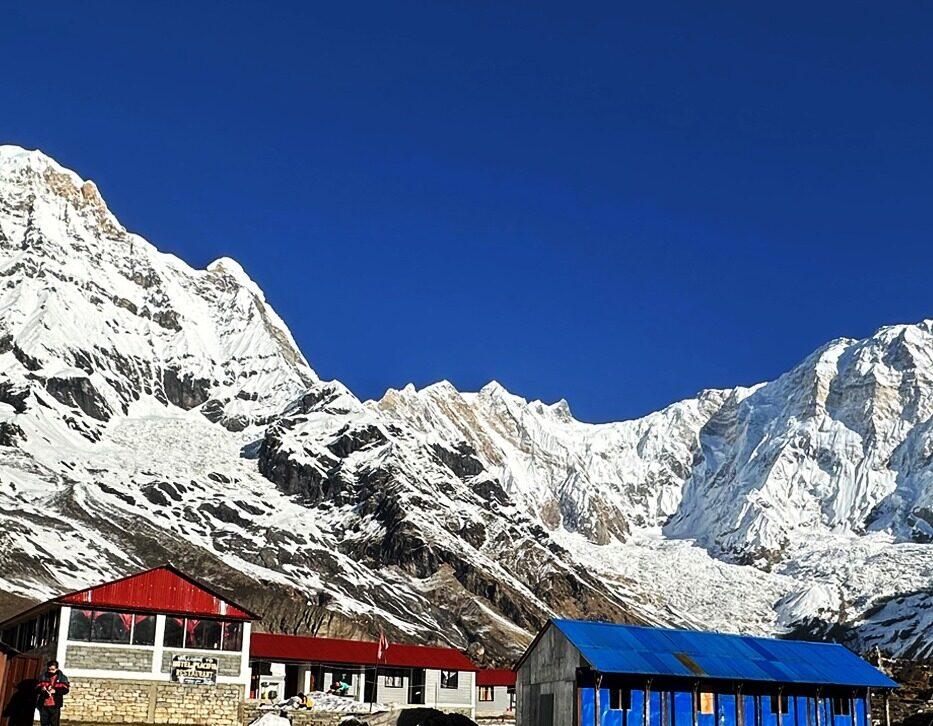
The trail itself moves through dense forest, and if you time it right during spring, entire hillsides turn pink and red with blooming rhododendrons. You’ll pass through Gurung villages where stone houses cling to terraced slopes, and locals still farm the same land their grandparents did. The trek builds gradually into the Annapurna Sanctuary, a natural amphitheater of peaks that wraps almost 360 degrees around you — Annapurna South, Hiunchuli, and Machhapuchhre (Fishtail) all crowding the skyline at once.
Tea houses along this route tend to be a bit more comfortable than what you’ll find on remoter trails, partly because of how established the region is. Difficulty-wise, it sits at a moderate level — challenging enough to feel earned, but manageable for reasonably fit beginners who’ve done some hill walking before. It’s a strong pick for travelers who want serious mountain scenery without committing three weeks of vacation time to get it.
Tamang Heritage Trek – Discover Nepal Beyond the Famous Trails
If Everest and Annapurna are Nepal’s headline acts, the Tamang Heritage Trek is the quieter, more personal story that rarely makes the front page — and that’s precisely its appeal. This trek moves through villages inhabited by the Tamang community, whose culture carries strong Tibetan roots, visible in everything from prayer wheels to architecture to the food on your plate.
Traditional stone houses, some centuries old, line the trail through villages like Gatlang and Briddim. Local hospitality here feels different too — less transactional, more like you’ve been invited into someone’s home rather than checked into a business. Ancient monasteries dot the route, many still actively used by local monks rather than kept purely for tourists.
Don’t like ads? Become a supporter and enjoy The Good Men Project ad free
The mountain views aren’t as dramatic as Everest or Annapurna, but they’re far from ordinary — Langtang Lirung and surrounding peaks provide a solid backdrop throughout. What sets this trek apart is community tourism done right: homestays, local guides, and an economy that visibly benefits the villages you’re walking through.
Experienced trekkers, especially those who’ve already ticked off Everest or Annapurna, tend to appreciate the Tamang Heritage Trek precisely because it isn’t crowded. Fewer trekkers on the trail means more genuine conversations, slower mornings, and a version of Nepal that feels lived-in rather than curated for visitors.
How to Choose the Right Trek for Your Travel Style
So which one actually fits you? Adventure seekers chasing altitude and a real physical test will gravitate toward the Everest Base Camp Trek — it’s demanding, but that’s the point. Beginners and families often do better starting with the Short Annapurna Base Camp Trek, since it delivers big mountain payoff without punishing inexperienced legs and lungs.
Photography lovers might actually want to do more than one — Everest for scale, Annapurna for that sanctuary panorama, and Tamang Heritage for the human element that a mountain photo alone can’t capture. Cultural travelers, unsurprisingly, tend to fall hard for the Tamang Heritage Trek, since it prioritizes people and tradition over pure scenery.
Experienced hikers who’ve already done the popular routes often specifically seek out Tamang Heritage for something less crowded. Travelers with limited holiday time should lean toward the Short Annapurna Base Camp Trek, while solo travelers can honestly manage any of the three, since all these regions see enough foot traffic and local infrastructure to make solo trekking comfortable and safe.
Companies like Escape Himalaya, which run all three trekking styles, are a useful example of how varied Nepal’s trekking scene actually is — proof that there’s no single “correct” way to experience these mountains.
Best Time to Experience These Himalayan Trails
Spring (March to May) is arguably the most popular season across all three treks, and for good reason — rhododendrons bloom in full color, skies tend to stay clear, and temperatures sit at a comfortable range for long walking days.
Autumn (September to November) is often considered peak season, and honestly, it’s hard to argue against it. Weather stabilizes, visibility is usually at its best all year, and you’ll likely catch a local festival or two along the way, particularly in the Tamang and Sherpa regions.
Winter (December to February) thins out the crowds considerably. Snow settles on higher passes, trails go quiet, and while temperatures drop sharply at altitude, lower sections of these treks remain doable for those prepared for the cold.
Don’t like ads? Become a supporter and enjoy The Good Men Project ad free
Monsoon (June to August) is trickier — trails can get muddy and leeches show up in lower forested sections, but landscapes turn intensely green. Some travelers actually prefer trekking Tamang Heritage or lower Annapurna routes during this window, since rain shadow effects make certain areas more forgiving than others.
What Makes Every Trek Memorable Beyond the Mountains
Ask anyone who’s completed one of these treks what they remember most, and it’s rarely just “the view.” It’s the tea house conversations that run late into the evening, the smell of garlic soup on a cold night, or a shared plate of dal bhat with strangers who become friends by day three.
It’s the daily rhythm — waking early, walking through changing light, watching sunrise hit a peak you’ve been staring at for hours. It’s small moments in village life: kids walking to school, prayer flags snapping in the wind, an old woman spinning a prayer wheel without even looking up. Guides and porters often become part of the story too, sharing bits of local history or cracking jokes that make a tough uphill section a little more bearable. These small human moments are usually what people talk about long after the mountain views have faded from memory.
Responsible Trekking Practices That Protect Nepal’s Trails
Trekking through these regions comes with a bit of responsibility too. Respect local customs and ask before photographing people or ceremonies. Carry a reusable water bottle instead of buying plastic ones at every tea house, and pack out what you pack in — leave no trace, even in remote areas where it’s tempting to think nobody will notice.
Stick to marked trails to avoid damaging fragile alpine ecosystems, and support local businesses and homestays rather than bringing everything from home. Keep a respectful distance from wildlife, and remember that not every beautiful scene needs a photo taken up close. Small habits like these go a long way toward keeping these trails intact for the next traveler.
Why Choose Escape Himalaya Trek for Nepal Trekking
Choosing Escape Himalaya Trek for your Nepal trekking adventure means placing your trust in a reputable and highly experienced company. With over 10 years of dedicated expertise in organizing treks and tours across the Himalayas, they have perfected their services to cater to all types of travelers, from beginners to seasoned adventurers. Their full registration with the Nepal government ensures compliance with national tourism standards, guaranteeing safety, quality, and ethical practices throughout your journey.
Furthermore, Escape Himalaya Trek has received consistent praise from travelers worldwide, holding a perfect record of 100% excellent reviews on TripAdvisor. This reflects their commitment to providing personalized attention, authentic cultural experiences, and meticulous planning to ensure each trip is safe, enjoyable, and unforgettable. Their professional team, local guides, and support staff are passionate about sharing Nepal’s natural beauty and rich traditions, making every aspect of your trek memorable and hassle-free. Choosing them means you are in capable hands, committed to delivering a responsible, enriching, and extraordinary Himalayan adventure.
Conclusion
At the end of the day, there’s no universal winner among these three treks — just different experiences suited to different people. The Everest Base Camp Trek delivers a legendary, physically demanding Himalayan challenge that’s earned its reputation. The Short Annapurna Base Camp Trek offers a smart balance of scenery and time, perfect for travelers without weeks to spare. The Tamang Heritage Trek, meanwhile, trades crowds for culture, offering a quieter and arguably more personal side of Nepal.
Rather than chasing whichever trek is trending, it’s worth picking based on what you actually want out of the trip — altitude, efficiency, or connection. Escape Himalaya‘s experience across all three routes reflects just how differently these journeys can shape a traveler’s time in Nepal.
Frequently Asked Questions
1. How difficult is the Everest Base Camp Trek for first-time trekkers?
It’s moderately to highly challenging, mostly due to altitude rather than technical terrain. First-timers can manage it with decent fitness, proper acclimatization days, and a realistic pace — rushing is usually what causes trouble, not the walking itself.
2. How many days are needed for a short Annapurna Base Camp Trek?
Most itineraries run around 5 to 7 days, depending on the starting point and pace. It’s designed specifically to be shorter than the classic Annapurna Base Camp route while still reaching the Sanctuary.
3. What makes the Tamang Heritage Trek different from other treks in Nepal?
It focuses on cultural immersion in Tamang communities rather than pure mountain scenery, with homestays, traditional architecture, and Tibetan-influenced village life taking center stage over dramatic peaks.
4. Which season is best for the Everest Base Camp Trek, Short Annapurna Base Camp Trek, and Tamang Heritage Trek?
Autumn and spring generally work best across all three, offering clearer skies and stable weather, though each trek has slightly different considerations depending on altitude and regional rainfall patterns.
5. Which of these three Nepal treks is best for culture, scenery, and beginner-friendly hiking?
For a mix of all three, the Short Annapurna Base Camp Trek tends to hit the sweet spot — moderate difficulty, strong mountain views, and enough village life along the way to still feel culturally rich.
—
This content is brought to you by AK Newswire
Photos provided by AK Newswire
About AK Newswire
AKNewsWire Guest Posting Specialist | Author on high-authority sites | Delivering quality content and powerful outreach.