


—
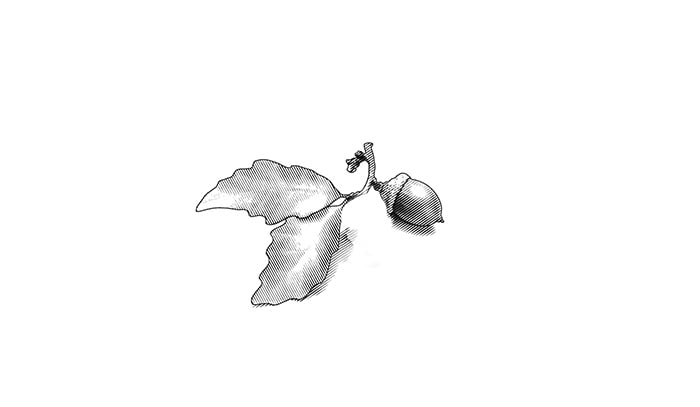
I want you to imagine an acorn.
We will come back to it soon.
Because we are talking about patriarchy. Or, perhaps, we are talking about power and privilege. Or, maybe we’re talking about happiness.
Regardless . . . This is a conversation that’s important to have.
Important because I think so much of the discourse on patriarchy is rooted in a myth so pervasive that it’s invisible. A myth so potent that it colours the conversation in a way that does not liberate men to their fullest.
I just read an article that basically stated that men are increasingly finding themselves in a lower social position as women ‘climb the ladder’. And so that men are disempowered and need to get there act together to avoid this catastrophe.
And it lifts up the thorny topic of patriarchy and male privilege, which isn’t so simple as it might seem.
I mean, clearly, the majority of major political posts are still held by white men. Every president of the United States (except one!) has been a wealthy white male. Men still, somehow, make more money per hour than women for the same work. The work of staying home to raise a child is still not economically counted. While men experience abuse (sexual and physical) it’s far less than women. Even in an activist scene that is full of women–many of the positions of power are held by men.
This balance of power is shifting as more women come into “positions of economic and political influence”. But there are so many ways, big and little, that men still hold onto the reins of power.
I think it’s good to step back and remember the bigger picture. The past thousands of years have seen women being oppressed–witch burnings, no right to vote– women seen as chattel. It’s easy to forget that, in the USA–women only won the right to vote in 1929.
But despite all this–I rarely hear feminists (even the most hardcore) saying men should now be oppressed. Just that we should stop oppressing and devaluing women. That everyone deserves to be heard. And that seeing those who’ve been ignored in positions of power–those who’ve been most impacted by oppression–is a good thing. If you want to help the people who are most affected by environmental and social injustice–why not put them in charge? Why not let them set the direction. They probably know what they need better than we ever will.
And men ARE becoming less ‘dominant’. Which is a wonderful thing. As a feminist I know said recently, I’m working for the liberation of men AND women.”
We’re coming out of a time of tremendous power imbalances. Men and women being stuck into traditional gender roles that don’t always work for them. People not feeling free to express themselves for who they are.
The coming out of these roles is not simple, easy or straightforward. There’s a lot of learning and healing for everyone involved. There’s a lot of, ‘who am I now? what’s my role? what does it mean to be a man–if not this?’
As a man, I can attest to there being a tremendous amount of confusion about “how to be a man.” The mixed messages we receive about “be more sensitive” but “don’t be so sensitive.” or “don’t be so passive” and then in the next moment, “don’t be so aggressive,” an encouragement to “make good things happen” and yet, “why are men always in charge.” None of these are mutually exclusive–but the balance isn’t easy.
♦◊♦
At a summer music festival, I find myself talking to a young woman of colour for whom feminism matters deeply. She tells me she noticed this hard edge she had where she would look at men who were clearly interested in her and think, ‘if he doesn’t have the balls to approach me then he’s too weak for me.
That struck me. Not because I think she shouldn’t think that. It’s likely an accurate assessment of the situation.
What struck me is the seemingly conflicting message progressive men receive of, “Don’t hit on women. I’m tired of being hit on. Don’t objectify us.” with, “If you don’t approach me and you want to, you’re too weak for me.”
There’s no actual contradiction here. You can approach people in a way that uplifts or in a way that has them feel terrible. There are ways that are fun and authentic and ways that feel creepy and slimy. But for some men today, it’s hard to know the difference.
♦◊♦
Another friend of mine (a man) dates a woman (a feminist) and when he goes to share his feelings with her she accuses him of being “a woman” for being so sensitive. On one hand he’s getting academic and political messages about not essentializing gender or participating in a heteronormanitive discourse, he’s getting messages from the queer community about letting people be who they are and identify how they identify–and here’s this woman accusing him of “being a woman” (in a shaming and condescending tone).
This isn’t simple.
♦◊♦
I’m in Vancouver talking to an old friend. She’s young but been an environmental activist since high school. She tells me she doesn’t want to date activist guys anymore. “They’re too passive. If we go to rent a movie, they’re all, “no, you choose”. Have a fucking opinion. And when we get back to my place–they’ll sit on the other end of the couch and if I want to make out I will have to initiate every single step of it. Ugh.”
Imagine a progressive male having learned the importance of respect and consent and not objectifying–but not having also learned the power of honesty and forthrightness.
♦◊♦
Case in point: I have a friend who’s a model. Let’s call her Jane. I’ve been shameless in expressing my attraction to her ever since I met her and she appreciates it. I know she’s seeing someone but I know she feels more relaxed around me knowing I’m not smuggling an agenda. And I feel more relaxed too. Recently, she confided in about a huge project she’d been working on that had come to an end. Why had it ended? Her business partner had been in love with her. She’d been expecting to make the project go and he’d, secretly, been hoping she’d been his girlfriend despite her seven year history with her partner. She didn’t appreciate his lack of forthrightness about what he was really wanting from the relationship with her. He used (consciously or not) the project as a way to get close to her.
We all do this with each other. We smuggle in agendas. We don’t really see people–we see them through the haze of our hopes. A friend of mine called it “hopium.” And it’s addictive. He might actually have been giving her clear signs of his interest that she couldn’t see because she wanted so badly to make this project happen. And he might not have been able to see her lack of signals because of his hopes.
As I typed those words, I was aware of the ever present part of me that wanted so badly to position myself as better than this fellow. To use that example to say, “I get it and he doesn’t.” And I want that so that I will be more attractive to women. And I want to be more attractive to women because . . . well that’s a whole rabbit hole to go into. Because I genuinely enjoy the company of women and feminine energy in my life. Because I’m scared. Because I’ve been attacked by feminists before and I’m scared of that happening again–so if I show that I “get it” enough–maybe they won’t attack me. And if I demonize another man–then I get to show that I’m an ally. I win and he loses. Self-protection.
♦◊♦
Another story: I’m at a fundraiser for the Otesha Project in Toronto. A youth run bicycle tour of parts of Canada. Amazing. One of the lead members went up to share his words. I was sitting at a table full of women. All of whom I would characterize as politically progressive or radical. And I listened to them objectify this man and talk about him like a piece of meat. It was kind of funny and I totally noticed myself start comparing myself to him, “Was I that hot? If I were up there would they be talking about me in the same way?” (I hoped so, but doubted it).
What struck me most was if it had been a table full of men and there was only one politically radical woman where I sat–she might have been enraged at the kind of objectification.
♦◊♦
The other day I was hanging out with two women I would consider incredibly empowered. They were talking about their new favourite TV show and how it kept finding a way to get the main character (a male) topless every single show. “I think they’ve finally figured out that women’s libido is just as high as men’s and if you show a topless hottie like that–we WILL watch it.”
♦◊♦
A shocking story: I ask a feminist activist what advice she would give a young progressive man who’s scared to approach girls. She ends up giving a great gem, “he should create an interesting life that he loves so he’s not devastated if she isn’t into him” (brilliant). And, on the way to this, she says, “maybe he should go to a sex worker to build up his confidence first.”
I was struck, not so much at the suggestion, though it caught me off guard, but at how I know so many feminists who consider prostitution the worst thing in the world–and yet here is one suggesting a practical use for it. It reminded me of an article I read where two feminists were debating the practice of creating feminist porn. One was for it and the other hated anything to do with the porn industry.
Some women I know are deeply anti-pornography. They find it objectifying, dehumanizing and just a terrible thing. Other women I know are huge fans of it and declare themselves to be proudly “pro porn”.
Some women love the kinds of sex they see in porn–others don’t (as is beautifully illustrated on the website Make Love Not Porn).
Who’s analysis is a man supposed to follow?
♦◊♦
Story: I’m in Cape Cod, Massacheusetts hanging out with one of the most beautiful women I know. She’s deeply steeped in tantra and the spirituality of masculine and feminine energies.
“I’ll tell you something,” she says. “Many of us women talk about in these circles for conscious change. We’re surrounded by sensitive new age men and what we really want sometimes is a man who could just bend us over the couch. Yes, we want men to be more sensitive. But sensitive to US as women. Sensitive to our needs and desires and body language. Not overly sensitive and taking everything personally. I need a man who’s solid in himself enough to notice what’s happening over here–not someone who’s obsessed with himself and what other people think of him.”
It’s clear, of course that women want to be respected and honoured. What’s also clear is that they are wanting something else. Something that progressive men, for the most part, are not able to bring them.
The point is that, for many men–these messages feel confusing. It’s not always clear how to be a man. How to relate with women. How to be a brother to other men.
We’re all unlearning the old and relearning something new together–creating it together even.
On one hand progressive men are told that, “There is no binary gender. It’s all cultural construction. Every single person is unique. You can’t fit everyone into some heteronorminative idea of who they should be based on their sex.” And so we nod and say, “Yes, that sounds wise.” But the next moment we hear these same women identifying as a gender. They preface their statements with, “as a woman I’d like to say” or “I stand by her as a sister”. What happened to no heteronorminative sense of gender?
♦◊♦
Another friend of mine who teaches women’s studies is a hardcore feminist–but not a hippie. She dresses like a 50’s movie star with an apartment to match. She’s a wonder. But because she dresses as she does the “activist” crowd was less than accepting. When she tried to join a campus activist group she was called “princess” by the male activists. Here she was expressing herself in the way that felt best for herself as a woman–but still not being accepted by men who professed to be feminist themselves.
♦◊♦
A painful story: A friend of mine starts to study the art of “pick up”. As in “how to pick up women”. He gets visciously attacked by a feminist friend of his, who says that she knows many men who are attractive to women because of their deep integrity and respect of women. And he feels devastated. He’d spent years being respectful and careful–and was never considered sexually attractive by women. He was always ‘the friend’. So, he tried to learn how to shift that the only way he knew how –and got slammed for not being as amazing as the other men she knew. Not only were her words not helpful or useful in any way–they were shaming, comparing and devastating to him. It took him years to recover.
Many women criticize the “pick up” movement (as if it were a uniform, homogenous movement any more than feminism is). But what if they had a younger male cousin who was a great guy but felt too terrified to every approach a girl? What would they say? What advice would they give?
In fact, to make things more confusing–while one half of the feminist scene is his town attacked him visciously (often privately and behind his back) others secretly admitted to him, “tell me if you’re doing another one. I know of some guys who could use this.”
♦◊♦
I remember myself going through a time of almost deifying feminists. And people of colour. And queer, woman of colour led to a distinct feeling of needing to impress them. There was nothing more I wanted than for her to pull me aside and say, ‘Tad, all of these other white men are crazy . . . but you? . . . You’re different.’
Whatever they said was infallible. Same went for their ‘allies’. If a white male positioned himself as an ‘ally’ to them then his word was gospel as well.
It took me years to notice the ways that certain activists and feminists would position their perspective on reality, gender and politics and the only one. The true one. And if you disagreed? You were a stupid, oppressive douche. You were dismissed. You were attacked and villified. You were made an example of. And i really believed it. I believed that they knew the truth and I didn’t. I believed that my own experiences, feelings and needs weren’t valid. And sometimes this was encouraged.
Now, a lot of the time, the politics were on point. Really solid and important points were being made. Good learning was happening for all involved.
And it took me years to notice the ways that I had my own self worth wrapped up in having their approval of me. It took me years to begin to see that they weren’t always in integrity. That some of them (like all of us) had deep anger issues, or lived in a worldview of punitive justice where they believed themselves to be the judge, jury and executioner of the value of other people. “He’s a good guy.” or “He’s a douche.” It took me years to see that some of them (like all of us) could be deeply manipulative.
It took me years to see that not all women agreed with each other. Or with the feminists. And that not all feminists agreed with each other. It took me years to see that not everyone in the anti-oppression scene viewed training the same way. Some trainings would have participants leave feeling uplifted, inspired and more connected to the world and their place in it–and some of them would leave having people feel shut down, ashamed and small.
It took me years to see how very, very complicated all of these conversations about gender can be.
It took me years to see that I could honour myself and honour others at the same time. That I didn’t need to leave myself– or anyone else–behind.
♦◊♦
Another story: A dear friend of mine became a part of a network of high level change makers who would meet once a year to discuss how to create more change more quickly in the world. It was a diverse group of people with a commitment to growing in diversity.
But the leader was a white man. A white, upper class, privileged male.
The group began to explore the dynamics of race, class and power in the group and the leader announced to the group he was going to step back from leadership so that more women and people of colour could step in.
But something felt off.
So my friend spoke up. She said, “I hear what you’re saying. And I’m concerned about where it’s coming from. I get that it’s the politically correct thing to say but I don’t want you to be left behind in all this.”
Within minutes the leaders’ repressed anger at the situation showed up. “Why can’t white people have a role in leadership? Where am I supposed to contribute?” He was so deeply hurting. But he’d shut that part of him down to do the right thing.
The conversation continued and a transition did indeed happen. But one that didn’t leave him feeling like he was a worthless, privileged roadblock to be removed.
♦◊♦
But to step back a bit . . .
Perhaps the most damaging myth of patriarchy is that it, ultimately, works for men.
I recall a friend of mine saying, “Well, every day is men’s day.” In the big picture (economically and politically) this is true.
But emotionally it is not.
Imagine an acorn.
It lives in a castle, on a hill.
Each day it is put onto a pillow where it is washed, cleaned and dried.
And the people who walk by admire it.
On one level this acorn is privileged. But in a far more profound way–-its growth is being held back by that privilege. In its separation from nature––it is not allowed to root itself and to grow into a oak tree and give back thousands of acorns to the world. As this acorn on the pillow all it can do is demand and consume resources and care. This is not good for the world. It’s not good for them. It’s not natural.
Being in a privileged class does not just hurt those being exploited––it hurts those in the privileged class.
Being pampered and told you are special and better than others is not medicine for the soul–-it’s poison. It leads to the acorn, eventually, being spoiled and rotting to death on its pillow, dying alone–having given nothing to the world. And this is its last thought. “I have died of old age, and given it back no youth. I have taken, without returning. I had the seeds of a thousand forests in me–and they are dying with me today.” It’s tiny acorn body dies. And is tossed into a plastic trash bag and put in a landfill.
Not that the oak tree doesn’t die.
It does. Eventually, the sap no longer runs up its body and it dies. Its trunk begins to rot until one day a strong wind cracks it–or a fire consumes it. But its last thoughts are different. As it dies it knows it is going back into the Earth. It is returning to its source of life. That, in its life it has given and given and given. And now, even in death, it gives its body back to the creatures of the woods as food.
It dies as a part of the world, not apart from it.
♦◊♦
We are made wise by the number and depth and diversity of our relationships. And to live in a system that has us living in monocultures we becoming myopic. Less wise. And I’m not just talking about the monoculture of only hanging out with other rich, white privileged males in positions of power. Not just the loss of meaningful relationships with people of colour, indigenous people and women. I’m talking about the loss of intimacy with nature, with animals, with the stars, with the elements.
The world becomes reduced to resources to consume rather than relatives to learn from.
To quote Thomas Berry, ‘the universe is not a collection of objects–it is a communion of subjects.’
Men are less mature, less deep and less real for these privileges. We don’t fight for justice and equality for women alone–we do it for ourselves, our own hearts. Unconscious hierarchy hurts us all. Believing that we are better than others hurts us.
So, this is the myth: That patriarchy ultimately benefits men.
That because men are economically and politically privileged that this system is a good thing for them. Of course, when we step back and look at the big picture–this comes into question.
We see before us a generation of men who are disconnected from their hearts and bodies. Men who were never initiated into their manhood –but feel trapped in a permanent adolescence. Men who have never learned of what a woman’s world is. Men who feel ashamed for all the things that make them a man. Men who have no real sense of brotherhood with other men. Men without direction. Men who are afraid of women. Men who are afraid of other men. Men without purpose. Men not initiated into their greater purpose of making a difference in the world. Men so obsessed with the penetration of sex that they never learn the ways they can penetrate each moment with love.
We see one of the first generation of men raised without fathers or positive male role models. As their old role of dominators and heads of the house hold fall away–they are left with no clear sense of what to replace it with.
So many mixed messages from the world saying, “this is what it means to be a man.”
If you were to sit down the average progressive male and ask them, “What are the gifts that women and the feminine bring to the world? What are the gifts that sexism, patriarchy and oppression have blocked the world from receiving?” The list would be long. Of course, there are dangers of conflating women and the feminine together directly–these lines are often not so clear. One can be in a woman’s body and deeply masculine and vice versa. But still, the list would be long. The gift of birth. The gift of their cycle. The gift of nurturing. Deep intuition and sensitivity. An amazing capacity for depth of feeling. The way that women are often the ones to carry a community–often the invisible giants on whose shoulders a community rides.
But if you were to ask the same man, “What are the gifts that the men and the masculine energy brings?” You would often see silence. And shame. Answers come but . . . not as readily. There’s a deep sense, in this culture, that men are a bad animal. A sense that “we don’t need men’s protection–we need protection from the men.”
“Look at all the wars in the world.” we are told. “The pollution. The devastation. And look who’s in charge! This would never happen if women were in charge.”
And many men have drunk this down. Swallowed it. And it comes out in small jokes about how stupid men are or how women are better. But sometimes those jokes have an edge.
Another friend of mine is attacked for his “masculine, direct style of communication” (by another male activist). And it makes me wonder-when did the term “masculine” become a bad thing?
We have come to believe that patriarchy and masculinity are the same things.
I was reading a blog post by Christine Agro, The Metaphysical Feminist. She wrote:
When I look back at the Women’s Revolution, I see a necessary fight; one in which the internal fire sparked revolution, sparked change, sparked an awakening. But I also see a continuation of fighting within the Masculine Principle, an energy in which I believe no one will ever have true equality because it is an energy that forces us to constantly choose “fight or flight”. So I propose a new equality, one that is based in the Feminine Principles. The Masculine Principle is the energy that has influenced our way of being since at least the Caveman era. It is an energy dynamic that is linear, outward focused, power-over, controlling and fight or flight based. It has influenced everything from religious doctrine to the laws of the land and in its influence has arisen a world in which we have and have-not, in which divide and conquer is the status quo. There is no room for the truths of many, there is only room for the truth of the most mighty, the most powerful . . . we should not accept law or doctrine that has been created within an energy structure that supports the few and views us as somehow less than.
And so masculinity has become synonymous with hierarchy, oppression and patriarchy.
Imagine how that might feel to the men in your life to read that.
To grow up scared of yourself. To think that the only answer is to become more feminine. That our masculinity is something to be scrubbed clean from us.
This is the point that must be challenged.
♦◊♦
Patriarchy is not authentic masculinity. It is the shadow side of it. It is the toxic mimic we have come to accept. That there are ways to be a man that don’t require being dominant over women–but in partnership with. We are re-learning how to be powerful as men–but a power with–not power over.
But when the two get conflated–and men are challenged on their privilege–bad things can happen. This is a core challenge in the anti-oppression scene. How to address men’s privilege?
I asked a friend of mine in Vancouver who did a lot of men’s work about this. He said, “You know what? I totally get you on the male privilege piece and that’s been a lot of my journey. And my experience is that the best way to address that is not to hit it directly on the head but to build community, build up men’s worth and inner strength. To build community and safety.”
When they have that they tend to be so much more open to hearing these things and absorbing them. They can actually integrate it all. They’re less defensive. I find that the best way to open them to issues of justice is to honour their lived struggles and experiences.
If we jump right into anti-oppression work that can be experienced by many men as saying that their struggles are totally invalid in the face of what women experience daily. It can seem dismissive and shaming to them like they shouldn’t ever complain. and to ask men to give up power with nothing to replace it usually puts them in a place of fear. They’re scared.
I want an activist community where there can be really deep listening and deep honesty on both sides. Sometimes men act in hurtful ways and sometimes women do too. I see my role as helping to grow into a place where the way they engage with work for change is uplifting and inspiring for everyone involved. Where they can be powerful and creative allies to women AND to other men.
A movement where no one is left behind–regardless of level of privilege. a movement where everyone has a place and belongs–a movement where everyone’s struggles are honoured instead of compared. I think that’s the foundation for a movement where genuine power imbalances can be questioned–where hard conversations can happen.
We absolutely live in a world of imbalances of privilege–and that’s often along lines of race, class and gender. And I think a strong men’s movement is a part of healing that.
This culture’s media denigrates the authentic feminine and trivializes the authentic masculine.
The old ways are unraveling and something new is being born. In all of us. Every day. I predict it will be clumsy and awkward–but beautiful.
As men’s roles are shifting–more men are getting involved in men’s work, joining men’s circles and learning how to relate with more honesty to other men and women in ways that uplift everyone.
Here’s to a future of genuine partnership between genders–and space for those who think the whole binary gender thing is bullshit. A future where people are free to be who they are. A future where everyone’s voice is valued.
You may also like these posts on The Good Men Project:
 White Fragility: Talking to White People About Racism White Fragility: Talking to White People About Racism |
 Escape the “Act Like a Man” Box Escape the “Act Like a Man” Box |
 The Lack of Gentle Platonic Touch in Men’s Lives is a Killer The Lack of Gentle Platonic Touch in Men’s Lives is a Killer |
 What We Talk About When We Talk About Men What We Talk About When We Talk About Men |
photo: iStock
—
RSVP for #StopSexism Weekly Calls
—
We are proud of our SOCIAL INTEREST GROUPS—WEEKLY PHONE CALLS to discuss and help solve some of the most difficult challenges the world has today. Calls are for Members Only (although you can join the first call for free). Not yet a member of The Good Men Project? Join now!
Join The Good Men Project Community.
The $50 Platinum Level is an ALL-ACCESS PASS—join as many groups and classes as you want for the entire year. The $25 Gold Level gives you access to any ONE Social Interest Group and ONE Class–and other benefits listed below the form. Or…for $12, join as a Bronze Member and support our mission.
Register New Account
Please note: If you are already a writer/contributor at The Good Men Project, log in here before registering. (Request new password if needed).
◊♦◊
ANNUAL PLATINUM membership ($50 per year) includes:
1. AN ALL ACCESS PASS — Join ANY and ALL of our weekly calls, Social Interest Groups, classes, workshops and private Facebook groups. We have at least one group phone call or online class every day of the week.
2. See the website with no ads when logged in!
3. PLATINUM MEMBER commenting badge and listing on our “Friends of The Good Men Project” page.
***
ANNUAL GOLD membership ($25 per year) includes all the benefits above — but only ONE Weekly Social Interest Group and ONE class.
***
ANNUAL BRONZE membership ($12 per year) is great if you are not ready to join the full conversation but want to support our mission anyway. You’ll still get a BRONZE commenting badge, a listing on our Friends page, and you can pop into any of our weekly Friday Calls with the Publisher when you have time. This is for people who believe—like we do—that this conversation about men and changing roles and goodness in the 21st century is one of the most important conversations you can have today.
♦◊♦
We have pioneered the largest worldwide conversation about what it means to be a good man in the 21st century. Your support of our work is inspiring and invaluable.
◊♦◊
“Here’s the thing about The Good Men Project. We are trying to create big, sweeping, societal changes—–overturn stereotypes, eliminate racism, sexism, homophobia, be a positive force for good for things like education reform and the environment. And we’re also giving individuals the tools they need to make individual change—-with their own relationships, with the way they parent, with their ability to be more conscious, more mindful, and more insightful. For some people, that could get overwhelming. But for those of us here at The Good Men Project, it is not overwhelming. It is simply something we do—–every day. We do it with teamwork, with compassion, with an understanding of systems and how they work, and with shared insights from a diversity of viewpoints.” —– Lisa Hickey, Publisher of The Good Men Project and CEO of Good Men Media Inc.


If you look like a Chad, then you should approach. If you don’t then you are a creep and should stay away.
Absolutely brilliant, and way ahead of the game. I think you’ve encompassed the very focus of what TGMP should be about.
Why investigate a thesis about men by talking with gobs of women?
Tad, what a great article! So timely! So needed!
For women reading this, I have come across an AMAZING resource to transform patriarchy within them. It changed my life!
“The Shadow King: The Invisible Force that Holds Women Back”, by Sidra Stone, PhD.
We need to transform the inner patriarch in us as women in order for the change to be complete. If not us, then who??
I’ve come to the realisation that the androphobia that needs challenging most is not out there, but resides in me. I talked openly about domestic violence to my family mediator a couple of weeks ago with the courage of honesty and was surprised to find that she didn’t automatically assume that I was the instigator, or perputrator or if I wasn’t the perputrator I must have done something to deserve it. I’m not saying no one ever reacts that way when they hear there was domestic violence in a heterosexual relationship, but that was the reaction I had anticipated and… Read more »
Quote : “As a feminist I know said recently, I’m working for the liberation of men AND women.” I totally agree… I think men have realized a beneficial awakening in modern society as perhaps unintended side effect of feminism… It has helped us become more independent, better at taking care of ourselves, better at expressing our needs / wants / emotions openly – which perhaps is something men have lacked throughout the ages; perhaps something the male brain may have been unnecessarily afraid of ? Through independence and liberation we have found ourselves in a new situation to which we… Read more »
The first ones to really question their gender roles were women, because of how idiotic and childish it all became. Then, women started discussing their issues from a standpoint of “We are best when we are ourselves” rather than “Are you strong enough for make the sacrifices to be a woman? Don’t be selfish, society needs it.” Men are still being told “Are you strong enough to make the sacrifices of being a man? Don’t be selfish, society needs strong men.” And with women discussing the topic as though they are the only ones in the room, men are starting… Read more »
If the woman gets the career she dreams of, the man doesn’t have to kill himself in the coal mine. More to the point those two are tied together and you really can’t say that one is the cause of the other or that we must focus on one first and foremost and eventually the other will come to pass. But that is exactly what we see from feminism. According to some of them the man is killing himself in the coal mine solely because the woman is unable to get the career she dreams of. Actually both are tied… Read more »
Exactly! As Glen Poole said in TEDx, “It shouldn’t be ‘them vs us’ or ‘us vs them’ it should be ‘us. ALL of us, vs gender equality.” Turning one perspective into the academically “correct” perspective doesn’t help anyone. Highlighting one statistic without the whole perspective throws things out of context. For instance, by telling women ALL THE TIME that they will only make 77c to a man’s dollar for the same work and same hours, you don’t help your cause with the distortion and lack of context. What you do, instead, is discourage women from entering the work force in… Read more »
Turning one perspective into the academically “correct” perspective doesn’t help anyone. Highlighting one statistic without the whole perspective throws things out of context. Funny you bring up context. At this point it seems that context only matters to people when it suits them. For instance, by telling women ALL THE TIME that they will only make 77c to a man’s dollar for the same work and same hours, you don’t help your cause with the distortion and lack of context. What you do, instead, is discourage women from entering the work force in the first place. Instead tell them how… Read more »
At a summer music festival, I find myself talking to a young woman of colour for whom feminism matters deeply. She tells me she noticed this hard edge she had where she would look at men who were clearly interested in her and think, ‘if he doesn’t have the balls to approach me then he’s too weak for me. What about herself? Doesn’t she have an agenda of her own? If she’s so feminist, why does she expect and accept to be a passive vessel for a man’s interest and approach? What about “If she’s interested in a man and… Read more »
I was wondering when someone would point this out, my thoughts exactly.
Because men can’t handle it. If a woman approaches a guy, she will never know FOR SURE if he responds to her positively because he likes her and wants to get to know her and not because she is easy p***y. Men are scared of sexually aggressive women. I have done my share of pouncing on hot guys in my day and they turned out to be very insecure. A guy who doesn’t have the balls to go after what he wants is usually (if not always) not someone who can stick around. He doesn’t trust himself. He doesn’t feel… Read more »
Or maybe he doesn’t think you are attractive? Men will at least be nice when women approach men.
I think it’s good to step back and remember the bigger picture. The past thousands of years have seen women being oppressed–witch burnings, no right to vote– women seen as chattel. It’s easy to forget that, in the USA–women only won the right to vote in 1929. Yes, most western democratic countries achieved the the right for the public to vote during the first couple of decades of the 1900’s. And it’s also easy to forget that usually, average men didn’t have the right to vote prior to this, either. It’s true that in a lot of countries, women often… Read more »
Exactly how long did it acquire you to post “The First Myth
of Patriarchy: The Acorn on the Pillow — The Good
Men Project”? It seems to have a good deal of great knowledge.
Thank you -Sam
“Men still, somehow, make more money per hour than women for the same work.”
You lost me right here. Clearly this is nothing more than a propaganda piece. Men make more money in aggregate than women, but as soon as you add the term “for the same work”, as so many people do, it becomes a lie. To further add “per hour” makes it even moreso and clearly demonstrates a bias and ideological conditioning, and this piece is far to long to be worth reading with that kind of ideological conditioning being promoted right from the start.
The parable in this story belies the author’s lack of biological understanding, from what acorns do, to what human males and females do.
If you wash an acorn every day, it’s going to sprout. It will put roots down into that pretty pillow it was riding on, and pretty soon, you’ll have an oak tree in the throne.
Put males together with females in a resource-rich environment, and you get patriarchy. It’s inevitable. Now patriarchy can be benevolent, or it can be malevolent. But however it operates, it is to a large degree inevitable.
http://en.wikipedia.org/wiki/The_Inevitability_of_Patriarchy
Now imagine instead that that acorn is one of a hundred, the other hundred were mashed into pieces, split in half, grown to be cut down for firewood or fed to animals. Then imagine someone saying we live in a system that privileges acorns.
Bingo.
If I WAS to call that oppression by privilege, it would be the fact that putting that one acorn in power makes it apathetic to the sufferings of the other acorns, particularly when the others are not seen as “fellow acorns”, but as “the competition”. And then you realize it’s not men in power that causes those problems, it’s the power that the powerful possess.
Patriacrhy itself is a myth… I am a male but I am not part of any privileged power elite. Most of the business and political leaders in western society *are* male, but they are also typically straight and married to women. These women wield power in their spheres just as their husbands do – Hilary was a powerhouse even before Bill was impeached. Women have been co-actors and co-creators of our civilization for as long as men have been. While men were out protecting and providing, women were raising children and instilling within them the values and mores that were… Read more »
“We see one of the first generation of men raised without fathers or positive male role models. As their old role of dominators and heads of the house hold fall away–they are left with no clear sense of what to replace it with.”
You say this like it’s a bad thing, this is a good thing, it means men can define it themselves!
i’m actually dealing with this problem regularly and NO it’s not a good thing because in our youth we DON’T define ourselves, without a positive male role model a young man of 15 or 16 can only look to society for a guide… usually the media… this is NOT good, the overwhelming role of men in the media are stupid, incompetent mentally 12 man children who can’t take care of themselves, or misogynistic thugs, who are only out for the conquest. Now a lot of young men by 16 or so recognize this is BS but with no other option… Read more »
“Another friend of mine (a man) dates a woman (a feminist) and when he goes to share his feelings with her she accuses him of being “a woman” for being so sensitive. ”
If she’s such a feminist, why does she consider “woman” an insult? As they say, you know misogyny exists because “the worst thing you can call a man is a woman.”
“Perhaps the most damaging myth of patriarchy is that it, ultimately, works for men.” I’m not sure this is so much the myth of patriarchy, but the myth of the myth of patriarchy. I’m beginning to recognize that my position as an academic feminist actually differentiates me a great deal from other modes of knowing, but for as long as I’ve been talking about and understanding patriarchy as a concept, I’ve understood it as something that is harmful to both males and females alike. That is why I call it a myth of a myth – because somehow at the… Read more »
“I can be cognizant of these sites of privilege so as not to perpetuate oppression for others.” Jasmine, I agree with your sentiments there very much. It seems to come down to a matter of framing (in my mind, anyway): A person does not want to be asked (or brow-beaten) to up that which they do not believe they have. Moreover, the relative value or worth of privilege can very greatly depending on one’s perspective (I think). There is something to be said for the positive over the divisive. There’s something deeply embedded in human nature (I like to believe, anyway)… Read more »
Precisely! A patriarchy does not really mean “men are the ones responsible”, but more like “those responsible are men”. For instance, you can say a patriarchy is to the benefit of men when you look at fortune 200 CEOs nearly all being men. But when you realize that most of the homeless are ALSO men, you realize men aren’t the ones advantaged. Those who are advantaged are men. Not to sound like a broken record, but it’s hard to accurately iterate the logic. It’s sort of “A square is a rectangle, but a rectangle is not necessarily a square.” Men… Read more »
By the way: “Being pampered and told you are special and better than others is not medicine for the soul–it’s poison.” There has been no point in my life in which I have been told or considered better simply for my gender. Even more so, a lot of what I grew up being taught about being a man has been based on pampering the women in our lives, making sure they are always comfortable, feel loved, and are treated as princesses. If you can’t do this, you aren’t a real man. So this definition of privilege really does not work… Read more »
Real people cry- it’s not masculine, it’s not feminine- it’s only human. I was pouring through some stuff, and thought this was a fitting example of what a 3-dimensional man can look like. “Pearl Harbor survivor remembers day of infamy By David Martin –all rights returned [Upon learning that World War II was about to end, and that he and his shipmates were going to survive] “No one yelled, screamed or anything. We just sit there and cried like babies, and I mean we bawled.” –Pearl Harbor survivor & World War II veteran, Tom Mahoney (CBS News) UNION CITY,… Read more »
The link to the video of the Mahoney piece- a bit more poignant hearing it in his own voice:
http://www.cbsnews.com/video/watch/?id=7390951n
Tad, I don’t want to turn this into an echo chamber of “Yay Tad!” or a mutual admiration society, but I must say I deeply enjoyed your thoughtful article- some of your experiences and perspectives resonated deeply with me on a very personal, political or a philosophical level; while some other parts did not. But what I thought made the article so brilliant was the tone in which you were able to cast your message. Hear me out on this- I think that in most discourses the tone often obscures, rather than accentuates the message. As I said, whether I… Read more »
Tad… you got everything wrong. Not only you, pretty much everybody who calls themselves “progressive”. You all oversimplied your worldview into one where inequality = patriarchy = privilege= hierarchy = dominance = oppression = violence and aggression = injustice = objectification = people as chattel = who knows what. In reality all these things are different. This is only useful for setting up a narrow and primitive Gnostic narrative of of history, where, like in Star Wars, a small team of the enlightened and pure-hearted fight against a huge empire of evil and ignorance, and winning only one small step… Read more »
Beautifully written! You have expressed many of my own feelings exactly. When I was younger I was a macho a-hole and objectified woman sexually and treated them accordingly. Life kicked me in the teeth a few times and by 27, I realized that I needed to change. Now at 57, I am a strong supporter of feminist rights, female empowerment and the total liberation of female sexuality from patriarchal monogamy where the woman must be be strictly monogamous while the husband has affairs, mistresses or visits prostitutes. And I am not saying that all men cheat on their wife; most… Read more »
Thank you, I needed to read that.
If I knew how to cry, I would be doing it now.
Beautiful article, Tad! What struck me the most is how spiritually attuned you are…to yourself and to others. Healing and wholeness- this is the ground on which we must build any discussion about gender, identity, patriarchy, matriarchy…everything, really. It is about connecting with people and loving whoever we find on our path, even if they don’t fit inside our categories and boxes. I think you hit it spot on. I just wanted to post an excerpt from Thomas Merton’s letter to a young activist because I think he speaks eloquently to this issue (Merton was a Trappist monk, spiritual writer,… Read more »
I’ve been waiting for the second myth of patriarchy to come out. There is more than one isn’t there?
It’s a beautiful article but it was wrong on almost every fact it mentioned. Didn’t even get the date women got the vote in the USA correct. He shows an understanding that people he trusted essentially manipulated and lied to him but he doesn’t seem able to question if that is still going on right now. He’s not skeptical. His understanding is informed by any propagandist he happened to run across. He doesn’t have the ability to stop and say, “Is that so?” I guess that’s pretty normal human behaviour but it’s something I’ve never really been able to do… Read more »
Typo: “And so that men are disempowered and need to get there act together ”
“there” should be “their”
Just telling you so that the editors can sweep in here and make that little adjustment.