


—
Patio doors have been a staple of residential design for decades, but for a long time, the innovation in this category was slow. You had a fixed panel and a sliding panel, maybe an upgrade to double-pane glass, and not much else differentiated one product from another in any meaningful way.
That has changed. A new generation of patio door systems, including the technology behind Modern Smart Slide Patio Doors, has addressed the longstanding frustrations homeowners have had with traditional sliding doors: the draft around the seal, the heaviness that develops over time, the limited security, and the thermal performance that was never quite where it needed to be in a Canadian climate.
If you are planning a patio door replacement or installing one for the first time, understanding how the technology has evolved will help you make a much more informed decision.
The Core Problem with Traditional Sliding Doors
Traditional sliding patio doors have a fundamental mechanical limitation. They slide along a track, and the sliding panel relies on pile weatherstripping, essentially a brush seal, to create a barrier against air infiltration. Over time, this seal compresses and loses effectiveness. Drafts develop. The door becomes harder to slide as the rollers wear. In winter, the gaps around the sliding panel can become a noticeable source of cold air.
The track itself accumulates debris, and in Ontario’s freeze-thaw cycles, ice and water can cause additional operational issues. For a door that is supposed to connect your living space seamlessly to the outdoors, traditional sliders often become a point of frustration long before they need to be replaced structurally.
How Smart Slide Technology Works Differently
Smart slide systems address the draft and seal problem through a different mechanical approach. Rather than simply sliding the panel laterally along a track, these systems lift the panel slightly off the track as you engage the handle, then compress it firmly against the frame when you close it. The panel actually seals against the frame under compression, similar to the way a casement window works.
This compression seal dramatically reduces air infiltration compared to a traditional pile-strip slider. The result is a door that feels tight when closed, operates smoothly because the lift mechanism reduces friction, and maintains that performance over a much longer service life.
Thermal Performance in a Canadian Context
In Ontario’s climate, a patio door’s thermal performance matters year-round. In winter, a poorly sealing door lets cold air in and heated air out. In summer, excessive solar heat gain through the glass can make adjacent spaces uncomfortable and strain cooling systems.
Modern smart slide doors address both of these with several layers of technology. The multi-chamber frame profiles minimize thermal bridging. Insulated glass units with argon or krypton gas fill and Low-E coatings manage solar heat gain and heat loss simultaneously. And the compression seal system eliminates the air infiltration that undermines all of that glass performance in conventional sliders.
For a home that is heated with natural gas or electricity, the difference between a well-sealing, well-insulated patio door and an older sliding unit can be meaningful on an annual energy basis.
Security Improvements Worth Noting
Traditional sliding patio doors have historically had security limitations. A standard single-point lock on a sliding door can be bypassed more easily than the lock on a swinging entry door. Some older sliders could even be lifted off their tracks.
Modern smart slide systems address this through multi-point locking mechanisms that engage at multiple points along the frame simultaneously when the door is closed. Combined with anti-lift hardware and toughened or laminated glass options, the security profile of a current-generation smart slide door is considerably stronger than what most homeowners have on their existing patio openings.
Design and Size Options
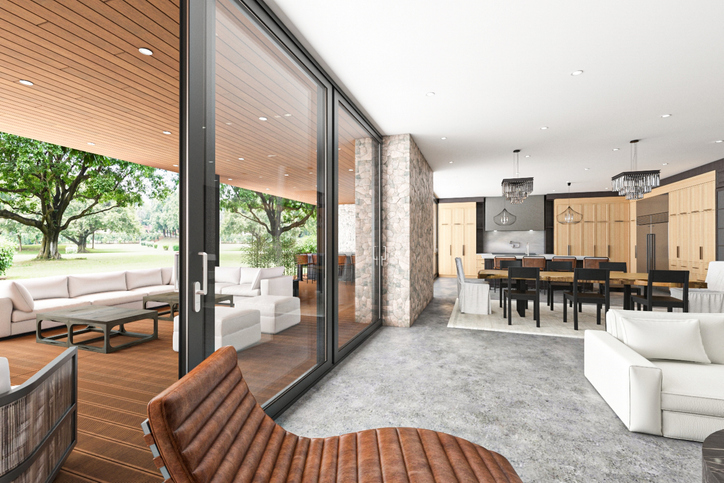
Contemporary smart slide patio door systems are available in configurations that older sliding doors could not accommodate. Large format openings, sometimes spanning multiple metres, are now achievable with the right structural support and product selection. The slim frame profiles of modern systems also maximize the glass area, meaning more light and a better connection to the outdoor space.
Finishes are available in a wide range of colours, and interior surface options can match or complement your interior woodwork. The overall aesthetic is cleaner and more contemporary than older sliding door systems, which often had chunky frames that visually interrupted the indoor-outdoor flow.
For homeowners renovating to create a more open and connected living space, the combination of improved seal performance, better security, and a more refined appearance makes modern smart slide systems a significant upgrade from what came before.
—

