


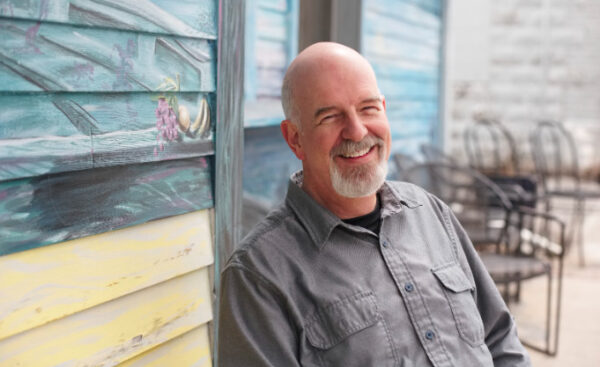
Wondering why life seems different after age 40? Or 50?
Feeling frustrated, stuck, confused about what’s next?
Wishing you could discover what life is all about?
Weird Wisdom for the Second Half of Life offers a way into these years. While other books explore financial planning, physical exercise, and a bucket list of activities, this one asks us to pay attention to what’s going on inside. The wisdom is Weird, but you’ll find it helpful, as author James Hazelwood unpacks:
Wonder
Enchantment
Integrity
Relationships
Destiny
Weird Wisdom for the Second Half of Life focuses on the inner journey that we all go through. In the book, you will explore the wisdom of depth psychology, ancient folklore, world religions & mythology, and many stories of people discovering how wisdom improved their second act.
After exploring life cycle theory and its application to the adult years, Hazelwood draws on the depth psychology of Carl Jung and a series of stories from ancient folklore and the world’s religions to help the reader discover the rich offerings of our inner selves. While this is a book for men, it’s really a book for anyone who wants a more meaningful second half of life. Midlife can be rough, but it doesn’t have to be void of purpose and meaning. The Second Half can be the best half.
The Good Men Project sat down with author James Hazelwood to talk about his upcoming book release.
Tell us a little bit about yourself
If I have a chunk of free time my favorite thing to do is go on a multiday bicycling and camping tour. There is nothing better than the simplicity of riding and camping, cause it’s all about eating, sleeping and pushing on to the next campsite. I need that simplicity. When I’m not doing that I currently serve as the bishop of the New England Synod for ELCA Lutherans. This means I spend a lot of time in meetings, speaking in public, dealing with crises and helping people see that the church is in desperate need of reforming just about every aspect of its life. The church needs to divest itself of structures that inhibit people’s spiritual and emotional maturation.
What was your inspiration for writing this book?
This book started over 15 years ago with a dream I had while traveling in Honduras. The whole story is in the book, but basically, I had a dream about rebuilding a cathedral. It took me years to realize what the dream meant and discover it had nothing to do with bricks and mortar but an inner cathedral. I dove into a lot of learning and growth through Jungian therapy, reading and mostly life experience. All that led me to discover that the second part of life, typically after our mid 40’s is different than the first part.
What do you hope your readers will get from reading this book?
If there is one thing, it’s quite simple, but hard to do. Ask yourself what am I paying attention to? Where is my focus, my energy, my hunger? It makes a big difference as we grow through life, and in the second half it’s more important than ever. This is particularly challenging for men. We tend to focus on the outer world of accomplishments. That’s awesome, but we need to balance it with attention to the inner landscape as well. I believe if you just turn your attention in that direction a little more, maybe 10% more, you’ll begin to see a treasure that will serve you well.
Do you see a cultural shift in how we approach aging?
Yes and no. On the one hand, the sheer demographics are forcing our culture to change attitudes. There are just a lot more older people than there used to be. Look at the plethora of retirement books. That shift is helping people realize that the second half of life can be the best part of life. And yet, I also still see tons of ageism. Look at the greeting card section at your grocery store and the retirement or post-50 birthday cards. They are quite ageist and sexist. People are depicted as washed-up. That’s just not true. Ancient cultures valued people with life experience as having wisdom that the village benefitted from.
Why do you think aging affects men and women differently?
Part of it is biological, part of it is cultural, part of it is psychological. James Hollis tells a great story of describing to women the life of most men in modern culture. He asks them to imagine living their lives facing any kind of challenge without their friends to talk about it, without a self-understanding and connection to their emotions and without a spiritual/wisdom tradition to process it. Most women respond, “my god, I’d be dead, that sounds like hell.” But most men over 50 have very few friends, sometimes none, they have been trained to stuff their emotions and often have no interest in the historic wisdom traditions. Part of what I’m trying to do in this book is offer some glimpses to mend that brokenness.
Do you think spirituality or a faith practice is necessary in order to “age gracefully”?
Yes, but I have to say, I think the phrase “age gracefully” is B#!!$&-!. I despise that phrase because it is often used as a way to demean people. I think of my 88-year-old mother who swims 4 days a week and is still writing murder mystery novels at a rate of two or three a year. She’s not aging gracefully; she is simply living fully. A man I know in his 70s, a retired minister, spends his time helping refugees get settled in his town and navigate the US immigration system. Another man reads to children at a local elementary school in an economically depressed neighborhood. These people are all living fully. The key is a spirituality that is both relational as well as internal, plus it often has a service to others component.
Do you agree with the adage “With age comes wisdom” or is wisdom only acquired through effort?
Wisdom is not an automatic process. It requires attention and self-reflection, plus the feedback of the community. The last thing people want is someone with life experience telling them what to do. But what can be helpful is that person asking questions that can guide another person. The wisest people I know ask me questions, they don’t tell me what to do or think.
Do your readers ever reach out to you to tell you about how something you wrote inspired them to make a life change?
Yes, especially in response to my Substack newsletter. Almost every issue I hear from someone. Typically, it’s around my writing something that they’ve thought for a long time but were afraid to say out loud. Since I write at the intersection of gritty mysticism and depth psychology, I tend to hear from a lot of people who are somewhat religious or disenfranchised altogether.
What is gritty mysticism?
I like the phrase, which I got from someone else, but can’t recall where I read it. In my mind it grounds mysticism, which is essentially a connection with the sacred or the holy or God. Gritty mysticism is real world, real life. I think of encounters with mystery while building something, hiking in the woods or even dreaming an outrageous dream with monsters.
If you could give advice to any public figure in the world right now, who would it be and what would you say?
Hmmm, rather than advice, I’d probably like to ask a series of questions. Let’s take the President of the United States or the Prime Minister of a country. Current, past or future. I’d ask three questions: How are you making decisions that have long term repercussions? What part of your soul are you hiding from us? Tell us one insecurity you have and how you deal with it in daily life? I think you learn a lot about people when they face their vulnerabilities.
Where can we learn more about you and this book?
James Hazelwood is an author, spiritual director, pastor, photographer, touring cyclist and currently serves as Bishop of the New England Synod (ELCA Lutheran). He is a graduate of the Haden Institute & Mt. Carmel Monastery training program in Spiritual Direction. His spiritual direction is primarily with men seeking to navigate the quandaries of modern life. In addition to Weird Wisdom for the Second Half of Life, he is also the author of Everyday Spirituality: Discover a Life of Hope, Peace and Meaning
He writes a bi-monthly column for Substack, which can be found here https://jameshazelwood.substack.com
His website is www.jameshazelwood.net
The book will be released on Thursday, April 27th as an eBook and print wherever people buy their books. An audiobook version will be released in early May.
Advance praise for Weird Wisdom:
Ours is an age that is desperately in need of guides of the inner world. This lovely offering from James Hazelwood seeks to address just this need. With warmth and wit, Hazelwood reminds us that, not only does life continue after midlife, in some crucial ways it really begins. This book is both an invitation and an initiation into the meaning to be found in the second half of life. It is a tour of the often-unexpected places where wisdom can be found during this time taken with a compassionate and trustworthy guide.
~ Jason E. Smith, Jungian Analyst, author of Religious but Not Religious: Living a Symbolic Life, and creator of the Digital Jung podcast.
Chapter after chapter in Weird Wisdom, James Hazelwood articulates questions on the page that many hearts carry quietly and alone. Let these pages be your invitation to go willingly and deeply into becoming a wisened elder. With this book as your guide, you can approach the threshold into wonder, enchantment, and the liberating mother tongue of metaphor, and maybe even find yourself at home there.
~ Jennie Isbell Shinn, M.Div., LMT, Spiritual Director and Dreamworker.
BUY on AMAZON and Barnes and Noble


