


For the past 20 years I’ve been trying to find my way through a minefield of good intentions, hurt feelings, and historical wounds, both my own and everyone else’s doing “race work.” I haven’t had any mentors for any long stretch of the way, just moment-by-moment advisors who, in retrospect, I have learned a ton from. At the time, it was just one pearl of wisdom after another, that helped loosen up my heavy heart. Needless to say, I got into racial work because I had a heavy heart of my own to begin with.
I got into “the work” for, what I now see as, all the wrong reasons. My first years in college I used the injustices of the world to suppress my own pain and to externalize the anger that would have me otherwise paralyzed in a state of deep depression. Without my anger at the world I would have not gotten out of bed at all. At the time, the pain of the world put my own pain into perspective and helped me be productive and alive in a way that my inability to be with own pain did not.
It’s taken 20 years of healing work to undo those early bad habits of suppressing my pain, explaining away my pain, and trying to fix and explain away other people’s pain, too. It’s also taken 20 years of rigorous study of every form of racism: personal, institutional, systemic, to be able to navigate this complex world of personal and historical pain.
Still now, I don’t really have a map I’m certain of, and when my own good intentions don’t translate into real or perceived justice, it hurts like crazy. I reach out to people who I can count on to remind me of a few staples I’ve learned. Lately the same few staples keep showing up, so I’m offering them here.
Actually, one more thing. My mantra in the past 20 years has always been: What does justice look like now? How can I be just, now? This question sounds noble. Maybe. It also became, at some point, a whip I hurt myself with every time an interaction didn’t have the candy-sweet result I expected. Holding ourselves accountable is an important part of the work, and it doesn’t stop there.
The work.
Racial Justice and Racial Healing work are not the same thing. With the death of Ahmaud Arbery, Breonna Taylor, George Floyd, Rayshard Brooks and countless others that makes my stomach churn just writing now, there is so much talk about allyship and action. Most people are talking about Racial Justice work, and righteously so — it’s time for System-wide change. I’m going to write more about the difference between racial justice and racial healing work, but here it is in a nutshell for now.
Racial Justice is advocacy work, it’s a process of critical thinking, exposing the truth, provoking us into seeing the underlying assumptions of our perceptions, so we can get poked into taking new actions, organizing and having wider-scale impact.
Racial healing work is quite different — and still absolutely necessary. Racial healing work is long-term work: it takes longer than a campaign, longer than an election, longer than a job, longer than a profession.
Racial Healing is a life commitment.
While working for racial justice can support racial healing work, racial healing work is different. It’s healing how we relate to ourselves and each other moving away from old expectations and past wounds. It is also about being able to create more authentic, genuine human connections while working towards justice, together. It is healing the pretexts of internalized racial inferiority and superiority and how that impacts our everyday life. It is the process of creating freedom from the painful repetition of trauma, in our own lives and in our communities. Racial healing is not plucking the bad apples off a tree — it’s uprooting the damn tree.
Given this context, I’d say that the work of whites doing racial healing work has seven aspects that can show up one at a time or all together. I’m sure there are others — these are the ones that come to me now.
1. Take responsibility for anything we can. White privilege is not something we shed, it’s something we become aware of, and sometimes we aren’t. And sometimes it has an impact even when we are aware. If an elephant tiptoed through my apartment right now, it would still wreck the place. It can be healing for a group just that we say aloud that we take responsibility. And that we get honest about the impact our actions or words have and what we’ll do next time. As someone who has been in the work for a while, I really want to say the right thing at the right time. I’ve learned that I serve the group often by saying the wrong thing at the wrong time (not on purpose of course) and then taking responsibility for when my white privilege underpants were showing, or I simply needed to put my foot in my mouth.
2. Be willing to stand in the constellation of historical trauma. This is a tough one, taught to me by one of my closest Black friends and colleagues. When we’re white in the work, we build trust with folks of color. At times this means that unexpressed rage will come at us, and that’s when it’s time for us to listen. Folks of color have to suppress so much every day, because they protect themselves from the retaliation of people who look like me and the retaliatory systems we built. If I can listen and not retaliate, it’s the best thing I can do. In effect, in that moment, I am standing in as a constellation, for every white person who has ever harmed the person in front of me.
3. Be fiercely authentic, compassionate, real. Whiteness has us hide behind the perfectionist veil of professionalism. Tear the S**T out of that veil. Let us become so fiercely authentic and fiercely real that we make peace with all of the parts of ourselves that whiteness would have us cover-up. We must accept ourselves for who we are and aren’t and build communities around us who can do the same. By being fiercely authentic, sometimes, sometimes, we will be seen for who we are, and not the color of our skin.
4. Standing for the intrinsic value of humanity. Committing to racial healing work means standing for the intrinsic and sacred value of every human — that includes you. So, discover your own intrinsic value and learn to give up having to prove yourself good, right, worthy, accomplished, prefect— whatever. That’s all whiteness sh*t that keeps yourself and others mentally enslaved. You can’t stand for the unconditional right to exist of anyone else, if you don’t see your own right to exist — not the best of you — but ALL of you.

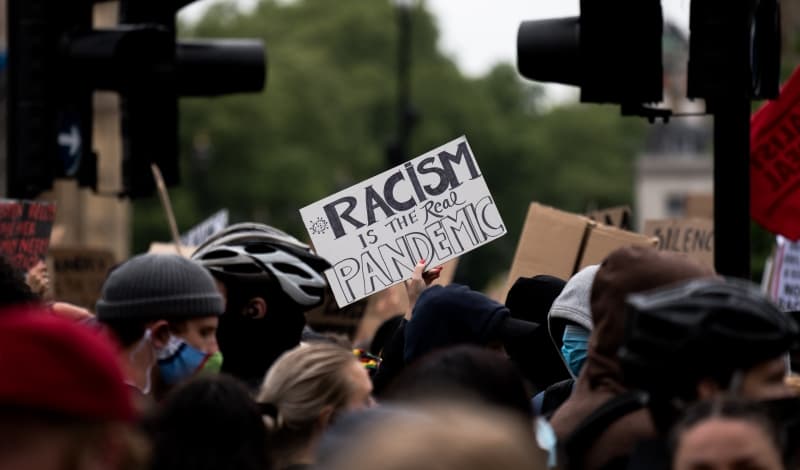
Photo by Steve Leisher on Unsplash
5. Process the personal and historic pain that is ours. Every painful interaction with a person of color will bring up our own pain –desire for validation, approval, not feeling like our mama loved us, knowing our own family mistreated others in the process of colonization, etc. Whatever it is, that pain is OURS to confront, be with, and heal. No one else’s responsibility but ours. Other people don’t have to change their words, so we’re not hurt. We need to learn to listen, be hurt, and go the heck home to take care of our wounds. Massage, acupuncture, shamans, reiki, journaling, nature, Netflix, whatever rocks our boat. We must take time for us.
6. Do not take on the pain that isn’t ours. This is the toughest one to write about, because so much of it is unspoken. It took being super close with African American elders for me to get this one. Folks of color in race work expect us to react to their pain. If we don’t, sometimes, people of color want us to take on their pain, and suffer, as a compensation for past injustice. Sometimes, sometimes, that results in stuff being put on me that isn’t actually mine, but the other person’s. Part of accepting and loving myself unconditionally means to be with my pain, and trust others to be with theirs. I can’t give you an example of this it’s too freaggin tricky. I’ll just say this. We are still responsible for listening to other’s pain, even when what we think is being put on us is more that we should take. It’s still important to listen. And not taking on the pain means not shaming or blaming ourselves, but allowing the person to be where they are, no judgement. If we can truly not judge ourselves, we’ll build the muscle to not judge them either. I also recommend you find elders of color who know your heart and can guide you through the parts of this picture you don’t understand.
7. Do all of this in community. Fierce, loving, accepting, communities. Make sure you have white people to be yourself and turn to. We cannot do this work alone, it’s too painful, and it’s too slippery. We need each other. NO MATTER WHAT. Part of racial healing work is reestablishing white communities that are actual communities, that remind us how to support and love each other, through the tough times — instead of just being competitions to earn respect and value.
8. Have a place where you are working to make a difference out there (not in our head). Some do racial healing work within their own families, for others its organizations or movements. Either way, works, as long as it’s not in your head. Racial healing work is not an intellectual exercise!
—
This post was previously published on Equality Includes You and is republished here with permission from the author.
—
***

If you believe in the work we are doing here at The Good Men Project and want to join our calls on a regular basis, please join us as a Premium Member, today.
All Premium Members get to view The Good Men Project with NO ADS.
Need more info? A complete list of benefits is here.
Talk to you soon.
—
Photo credit: Unsplash

