


This article is number five in a series of articles on sustainable design. The previous four are:
- Three reasons for designing new objects in a world with too many things
- Designing with waste materials
- Why imperfections are essential when working with innovative, sustainable design
- How to upcycle and hack unwanted garments.
…
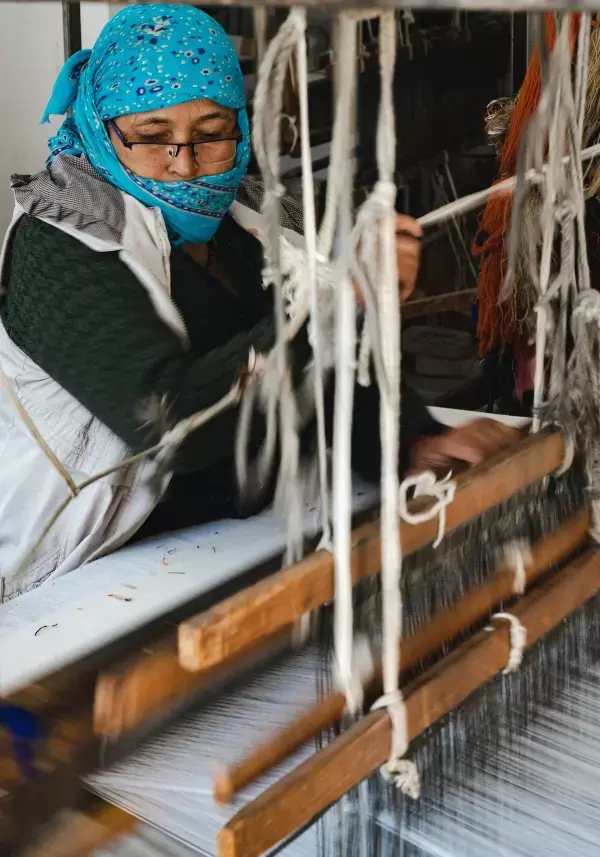
The second legitimation for designing new things in a world overflowing with discarded objects is to sustain traditional crafts and prevent them from dying out, as well as to empower artisans.
The reason I am emphasising the importance is that currently, we are experiencing a mass extinction of crafts traditions worldwide. Part of the reason for this is the mass production of goods since the industrial revolution and the immense competition that quickly, cheaply produced products constitute slowly crafted artifacts. But furthermore, crafted products are threatened due to the societal and cultural development of norms and wishes, which tend to be dominated by a need for growth and quick, easy acquirement of convenient products, and due to aesthetic challenges.
The role of the sustaining and empowering designer includes sustaining and strengthening dying crafts traditions and working with social entrepreneurship or social inclusion. These elements of the sustainable designer’s role will become increasingly important shortly, as they will meet the conscious consumer’s demand for transparency and ethically produced goods and the need for equality.
Traditional crafts are endangered in many regions of the world. This tendency is typically either caused by a lack of status and money in working as an artisan, so younger generations pursue other careers; or due to the aesthetics linked to the particular crafts stagnating, which has led at times to traditional craft products being labeled kitsch — something tacky and tasteless. Another reason that traditional craftsmanship is struggling is that crafts products don’t always meet the needs of a contemporary consumer. They might belong to a bygone era, or they might also be too closely linked to a regional, local need, which makes them hard to sell to a larger audience.
When traditional crafts techniques and traditional crafts expressions disappear, treasured knowledge and skill are lost. Craft techniques and patterns are rarely enshrined or written down, and the traditional patterns are typically not sketched and stored, as they are often taught orally, or rather by showing the process by hand from one generation to the next. They are characterised by non-verbal transmission.
When artisans seek other earning opportunities, the traditions of the craft die out. This is not only a large cultural loss, but a loss of diversity.
One of the most challenging parts about sustaining dying crafts traditions is the balancing act between maintaining the core of the craft — the technique, hands-on wisdom, the look of the traditional patterns, the feel of textures, etc. — and updating the overall aesthetics in order to effectuate and innovate.
The difficulty here lies mainly in the curious fact that the significant aesthetics — the look and feel of the crafted product — which is linked to a specific crafts tradition is its strength but simultaneously its Achilles heel.
A craft-tradition is typically accompanied by certain motifs, patterns, textures, color combinations, carvings, or shapes, and is restricted to staying within the limitations of these. The motifs and textures are typically charged with connotations; with metaphysical meaning, allegories, symbols, stories, and signs, and linked to certain events or ceremonies — and only worn or used at these — societal status, family ties, or life-phases. And traditional artisans are trained to carry out these conventional patterns with precision.
The problem is that the shapes and motifs of traditionally handcrafted artefacts might not meet the needs and aesthetic preferences of others than the narrow target group these were originally created for. Their symbolism might, so to speak, be lost in translation — or carry no meaning when detached from their origin — their function might be outdated, and their aesthetics might not be comprehensively nourishing.
Furthermore, the techniques linked to original crafts expressions tend to be immensely time consuming, leaving present artisans with the burden of not being able to match the time they spend on creating their products with the price they can get for it.
The balancing act that the sustaining designer faces involves locating the core of the specific craft-tradition that she is working on preserving — whether this is wood carving or basket or rug weaving — and entering the design-process with the overall objective of leaving significant, recognisable traces from the original layout while simultaneously innovating and optimising the functionality and aesthetics of the product. Leaving the fundamental traces from the creation process, charging the product with creation time, is of great importance in order to establish an enduring bond between product and receiver.
Let’s connect! https://www.instagram.com/the_immaterialist/
—
This post was previously published on medium.com.
***

All Premium Members get to view The Good Men Project with NO ADS. Need more info? A complete list of benefits is here.
 |
 |
 |
 |
—–
Photo credit: Manu on Unsplash

