



I know what you might be thinking: did that shark attack them?
The answer is no.
This is actually one of the photos from the countless shark dive expeditions Michael Bolton has filmed and photographed.
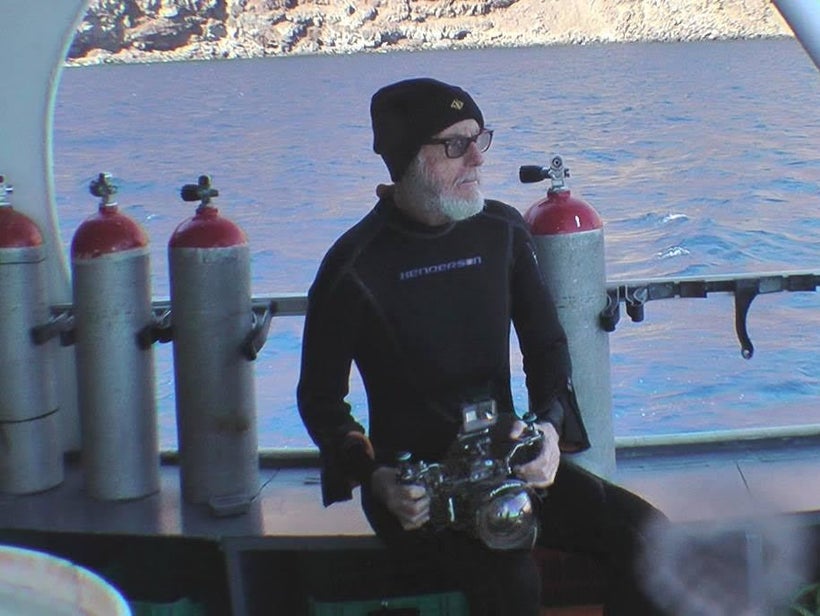
Michael has been diving with sharks for over 50 years.
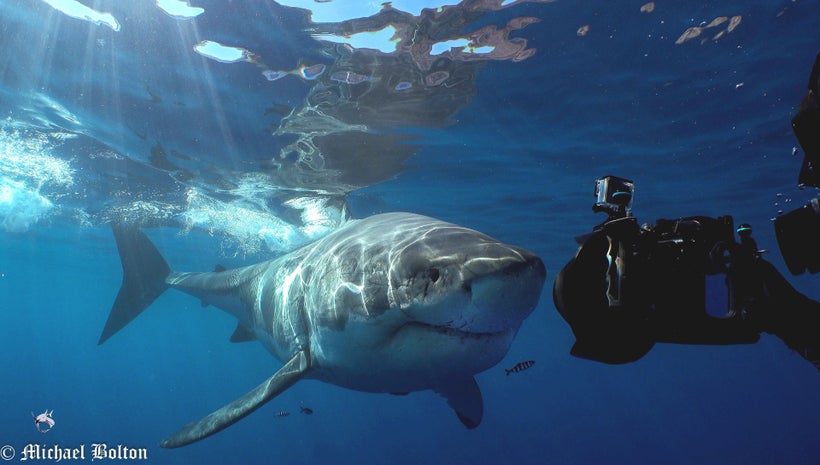
He’s been documenting them through photography and videography during his expeditions, and has captured some truly beautiful photos and videos.
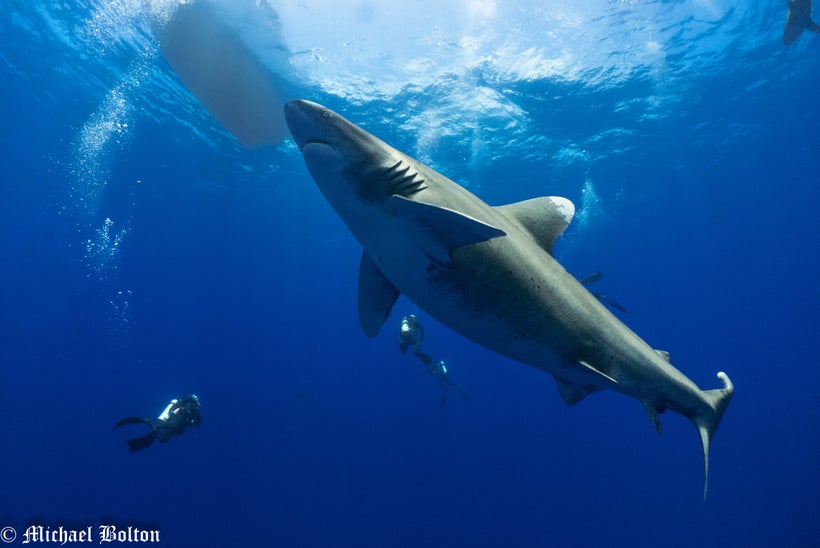
These photos and videos show a different side of sharks, one that Hollywood and much of the media doesn’t show.
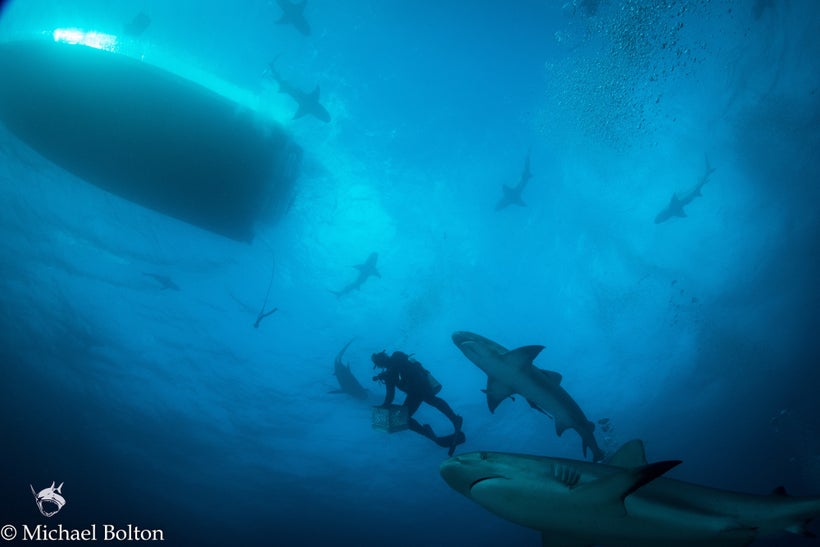
Adam: What life events led you to become an underwater videographer and photographer of Great White Sharks?
Michael: I started my diving carrier in 1960 at the age of 17. I grew up during the era with TV episodes of Mike Nelson’s Sea Hunt. Watching that show inspired the dream in me to pursue diving. When I was in the air force and transferred to Panama, the opportunity of diving came to light and I jumped on it immediately. I still live in Panama to this day, where we have two oceans dividing the Isthmus – the Pacific and the Atlantic.
After getting into diving, I took up spearfishing soon after. Later, I went on to represent the country of Panama in international spearfishing tournaments during the late 60s and early 70s. In the mid-70s, I was asked to assist in constructing a sport fishing club on Coiba Island, one of Panama’s remote islands off the Pacific. I lived there for almost two years and during that time I drifted away from spearfishing, taking up underwater photography and videography instead. There were many species of sharks to film, and sharks were (and still are) my favorite subject!
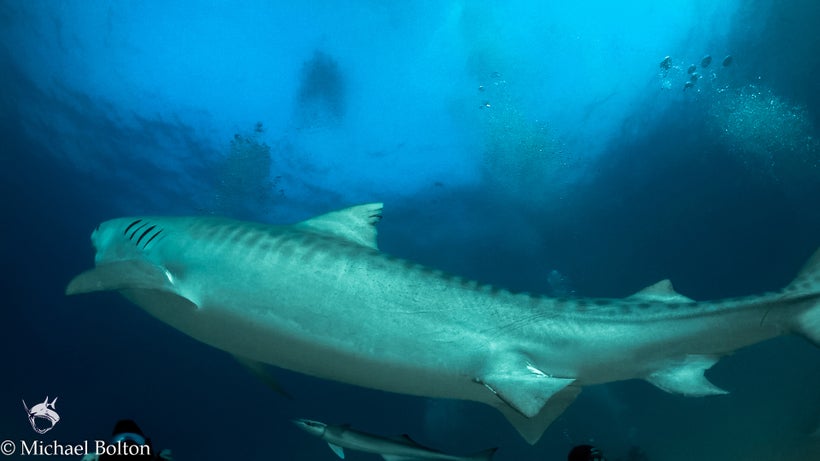
My dream of getting into the water to film the Great White Shark was brought about from a documentary shot during the early 70s called Blue Water, White Death. It was Produced and Directed by Peter Gimbel, together with the famous pioneers of shark diving – Ron & Valerie Taylor and Stan Waterman. This is what I’ve always wanted to do, but here in Panama’s waters there weren’t any Great Whites. Using the old Nikon Nikonos 1 & ll, 35m still cameras and a Kodak K100 16mm movie camera with a Al Giddings Underwater housing, I fell into the passion of taking pictures and videos. It was a challenge in those days as it was only film shooting with the old Ektachrome 64 and 100. I was capturing the videos and pictures as best as I could, and then I’d take them to develop and hopefully come out with something worth looking at at. During the next few years I had the opportunity to work with ABC’s Wild World of Sports, filming underwater action shots of sailfish marlin and game fish. It was not a full time gig, it was only when they would come to Panama for these episodes and look me up for the job. I did this as a hobby, not as a profession. I had my full time job so I was only able to do this on my spare time.
Now, how I got into video-graphing and photographing Great White Sharks…
Over the next three decades, I continued to dive whenever possible. After my retirement in 2008, I had the opportunity to join a friend for an expedition and dive to Guadalupe Island off the coast of Baja California at the home of the Great White Shark. Then and there, I anxiously picked up my passion again for underwater photography and videography. Mostly, I turned to shooting video, as I think one has to decide on which way to go. It is hard to concentrate on both at the same time. Although now the new GoPro action cameras have given us the opportunity to add these onto a still camera housing and shoot video while shooting stills, which many cameraman do, including myself. Since this trip to Guadalupe in 2008, I have been back thirteen times over the past nine years.During these past years, I also made shark dives in the Bahamas with Tigers, Hammerheads and Oceanic White Tips, which I also love to shoot, but Great Whites are definitely my favorite!
Adam: Many people fear sharks and think they’re out to eat people…what’s been your experience and relationship with these majestic creatures?
Michael: Sharks are definitely not here to eat people. I have been diving amongst sharks for over 50 years and have had almost no dangerous encounters with them. I believe most people are afraid because they grew up around the Jaws movie era, and the media created fear amongst people about sharks. This, along with the lack of knowledge and education about sharks and their behavior, have played a big roIl with this mainstream fear.
Even when I began to dive and spearfish, I was taught to be afraid of sharks. I was taught that they were dangerous. Of course, when one is spearing fish and blood is in the water, that’s going to make the situation different. Underwater, we are in their world and the shark will come after a bleeding struggling prey. So under these circumstances, it increases the danger of being accidentally bitten or attacked by a shark. Understanding shark behavior, learning more about them, and educating people about sharks is part of the solution, along with creating awareness about their importance to our ecosystem, and informing people that they are NOT out there to eat us!
I photograph and film many different species of sharks in their natural environment and they are an inquisitive, graceful predator that shows no interest in eating us humans. Of course, there can be an exception, as sharks are predators, and even like our friends, the dog, they can have a different temperament. Again, knowledge and understanding shark behavior when diving with them is always the number one solution to protect yourself. Knowing your surroundings, being more watchful during early morning and evening dives, and being aware if there is bait or mammals like seals around you that sharks feed on are all important safety factors when getting in the water with them. I can definitely say that I am more afraid of diving in a sea without sharks than diving with sharks!
Adam: Do you photograph and video the sharks from a cage? Are you swimming with them? Have you ever swam with Great Whites without a cage? If so, what was the experience like?
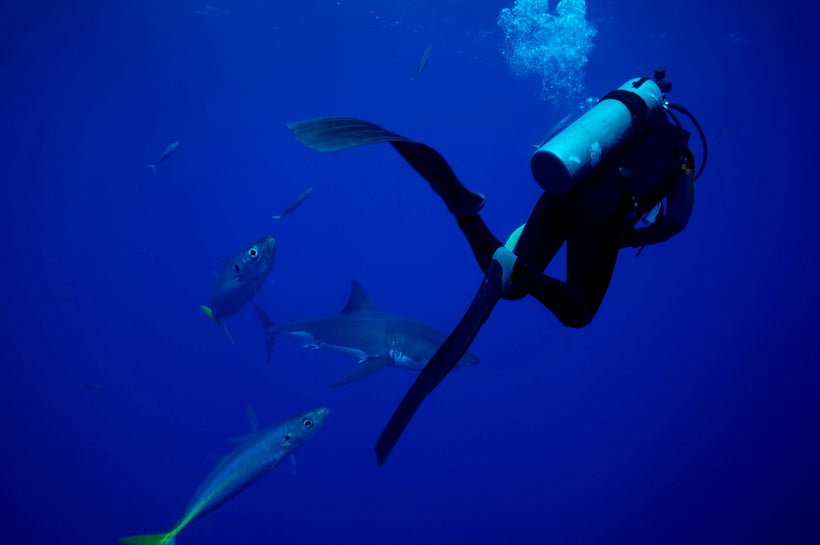
Michael: I do shoot outside the cage with most of the species – Tigers, Bulls, Hammerheads and Oceanic White Tip sharks. The only shark that we film from inside the cage is the Great White. Although, I have dived outside the cage with the Great Whites; those moments have been the highlights of my life. Great Whites are very curious animals, and even though they knows their size and power, they are also very cautious, intelligent, and have extraordinary eye sight. The Great White doesn’t just run in and attack a prey at the first site. It studies and analyzes what could be a prey by making several circles and assessing the situation before an attack. So, 99% of the time around humans, the Great White is just surveying the situation by circling around until it eventually realizes that we are not its prey. Again, knowledge and understand of sharks behavior is always the best defense with them. Like a non-friendly (hostile) dog, you would never want to turn your back and run from them, as it makes the situation worse. The Great White is an ambush predator, so it could make the situation worse. Outside the cage, the Great Whites act more cautious, and for getting good camera shots, it is much better from the cage. From here, they are much more active and inquisitive, coming in closer.
Adam: What have you learned from your time being with Great White sharks?

