



Not too long ago I was speaking with a colleague who mentioned that many notorious offenders, including Hitler, were vegetarian! I was surprised, but my colleague explained that a lot of the people who don’t like people, end up becoming vegetarian or vegan. I was curious why? And my colleague said that some people see the world as a cruel place, and they don’t want to see animals — who haven’t hurt them — get hurt. They have empathy for animals and want to protect innocent animals from the cruel world.
Now later, after some Google searching, I saw that what my colleague told me about Hitler being a vegetarian isn’t exactly true (it seems like he was off and on). But it did make me think about many people’s propensity to care more about animals than their fellow humans.
A few weeks later, I was scrolling through Twitter when I saw this clip from the TV show, Community:
YouTube clip of the show Community
“I can excuse racism, but I draw the line at animal cruelty.”
“You can excuse racism?”
It’s a comedy show and the two actors in this clip had great (!!) comedic delivery of their lines. But the joke’s undertone piqued my interest again. This is a real thing. People do devote more of their time to helping and caring for animals than they do for Black Americans or even homelessness or poverty. In the news, there’s been more public outrage over dogs getting shot than a pregnant woman getting shot. And I was so confused why?! And luckily for me so scientists were too.
The Science Behind Animal Empathy
A 2017 study by sociologists Jack Levin, Arnold Arluke, and Leslie Irvine asked participants to respond to a fake story about a victim who was assaulted with a baseball bat. This victim was unconscious with several broken limbs. All the elements of the story were the same, except the identity of the victim which was either a one-year-old baby, an adult human, a six-year-old dog, or a puppy. And guess what?
Respondents showed higher levels of empathy for the baby, the puppy, and the adult dog (in that order), but significantly less for the adult human. It’s not that we have more or less empathy for our own human species (the infant and the adult human were on opposite ends of the ranking), but it seems like our empathy is somehow connected to something else: our perception of helplessness and vulnerability.
We empathize more with the vulnerable and the helpless.
The (In)vulnerability of Our Fellow Species
Now part of me appreciated this study. I mean if an average baby or puppy or even dog were badly physically hurt versus an average adult, it is very likely the consequences for that baby or puppy or dog would be more severe than the consequences that result from an older adult being hurt. But an older adult would be hurt nonetheless.
There is a sensitivity that is more placed on dogs and babies, that we forget needs to be also be placed on our adult human race as well. We get hurt. We get scared. Adults get really scared. We have jobs we want to keep, blood we still bleed if we break, and tears we still shed when we get hurt. Many of us don’t have our parents or caregivers to take care of our problems.
I think about when I was a kid, watching my parents. I thought as an adult you have it all figured out. Life got easier, things clicked. Then I got older, and I learned about mid-life crises, and taxes, and heartbreaks, and bills, and job promotions, and recessions, and college tuition, and divorce, and on-and-on. As adults get older, we are expected to also get tougher to handle all of life’s surprises, but just because we get older, doesn’t mean we lose our inherent fragility.
Seeing fellow adult humans as older children might help one recognize that all adults really are people just trying to do the best they can with what they know. We are still people who have vulnerabilities. Imagine your friend or your sibling or even your parent were now the victim in that study, getting hurt or beaten up. Your concern and empathy levels likely rose a lot.
Now imagine we are all connected. Think of it like a butterfly effect. Who and what one person is or does affects others which affects others, which leads to a cascade of effects. If someone, anyone, was hurt, it affects us all in some way. We are all a lot more connected than maybe we can ever realize. Our fellow adult humans are not invulnerable to pain. And it’s the ones in pain who hurt others. Hurt people, hurt people. And to stop the hurting, we need to be empathetic and compassionate. You stop hurt and pain, by giving its opposite — love. Love and empathy…compassion and support are healing. It’s nurturing. It’s like a warm hug from a loving mother.
The Beauty of Caring
We have empathy for infants, puppies, and dogs…now imagine if we applied that same level of empathy to adults who need it too. Imagine if we recognized our own innocence and vulnerability, and then saw that in others. Adults need love too. You know it, you see it in yourself. You see it in those you love. Empathy is abundant, it can reach us all. Any age, any race, any class, any gender.
And of course, there is an argument to be made about empathy towards other animals like chickens, like endangered species, like the fish in the water we pollute. Maybe we provide more empathy to dogs and puppies because of messaging we often get like “man’s best friend.” Dogs and cats feel more connected. We wouldn’t dare eat a glazed puppy burger, or a grilled cat sandwich. But we do eat steak and chicken.
I think this study gave me a lot to think about in the context of empathy and where it’s applied. And it made me wonder what the world would look like if we saw and recognized more of the innocence and vulnerability that exists in all of our living species.
I’m not exactly sure what that world would look like, but I think it would be a good one.
❤
N
…
Want to buy me a coffee? https://ko-fi.com/purposeistolove (I’d be very, very thankful!)
…
Follow me on Medium or Twitter for more posts about love, relationships, and self-empowerment.
—
This post was previously published on medium.com.
***

All Premium Members get to view The Good Men Project with NO ADS. Need more info? A complete list of benefits is here.
 |
 |
 |
 |
—–
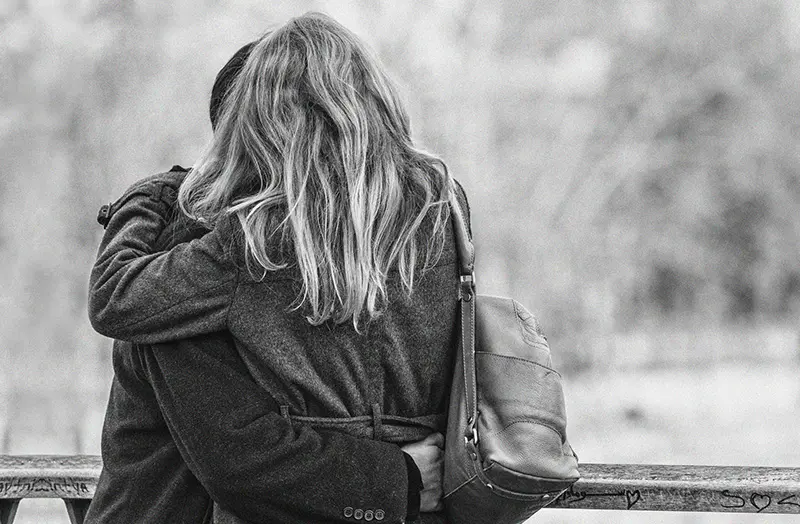
Photo credit: Chewy on Unsplash

