



We are in the Safari Ward at Great Ormond Street Children’s Hospital (GOSH), waiting for a nurse to take bloods from our one-month-old baby. As I circle the room, I keep returning to a wall that is plastered with photos of children who have been treated here. I see many smiling faces and read stories parents have written about how their child survived leukaemia, osteosarcoma, or lymphoma, and is now thriving. These stories are inspiring, but I also find myself unable to push away the question — what about the children who die? Where do I go to read their stories? The ones who cannot claim the label survivor.
The nurse calls us back, but finds that Z’s tiny central line is blocked and blood cannot be drawn. We are told we will have to wait a few hours to see if enzymes can get through the blockage.
We are not surprised; waiting has become one of the defining traits of our new life since our baby was diagnosed with retinal cancer and had to start chemotherapy.
We decide to go for a walk to pass the time.
I am peripatetic now in many senses of the word. I move between Royal London Hospital, GOSH, St. George’s and home. When at hospital, I pace hour upon hour, bouncing and rocking Z as the anti-nausea meds, and carboplatin and etopocide drip slowly into his blood stream. And as we pace, I talk out loud to myself into my audio journal, trying to grasp what is happening to him, to us. Philosophy as a defence mechanism.
At least this time we can go outside. We exit GOSH and turn right. I look at every child we pass on the street and wonder — are you a patient there too? Is there something hurting you inside that the rest of us can’t see?
We pass by several restaurants, and I have an urge to go up to people and say, “Don’t you realise that building is full of sick children? How can you just sit there eating?” I feel vague, misdirected anger seeing how tidy things are on the surface, the messy suffering hidden away.
We begin to circle Russell Square, and I get calmer as we go round and round. I understand now why circumambulation is a common form of prayer in so many faiths.
My husband David breaks the silence. He mentions the stories on the wall of Safari. Beautiful he says. Yes, very moving I agree. He pauses.
“You know…I never thought of myself as a survivor before.” His voice breaks and I turn to him, squinting my eyes against the sunlight.
Survivor. The word sounds strange to me. I cannot make it fit.
“I have never thought of you that way either,” I say. “But…was your life actually at risk?”
“Yes, I guess,” he says. He looks confused, pained. I see the child in him.
When he was eight he was diagnosed with retinoblastoma, the same cancer our baby has inherited from him. After a year of harsh treatments, his left eye still had to be enucleated. I always assumed that was the end of the story — the tumour and therefore the risk obliterated with the sick eye.
But now, walking beneath the elms and holm oaks, he tells me that after his eye was removed he continued to have chemo and then radiation. To keep cancer from spreading. To save his life. He tells me that he spent much of his childhood and teenage years afraid it would return, certain he would die young.
We have been married almost eight years, together for 15. How am I just hearing this now?
We’ve spoken often about his childhood cancer, but he has always insisted that it wasn’t a big deal. Sure it was hard, he says, but he got over it and it didn’t affect him afterwards. Yes he lost his eye, but all the children at school were kind. No one bullied him. He had no trouble getting girlfriends. His life so far has been pretty great.
I was never sure what to think. Was it possible to be so well-adjusted, unaffected? But maybe it was ableist of me to assume that he would be scarred somehow by his childhood illness, and repressing secret trauma.
But then…there is the anger.
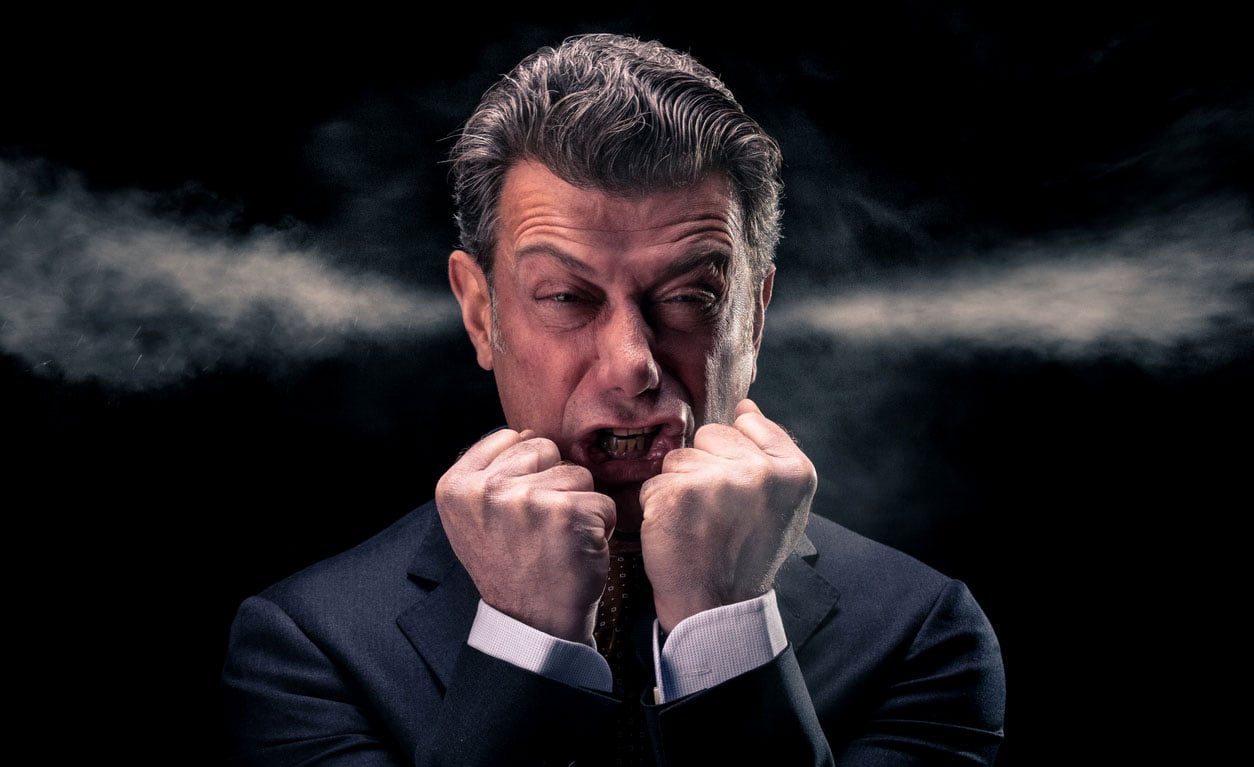
David has always had a bad temper. Since Z’s diagnosis however, it’s as though there is a fine layer of gun powder over every surface of the house. When something ignites it, the anger spreads quickly and unpredictably. This anger feels wild, unhinged, and there is a repressed violence to it, if only in its vibrations. I know there is no reason to be afraid of him, and yet in those moments some ancient animal part of me is.
In the aftermath he always says, “Why am I acting like this? I don’t understand…”
In “Raising Cain: Protecting the Emotional Life of Boys,” psychologists Dan Kindlon and Michael Thompson suggest that many men are “systemically steered away from their emotional lives toward silence, solitude and distrust” which can ultimately result in anger and violence towards themselves and others.
David has a lot to be angry about. A father that left when he was in utero. Childhood cancer. His country, Venezuela, falling to pieces, causing his friends and family to scatter all over the globe — some legally, others not. His constant struggle here in Europe for a visa, having to prove over and over that he is of value despite the liability of his nationality.
But deep at the heart of all of the rage is sadness, all the tears he never got to cry as a child, all the fear that he pushed away.
He grew up in a family that didn’t know how to talk about the difficult things they were experiencing, who didn’t have a language for their sadness, fear, anger or pain. When it came to coping with cancer the advice he received was to tough it out, to never show vulnerability, to never let anyone make him feel lesser just because he looked different.
According to Kindlon and Thompson, “stereotypical notions of masculine toughness deny a boy his emotions, and rob him of the chance to develop the full range of emotional resources.” My husband admits he was never given an invitation to put words to his feelings, so he was never able to fully process them or let them go. Now the feelings are bubbling up unbidden and he must make a choice — learn to name them and bring them to light, or bind them deep inside again, weighed down by silence.
Here, walking beside me, our baby Z’s heart beating against his own, my husband has just claimed his first new word, survivor.
“How do you feel?” I ask.
“It hurts,” he says.
This is the start of something. The beginning of a new language we are learning to speak to each other, a language we will pass down to our son.
—
This post was previously published on medium.com.
***
You may also like these posts on The Good Men Project:
 White Fragility: Talking to White People About Racism White Fragility: Talking to White People About Racism |
 Escape the “Act Like a Man” Box Escape the “Act Like a Man” Box |
 The Lack of Gentle Platonic Touch in Men’s Lives is a Killer The Lack of Gentle Platonic Touch in Men’s Lives is a Killer |
 |
—
Photo credit: iStockPhoto.com

