


When I woke up in our cozy hotel suite, I felt, for the first time in a long time, happy. I did what I always do, first thing in the morning. I made coffee, fired up one of the many refurbished Chromebooks I’ve toted around the country, opened 750Words.com, and wrote.
“What are you writing?” she asked.
“Thoughts,” I said. “Ramblings. Lists of things.”
She let me get back into it. I didn’t mention that the whole reason I was there with her, the way I fought through my depression, pulled myself out of the ruins of my past life, and made it across the country to wake up with a kindred spirit, was at least partly thanks to this practice.
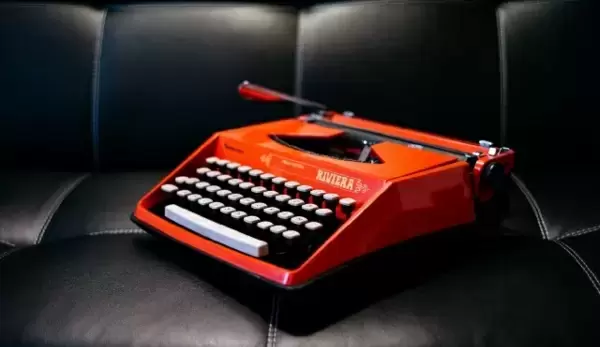
I’ve always been a writer. My first favorite toy was a typewriter. Writing is how I make sense of the world. It mutes the calliope music, gets the craziness out of my head, and puts it in front of me where I can do something with it. When I write something I’m proud of and it connects with people, it’s one of the most exciting feelings I experience. The more I write, the better I feel.
Nevertheless, I’ve had difficulty establishing a regular writing routine. This is The Resistance that Steven Pressfield talks about. It bedevils nearly anyone who wants to do something worthwhile, whether fitness, meditation, or scrubbing the baseboards. The only way to beat it is to lock in a practice.
Almost anything can be a practice. Art is a practice. Work is a practice. Sex, done well, is surely a practice. Rearing kids is a practice. When you fully commit to something, develop a set of habits and rituals around it, and keep showing up for it until it takes on a life of its own, that’s your practice.
If you adopt a practice, take it seriously, and dedicate significant daily time to it, it will infiltrate every corner of your life, including your dreams. You’ll draw connections between all kinds of seemingly disparate ideas and notice all sorts of stunning synchronicities. Things will get weird, guaranteed.
The thing that helped me the most in establishing a daily writing practice was discovering the site 750 Words. It applies some light gamification to getting in the swing of writing every day, with streaks, badges, and the like, thus leveraging my strong competitive tendencies. After I reached various milestones — 50, a hundred, a thousand days in a row — I didn’t want to stop. And I’d observed the magic it was working in my life. I’m now at 2000 straight days of writing at least 750 words per day, with no signs of stopping. (For less pressure and no specific word count, Penzu is also wonderful.)
You become what you do every day. You may as well do it deliberately.
Logging into 750 Words every day for five years taught me how to develop and maintain a practice. I hope what I learned may apply to whatever you try to make a regular thing.
Make it easy on yourself
In the early stages, eliminate as much friction from your new routine as possible. Carve out a regular time where you won’t be interrupted, eliminate as many distractions as possible, and minimize your obstacles.
What works for me is writing my words every day within an hour of waking up. I’m an early riser, so I can usually count on some peace and quiet. Plus, once it’s handled, I can get on with my day and not sweat it.
Also, don’t overdo it; you’ll probably just burn out and give up. “Start low, go slow,” as they say on the drug scene.
Do it until it’s easier to keep going
At first, writing every day was a pain in the ass. Now, I realize I’m much happier because of it. When I write in the mornings, I get to do something I love, something I’ve learned to do well, and something that helps me make peace with my demons. It’s one of the times when I most enjoy my own company.
Initially, your goal should be to stick with your practice until the equation flips and it makes more sense for you to keep going than it would be to stop. Do anything long enough, and it takes on a momentum of its own.
When you’ve got 500 straight days, why not go for a thousand? You can’t quit now. You’ve got too much to lose.
You can waver, but don’t quit
The system behind 750 Words is based on the “morning pages” exercise introduced by Julia Cameron in her book The Writer’s Way. Cameron was religious about longhand writing, but like me, the 750 Words founders don’t see anything wrong with using a keyboard. 750 words is about the length of three pages. The words aren’t for public consumption, and you never have to share them with anyone; they’re just for you.
If you want, you can always write more. I often use it as a scratchpad for essays, stories, comedic bits, and other projects to flesh out later.
Nevertheless, during my first thousand days, I got cynical about the whole deal. Should I allow myself this level of self-indulgence? Why spend all this time writing stuff that no one else will read? Is this really the best way to spend my mornings? I even wrote an article airing my frustrations.
And, yet, I kept doing it. I showed up as my marriage went down in flames, when I couldn’t force up anything but endless self-pity and self-recrimination. I typed 750 words into a smartphone on the bus. I wrote 750 words when I was out of my mind on mescaline. I didn’t always relish it, but I kept showing up, every damned day, for five years, including some of the angriest and most miserable days of my life.
When things get gnarly, character reveals itself. You can whine all you want. You can be absolutely sure you’re wasting your time. But keep your commitment to your practice. My writing practice has been more important to me than any job I’ve ever had, and it’s well worth the marginal suffering and sacrifice it entails.
Your practice can open doors, help you find yourself, and save your life
When I used to do standup comedy open mics, my favorite was the one at the now-long-defunct Westwood BrewCo, hosted by the unsung genius Robert Yasumura. One night, Yasumura remarked on how many aspiring comics he’d heard refer to comedy as “my therapy.” “If comedy is your therapy,” he said, “try real therapy.”
Indeed, if you’re dealing with mental illness or traumatic life events, your practice may not be sufficient. Try real therapy.
I will say that, to the extent that I have a self-care routine, writing is an essential part of it. More than once, my writing practice has helped me talk myself out of suicide. It’s also saved me from waking up at age 50 and thinking, “damn, I wonder how things could have been different if I took my writing seriously.” As I’ve built my skills and shared more of my writing with the world, I’ve made friends, learned new things, and had adventures I wouldn’t have had otherwise. It hasn’t made me rich yet, but it’s kept me out of trouble, and it’s enriched every aspect of my life.
Most importantly, it’s helped me figure out what I want. And even when I’m thousands of miles from home, lounging in a swanky hotel room with a woman I adore, I want to keep practicing.
—
This post was previously published on medium.com.
***
You may also like these posts on The Good Men Project:
 White Fragility: Talking to White People About Racism |
 Escape the “Act Like a Man” Box |
 The Lack of Gentle Platonic Touch in Men’s Lives is a Killer |
 |
—
Photo credit: Luca Bravo on Unsplash

