


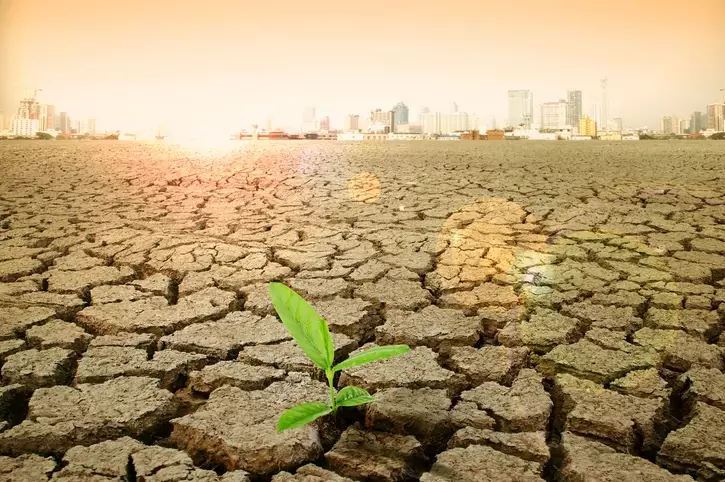
Across wealthy democracies, large majorities of people believe their country is heading in the wrong direction. Society, they say, is broken. Things are falling apart. The future looks bleak.
And yet, when asked about their own lives, those same people tend to report something rather different. They’re doing okay. Work is manageable. Family life is stable enough. Day-to-day existence feels … fine.
It’s a contradiction that shouldn’t sit comfortably, but it does. We are living, apparently, in a world that is collapsing everywhere except in our own kitchens.
Doing fine (while expecting the worst)
This gap between personal experience and collective belief is more than an intellectual curiosity. It shapes how we see one another.
If I’m doing alright but everyone else is angry, frightened, or miserable, then the world beyond my front door starts to feel vaguely threatening. Public life becomes something to endure rather than participate in. Trust feels risky. Withdrawal starts to look sensible.
The Ipsos poll doesn’t just measure pessimism. It reveals projection.
We assume our own stability is the exception, not the rule. That we’re coping in spite of the chaos, rather than alongside others who are also muddling through.
And once you accept that assumption, it becomes easier to disengage, be it from politics, from community, from responsibility for anything beyond the narrow boundaries of your own life.
Optimism gap
There’s something about this dynamic that will feel particularly familiar to many men in midlife. On the surface, things may look alright. Career established. Family formed. Roof over your head. Bills mostly paid. From the outside, and often to yourself, it appears that you should be content.
And yet, underneath, there can be a persistent sense that something is off. A feeling of disconnection. A low-grade anxiety that the wider world is hostile, unstable, or no longer built for you. You might not feel personally unsafe, but you don’t quite feel at home either.
For many men, this turns inward. We withdraw. We shrink our worlds. We convince ourselves that keeping our heads down is maturity, that disengagement is wisdom. But what if part of the unease isn’t about decline at all, but about distance?
The perils of perception
When I visit my parents in London, I sometimes sit by the window and look out. What I see doesn’t match the story of collapse.
I see a multicultural neighbourhood quietly functioning. Children walking home from school. Neighbours stopping for a chat. Someone holding a door. Someone else helping with shopping. Community notices advertising events, fundraisers, classes, gatherings.
Nothing heroic. Nothing dramatic. Just people coexisting, cooperating, and occasionally caring for one another.
This is just one community, in an admittedly middle class part of London. It doesn’t negate the struggles of others, and it shouldn’t be used to dismiss real hardship or injustice.
But it is real. And it’s almost entirely absent from the way we’re taught to think about the world, driven at least in part by the decline in local media in favour of national media and social media platforms.
Distortion field
Local media matters because it anchors us in reality at a human scale. While national outlets tend to trade in abstraction, outrage, and stories of decline, local journalism tells us what is actually happening where we live, with people we might meet tomorrow. It builds trust through proximity, lowers the emotional temperature of public life, and reminds us that society is not an idea but a collection of places, relationships, and shared responsibilities.
As local media withers, speculation, polarisation, and national narratives rush in to fill the gap, widening the dissonance between how our lives feel and how we think the world is doing. Moreover, social media platforms have proliferated as a source of news for many, platforms that didn’t invent pessimism, but have seemingly refined it into a system.
The stories that spread fastest in this system are not the most typical, they’re the most emotionally charged. Outrage travels better than reassurance. Conflict outperforms cooperation. A video of one person behaving appallingly becomes evidence of social decay. A protest becomes proof that society is tearing itself apart. A disagreement is framed as an existential threat.
Meanwhile, the quiet competence of daily life goes unrecorded. The decent majority are invisible. Normality doesn’t trend.
Over time, this feeds into the Ipsos effect: my life is fine, but the world is not. For men already prone to retreat, men who may lack close friendships, community ties, or spaces to talk honestly, this distortion can be particularly corrosive. It confirms the instinct to pull back, to observe rather than engage, to treat the world as something happening to other people. Or worse, it may leave men prone to some of the more extreme corners of the internet, where anger is validated, extreme language is normalised and escalation is rewarded with attention and belonging.
The luxury of optimism
Stepping back, zooming out a little, I have landed on a conclusion. I have come to this point of view slowly, and not without resistance.
I believe the world is fundamentally made up of decent people.
Not perfect people. Not endlessly kind people. Just people doing their best, most of the time, to live without causing unnecessary harm.
This belief isn’t ideological. It’s observational. It comes from watching how people behave when there’s no audience. From seeing how communities respond when something genuinely goes wrong. From noticing how often cooperation happens without fanfare.
The Ipsos poll suggests that while we still trust ourselves, we’ve stopped trusting one another. And that loss of trust may be more dangerous than any of the problems we’re so anxious about.
Think globally, act locally
If the problem is distance — between our perceptions and reality, between ourselves and others — then the solution isn’t grand narratives or better arguments. It’s participation.
Community doesn’t mean saving the world. It means showing up locally. Knowing names. Taking small responsibilities seriously. Contributing without expecting applause. Supporting local enterprise, volunteering, participating in local community events. Keeping an eye out for your neighbour.
For men in midlife, this can be quietly transformative. Not as a cure-all, but as an antidote to drift. A way of re-anchoring identity in contribution rather than status, in presence rather than opinion.
I recognise that each of us playing our part won’t fix everything. But it does achieve something vital and quite wonderful. It narrows the gap between how the world feels and how it actually is.
The World’s End is just a pub in SW10
The world is not perfect. Some people are struggling deeply. Some systems are failing.
But the story that says everything is broken, everyone is hostile, and nothing is worth investing in is not only incomplete, it’s dangerous. Because once we stop believing in each other’s basic decency, we stop behaving in ways that bring it out.
Sometimes the most meaningful response to all the noise is surprisingly modest. Step outside. Get involved. Play your part. Recalibrate your lens. Look out of the window.
The world we see there may not be perfect. But it’s still very much worth our time and attention. It thrives when we participate and engage.
Community matters.
—
This post was previously published on The Wisdom Vault.
***
You Might Also Like These From The Good Men Project



If you believe in the work we are doing here at The Good Men Project, please join us as a Premium Member today.
All Premium Members get to view The Good Men Project with NO ADS.
Need more info? A complete list of benefits is here.
Photo credit: iStock

