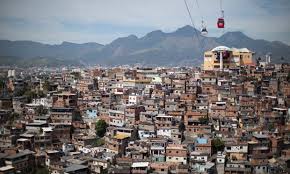
Roger Director reports on the glory and celebration of the World Cup amid the poverty of the favelas. As he writes, “It chastens.”
I was listening to the waves brush the sand a few feet away when the caipirinhas snuck up on me. My buddy and I had found an oasis, this one a bar, and at its outdoor patio in Salvador, capital of Bahia, we and several dozen fans were watching the kick-off of the World Cup’s first game, between Brazil, the host country, and Croatia.
Brazil had been preparing to host the Cup for years, just as we had been planning, having decided this jaunt would constitute some sort of manly “autumn revel”—the last, over-the-legal-limit hootenanny of the sort we and many others of questionable common sense undertake to epic sporting events. We had been to the World Series, NBA finals, Super Bowls, title fights—courting the great throb that sets your neck hairs tingling. This would cap it all, and measure our friendship.
I don’t know Portuguese, but as the Brazilian anthem was sung on the tv—and, full-throatedly, by the dozens of yellow-and-green clad fans around us in the steaming air—it wasn’t hard to imagine that the words to the national song mean ‘we will win the World Cup.’
Piles of shanty boxes, open to the elements, piled atop each other like tossed-out produce crates, their sides buckled, their leaking, makeshift roofs stove in.
Soccer at times seems like it constitutes half of the country’s DNA helix, as David Goldblatt notes in a terrific new book, Futebol Nation, The Story of Brazil Through Soccer. It’s more than fitting, therefore, that Brazil host the tournament. Hundreds of thousands of fans who would, in any other circumstance, be far too obviously insane to be granted entry visas, are instead welcome to partake in the quadriennial soccer haj.
Don’t like ads? Become a supporter and enjoy The Good Men Project ad free
Prior to the game, the screen at Oasis flashed an unending succession of soccer highlights, predictably over-analyzed by innumerable talking heads. But there were highlights of a different sort from the other cities around the country—some less than joyous pre-match festivities: police firing tear gas into crowds of protestors. Bank windows being smashed.
Some Brazilian citizens—never mind the soccer in their genetic makeup—felt the need to express their outrage at the billions of dollars spent on games, the Cup and the 2016 Olympics, which will also be held in Brazil, to the detriment, they obviously thought, of the living standards of their fellow citizens. Soccer might be, as the legendary Pele called it, “the beautiful game,” but life itself here isn’t always pretty.
This was all too apparent the very next day. We hiked under a blazing sun to the gleaming new Arena Fonte Nova, site of the match between Holland and Spain, a re-play of the World Cup final four years ago. The crowds teemed along the avenues leading to the match. They had come from every continent and corner of the planet, singing and cheering, pounding drums and hooting horns. Dutch fans, exuberant and orange-clad, matched by hoarse-from-shouting Spain partisans in their red jerseys. It was an immense outpouring of humanity in all its glory.
And just above the throngs, climbing upward at an impossible angle, in an ascent that seemed to reach the heavens, were the favelas. The slums—although it is, if you will, too nice a word. Far too nice. Piles of shanty boxes, open to the elements, piled atop each other like tossed-out produce crates, their sides buckled, their leaking, makeshift roofs stove in. Garbage and waste-strewn. Reeking of sewage. With a spiderwork of jerry-rigged electric wires that regularly spark into flame. The utter disarticulation of human life.
Felipe Dana/AP
A glance up from the street as you follow your fellow holders of $200 and $500 tickets, who have flown in business class, and you recoil in horror. It chastens.
You could dwell on it, wind up fretting, and allow your mind to wander and miss the live action right there on the pitch below you, as I almost did after I’d found my seat at the Stadium and the Holland-Spain match raced along.
But the raised arm of the Dutch striker Robin Van Persie re-claimed my attention. He was signaling his teammate and began a long, angling run across the field. Van Persie met the pinpoint pass he’d motioned for as if he’d merely been ordering a beer, and he got the ball at exactly the spot he wanted. Displaying unearthly coordination and a holy grace, Van Persie floated a header over Spain’s goalkeeper for an equalizing score. The stadium exploded, seeming to lift into the air. The Dutch had waited four years for the revenge they exacted throughout the rest of their 5-1 beatdown of the defending champions.
As it swarmed out of the stadium, the crowd was wet with rain, sweat, beer and salivating delirium. Everything had gone perfectly for the Dutch fans, and the night, like all the remaining nights of this month-long tournament, would be filled with car horns and fireworks, kissing and hugging, dancing and howling and every manner of celebration.
The next day, my friend and I visited the San Marco favela, along with a small group that included Wilson Egidio, a Brazilian and former player who has become a notable, widely respected youth soccer coach in the States. Wilson regularly treks to Salvador, bringing soccer equipment and offering coaching clinics to the kids of the favela.
For this trip he brought bags of new shoes and balls to the ramshackle headquarters of a youth club supported by a top local professional side, Vitoria. The kids, ages five to 15, none of whom look to be more than half-fed, sat cross-legged and listened respectfully as Wilson spoke to them before they rummaged through the bags.
Afterwards, in the heat, they began non-stop, sweaty scrimmaging in the bare dirt pitches where they are learning to play the game. They had sought shoes that weren’t so tight they made their feet hurt. They had sought some new soccer nets. And, of course, some sought a chance that somehow what Wilson delivered would help them one day leave this hillside’s open grave and join the river of riches flowing by joyously right at their feet.
Photo: Luca Bruno/AP
About Roger Director
Roger Director is an Emmy-nominated television writer-prouducer who has worked for such shows as NCIS Los Angeles, NCIS, Mad About You, Arliss, Moonlighting and Hill Street Blues. He has published two books: the novel A Place to Fall and I Dream in Blue, a non-fiction ramble about his blood-loyalty to the New York Giants football team. He has written for espn.com and edited Sport Magazine.