



—
Any flat metal with a thickness of 0.150 to 6mm (0.006 to 0.25”) is known as sheet metal. These sheets are used to form a variety of parts and products using various metal forming techniques. Before producing the parts and products for the market, they need comprehensive testing of their features, functionality, and durability. Therefore, first sheet metal prototypes are made and tested for desired functionality to improve the model and validate it for further production. Sheet metal prototyping involves shaping the worksheet using laser cutting, bending, stamping, punching, etc.
This article will elaborate on the process, benefits, and application examples of sheet metal prototypes.
What is meant by Sheet Metal Prototypes?
These are the functional testing models that have all the desired features and functionality according to design. These prototypes are made with streamlined forming processes and simple tooling. The sheet metal prototypes allow designers or product developers to test the fit, form, and functionality of designed parts and products.
Prototypes are also essential for the minimization of the assembly intricacies. You can leverage sheet metal service to test structural integrity, precision specifications, cost-effectiveness, and functional flaws to find the areas where you can improve to make them better. There are several experienced sheet metal prototype manufacturers online like Proleantech.

Sheet Metal Prototyping Materials
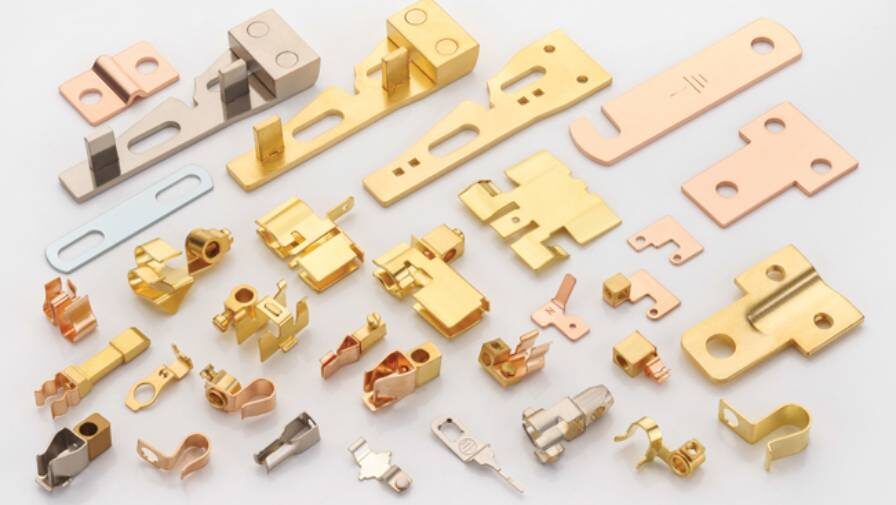

Sheet metal manufacturing and prototyping metals are similar. You can create prototypes from any metal or alloy sheet if their physical and mechanical properties support the desired deformation. Sometimes, manufacturers make prototypes with softer materials like aluminum in primary phases to test the physical geometry of designs.
Stainless steel sheets are tough and offer good corrosion resistance, alloys like 304, 316, 420, and 420 are used for various prototypes. Additionally, mild steel and alloy steel sheets can also used in prototype manufacturing.
Aluminum is another common sheet metal for rapid prototypes, it is ductile and can be formed into different shapes easily. Based on requirements, you can choose aluminum alloy grades like 7075, 6061, and 5052 for rapid sheet metal prototyping.
Furthermore, other prototyping sheet metals are copper, brass, titanium, zinc, and nickel.
Rapid Sheet Metal Prototyping Process
The rapid sheet metal prototyping process involves different steps, each optimized for maximum efficiency. It starts with creating a sheet metal design based on the available metal forming process, tooling, metal forming operations, and testing.
Here are the prototyping steps and guiding you how to make sheet metal prototypes in brief.
Step 1: Create A Detailed Design
Make a detailed 2D and 3D design of the desired sheet metal part or product(sheet metal drawing). You need to outline all features, dimensions, tolerances, and other information required for manufacturing. Meanwhile, there are tolerancing standards like ISO 2768 that you can follow to ensure manufacturability.
Step 2: Determine the Required Forming Techniques
Based on the design, determine which forming techniques are needed to achieve the shape. First, you might need to cut into small sizes with a laser cutter, then bend the pieces into curvature, stamping with a die setup, or whatever forming technique.
- Laser Cutting:A focused laser beam controlled by a CNC laser head precisely cuts, shapes, engraves, or marks the sheet into the desired dimension.
- Bending:It refers to deforming the sheet into a specific curvature or angle. Typically, press brakes are used for this.
- Punching: Creating a hole on the worksheet with a counterpart punch.
- Stamping: Imprints shapes or designs onto sheet metal using a die and press. Common techniques are single die, progressive die, and compound die stamping.
- Other Operations: Shearig, notching, blanking, deep drawing, etc.
Step 3: Tooling Arrangement
After identifying and sequencing the sheet metal operations going to be executed to shape the prototype, ensure you have all the necessary tools and equipment. For example, if you going to use stamping, you need to make the die and punch for that first. In case of such heavy tooling, use rapid tool manufacturing methods.
Step 4: Execution of Forming Operation
Now, set the tool on the machine and tools and execute each operation in the right sequence. Meanwhile, ensure the deformation variables like bending force, laser power, etc, for the optimal result.
Step 5: Assembly & Post Process
If different parts need to be assembled to form the sheet metal prototype, choose the right joining technology (welding, riveting, etc.). Meanwhile, the prototype might also need trimming, machining, sanding, or other post-processing to achieve the specified specifications.
Applications of Sheet Metal Prototyping Across Industries

Automotive, aerospace, electronics, home appliances, and many other industries require prototypes to test, improve, and validate the new sheet metal designs or improve existing parts. Additionally, sometimes industries need some custom parts or systems, they also require prototypes.
- Automotive: Chassis supports, exhaust system parts, engine brackets, interior trim components, and more.
- Aerospace: Instrument housings, airframe components, control panels, wing supports, etc.
- Electronics: Heat sinks, battery contacts, circuit board mounts, connectors, enclosures, etc.
- Industrial Plant: Machine guards, convoy brackets, motor housing, control cabinets, etc.
—
This content is brought to you by Robbin Smith
Photos provided by the author.

