



When I was a boy, my best friend, Steven, didn’t invite me to one of his birthday celebrations. He invited another friend from his school, and they went to a local carnival.

My father found me sulking in my bedroom and asked what was wrong. I told him that Steven went to a carnival for his birthday with another friend, and didn’t invite me. I added that I wasn’t going to invite Steven to any more of my birthdays.
Dad sat down next to me and said, “It’s your choice, Johnny, but I think that would be a mistake. You don’t know why Steven didn’t invite you to his birthday. Maybe his friend was the one with the tickets to the carnival? You two spend nearly every day together. Perhaps he just wanted a change?”
I wasn’t moved much by my father’s reasoning, but then he said something I never forgot:
It comes down to what kind of person you want to be, Johnny? Small people seek revenge. When they’re hurt, they want to get even. Big people take the moral high ground. They forgive. They treat others the way they’d like to be treated.
It didn’t take long for me to get over the whole incident, and when my birthday party came around I invited Steven and had a great day. It felt good to do the right thing.
I didn’t know it at the time, but Dad’s fatherly lesson was yet another brick laid in the foundation of my character. There are many important bricks that well-adjusted people are built upon. Honesty. Integrity. Trustworthiness.
When these bricks are properly assembled and modeled by effective parents, gifted teachers, and professional mentors, they form one of the most important qualities that lead to success and happiness in life.
What is this vital quality?
Emotional maturity
Full-Bodied Preconception
I went to university and graduated in 1989 with a master’s degree in criminal justice administration. After a rigorous selection process, a six-month police academy, and many more months of field training, I became a police officer with the Scotts Valley Police Department.
Despite the stoic and macho depictions of police officers on television, my real-life experiences were quite different. Some of the cops I worked with were rugged and tough, but others were outgoing and funny.
Some were musicians and artists. I knew a burly, deputy sheriff who was a sensitive actor performing in local plays. So many preconceptions of police officers are wrong, fueled by TV shows or anecdotal stories.
“There is nothing so expensive, really, as a big, well-developed, full-bodied preconception.” ― E.B. White, One Man’s Meat
In short, most cops I knew and worked with were like people in other professions. They had spouses, kids, mortgages, dreams, strengths, and weaknesses. Human beings are human beings.
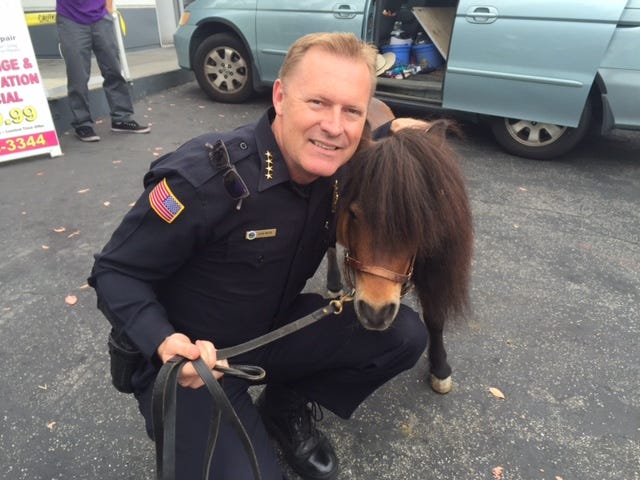
Chief John P. Weiss, horsing around at work.
As I rose in the ranks to supervisory and management positions, I had to work with officers on their strengths and weaknesses. Most were fine individuals with good hearts and a desire to help others.
Some, however, suffered from emotional immaturity. They succumbed to cliques, gossip, and complaining in the station house. Most of the employee problems I dealt with in my career were due to emotional immaturity issues.
In fact, for the ten years I served as Chief of Police, the single, most important quality I looked for in hiring new police officers was emotional maturity.
***
Don’t Throw Pity Parties or Blame Others
Roger K. Allen, Ph.D., defines emotional maturity as “the ability to make good, positive, healthy choices during the challenges of life.” Especially key moments in your life, when there are potential consequences to your actions or lack thereof.

I like this definition of emotional maturity from an article in theroot.com:
Emotional maturity is the ability to handle situations without unnecessarily escalating them. Instead of seeking to blame someone else for their problems or behavior, emotionally mature people seek to fix the problem or behavior. They accept accountability for their actions.
Here’s another example of my father teaching me emotional maturity. A colleague of mine was selected over me for promotion to Lieutenant. I was disappointed and frustrated. I put a lot of time and effort into the promotional process and felt sorry for myself.
I complained to my father about it, and all he said was, “Have you shook the other guy’s hand yet?”
“What?” I said.
“Johnny, shake the guy’s hand. Tell him congratulations, and that if he needs anything in his new position, you’re happy to help. Wish him success, and be sure to attend his promotion party. It’s the right thing to do, and besides, people judge you more when you fail than when you succeed,” Dad said.
My father’s advice was a blueprint for what emotionally mature people do. They take responsibility for their successes and failures. They don’t throw pity parties or blame others, even when they have a right to. They work around roadblocks, and focus on personal development and doing the right thing.
According to a blog post by Roger K. Allen, Ph.D., here are some of the differences between emotional immaturity and emotional maturity.
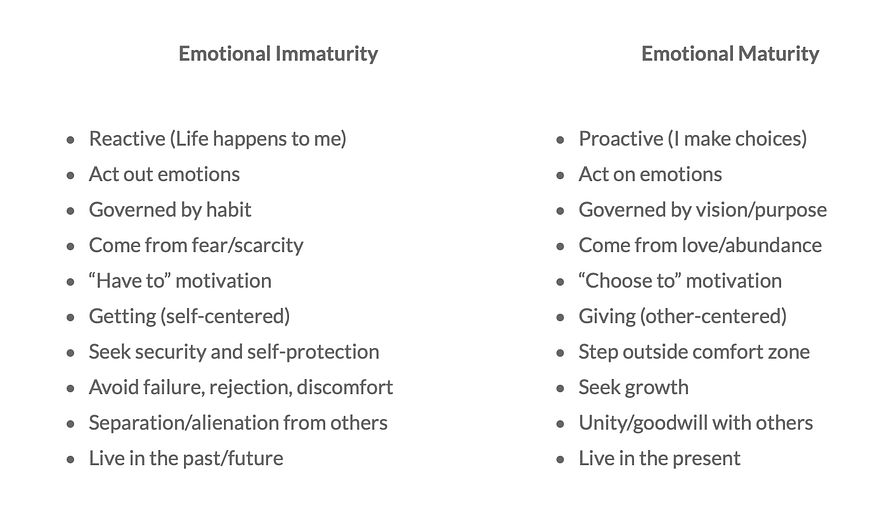
Where do you fall in the above categories? If we’re honest with ourselves, we’ve all done things in the emotional immaturity column. The good news is that it’s never too late to develop and hone our emotional maturity.
***
The Humanity of the Officer
The best cops I had the pleasure of working with were emotionally mature. They took responsibility for their lives instead of complaining or blaming everyone and everything for their troubles. And they had empathy and kindness for others.
Watch the heartwarming video below. It shows the power of an emotionally mature police officer as he interacts with a suicidal, autistic, young man.
.
.
Cops are taught something called “command presence.” It’s an important tool because if you can’t project strength and authority, you’ll put yourself at risk with gang members, bikers, and those who are sizing you up for weakness.
Yet there are times when cops must convey gentleness and kindness, much like the officer in the video above demonstrates.
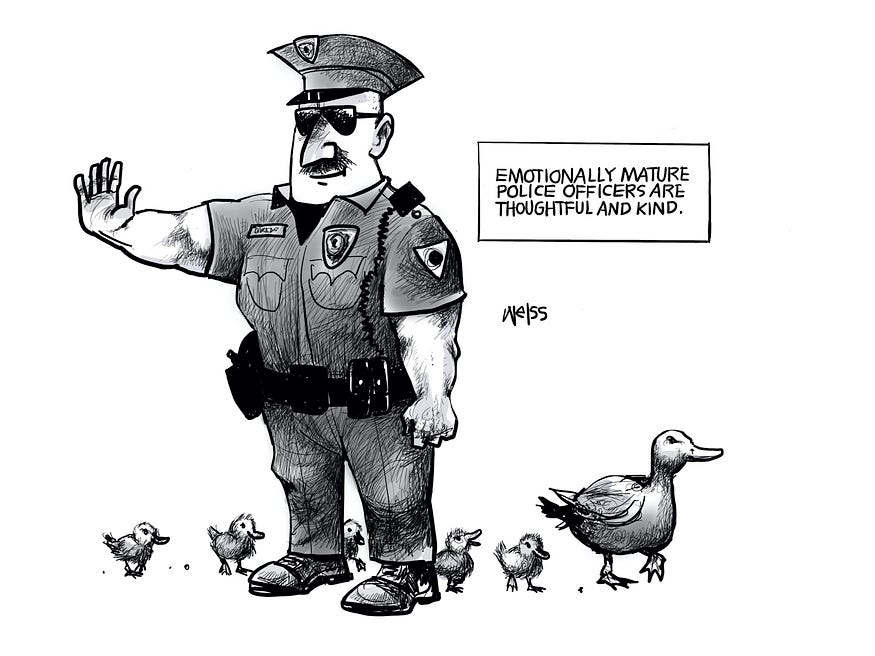
When I was in uniform, I used to bend down to talk to children on their level. If a crime victim was sitting in our lobby, I would kneel down to carry on a conversation at eye level. I was aware that my uniform and equipment were intimidating, and wanted to build trust and rapport.
In my experience, the emotionally mature cops I worked with were far better at gaining the cooperation of others, from gang-bangers and emotionally disturbed people to scared witnesses and timid children.
These emotionally mature cops also managed to avoid office gossip and petty squabbles. They seldom got complaints, frequently earned promotions, and were respected by all.

Emotionally mature cops are patient with angry people.
Emotionally mature cops are comfortable with themselves. They have nothing to prove and seem to possess deeper wells of empathy and understanding of others.
***
Whiners and Winners
If we want to make police officers more effective, we should invest more energy in identifying emotionally mature police candidates. That means expanding criteria in the background process to screen for warning signs of emotional immaturity.
It also means working more closely with psychologists who evaluate police candidates, to elevate the importance of emotional maturity in our selection process.
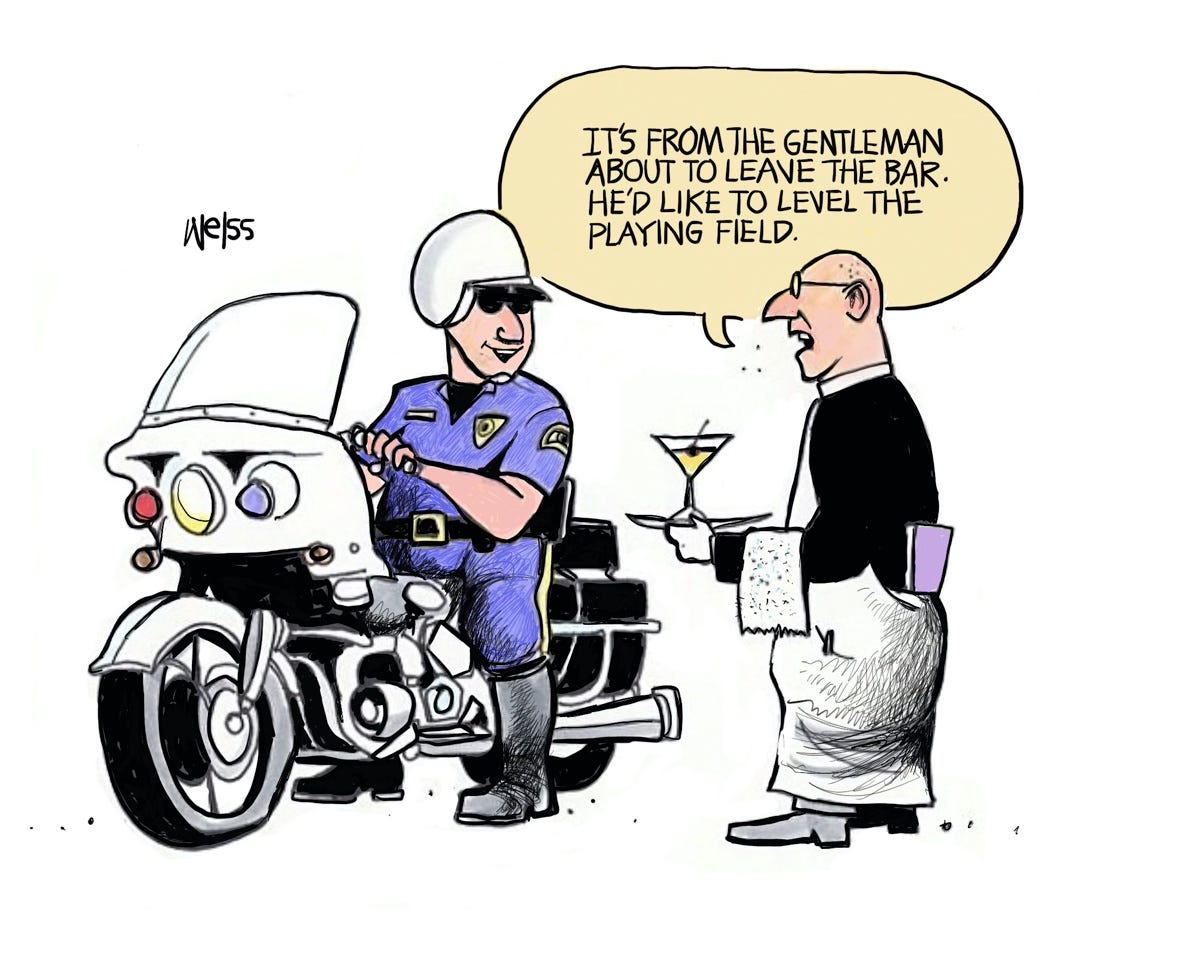
Emotionally mature cops have a sense of humor.
In my first year as chief of police, I hired a few officers who received “low pass” recommendations from our police psychologist. We had reduced staffing and desperately needed more officers.
The candidates appeared to be excellent in every other area of testing. I took a chance and hired them, despite their “low pass” psychological scores.
Unfortunately, the candidates ended up becoming whiners and malcontents in our agency, often gossiping and complaining. They demonstrated little emotional maturity and negatively affected morale in the department. It was a mistake I never made again.
When problems arise, you will usually find two types of people: whiners and winners. Whiners obstruct progress; they spend hours complaining about this point or that, without offering positive solutions. Winners acknowledge the existence of the problem, but they try to offer practical ideas that can help resolve the matter in a manner that is satisfactory to both parties.-George Foreman
Don’t like ads? Become a supporter and enjoy The Good Men Project ad free
***
Respond Wisely in Each Moment
During my ten years as a police chief, I learned how important it was to hire people with emotional maturity. I made emotional maturity a theme in our recruitment and training and insisted our supervisors and administrators model it in their behavior.
One of the best classes I attended in my police career was “Emotional Survival for Law Enforcement,” taught by Kevin M. Gilmartin, Ph.D. We sent as many officers as we could to Dr. Gilmartin’s training, which covered everything from cynicism, malcontents, relationship failures, and integrity loss issues to over-aggressiveness, victim-based thinking, entitlement orientation, loyalty, integrity, and more.

Emotionally mature cops are good listeners.
Police work is an impossibly difficult job. All the ills of society seem to fall on law enforcement. If we want to help police officers to be more effective, focusing on emotional maturity is key. Both in the initial selection and hiring process, and throughout the career of police officers.
“Emotional maturity involves the ability to be self-aware of one’s emotions and be able to filter them before acting on them. Whether you are relatively unemotional or life feels like a constant, erratic roller-coaster, emotional maturity involves being able to respond wisely in each moment while staying true to yourself.” ― Charlotte Maloney, Emotional Maturity: Discover How to Control Your Emotions and Be More Mature
Beyond the world of law enforcement, emotional maturity is a quality we should all strive for. If you want to be more effective in your work and life, learn to take responsibility for your decisions and actions.
Stop blaming other people and circumstances. Manage your emotions so they work for you, not against you. Set high standards for yourself, and treat others as you would like to be treated.
The best cops possess emotional maturity. The same can be said for most of the effective people I’ve met. Imagine what kind of society we’d achieve if parents, teachers, and organizations made the development of emotional maturity a priority?
***
Before You Go
I’m John P. Weiss. I write about life lessons, culture, and the creative arts. Get on my free email list here for the latest artwork and writing.
—
This post was previously published on Medium.
***
You Might Also Like These From The Good Men Project
 |
 |
 |
 |
Join The Good Men Project as a Premium Member today.
All Premium Members get to view The Good Men Project with NO ADS.
A $50 annual membership gives you an all access pass. You can be a part of every call, group, class and community.
A $25 annual membership gives you access to one class, one Social Interest group and our online communities.
A $12 annual membership gives you access to our Friday calls with the publisher, our online community.
Register New Account
Need more info? A complete list of benefits is here.
—
Artworks by John P. Weiss

