



Imagine what it must have felt like for Leonard Bernstein. It was Christmas day, 1989 in East Berlin.

It was a historic event and the concert was broadcast live to over twenty countries and approximately 100 million viewers.
The concert included an international cast of notable singers and musicians. The result was a powerful and stirring performance of Beethoven’s Ninth Symphony (view the actual video here.)
What many may not have known during the concert was that Leonard Bernstein was dying.
The power of art
Author Kent Nerburn’s wonderful book “Letters to My Son- A Father’s Wisdom on Manhood, Life, and Love,” contains a chapter titled “The Power Of Art.” In it, Nerburn discusses Leonard Bernstein’s famous 1989 performance in East Berlin.
Listen to Nerburn here as he describes Bernstein at the concert:
There he stood, a Jew who had lived through the dark years of the Holocaust, in the midst of the city that had symbolized both the Nazi regime and the division of the world into camps of communism and democracy, preparing to lead an orchestra and chorus from the nations of the world in a song of healing and celebration.
Bernstein, a life long smoker, suffered from emphysema. He was in ill health at the concert and passed away from a heart attack that following August.
Still, he lived for his music and art. He lived long enough to see the fall of the Berlin Wall. Music and art once again outlasted persecution and suppression.
As Kent Nerburn put it: “What a valedictory for a man who had given his life to the joy and power of music.”
Nerburn went on to write:
This is the power of art. It lives in music, it lives in the theater, it lives in painting and architecture and sculpture. It can come in the words of a poem or on the pages of a novel.
The question is, must art become commercially successful and widely recognized to be powerful? To fulfill the artist’s creative vision? To elicit joy in oneself and others?
Doing the work is enough
The problem for a lot of artists is not their art but their egos. Dreams of artistic fame and fortune rob many artists of the simple joy to be found in creating.
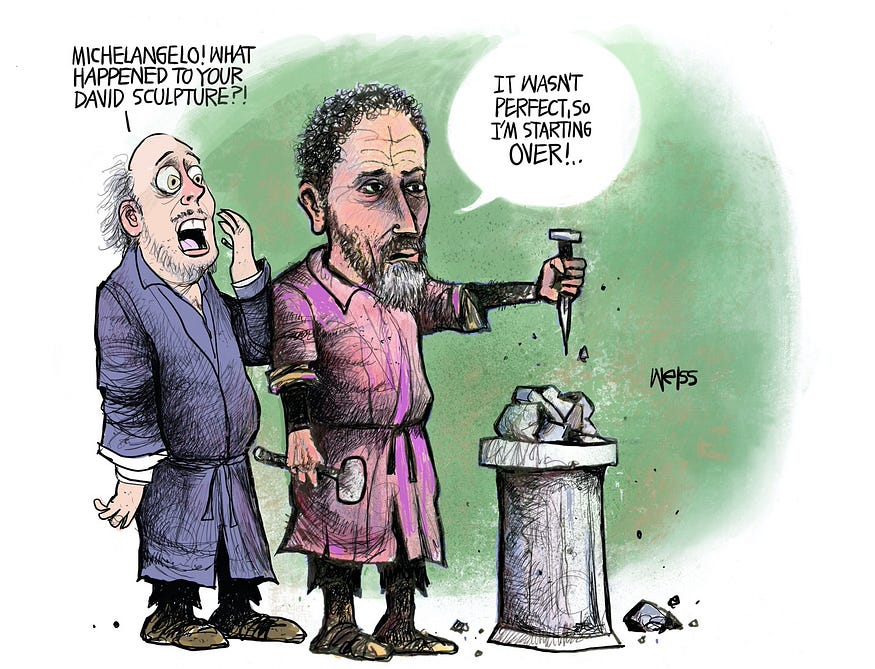
Author Ryan Holiday warns us about the evils of ego in his excellent book “Ego Is The Enemy.” Here’s an excerpt from his book:
John Kennedy Toole’s great book ‘A Confederacy of Dunces’ was universally turned down by publishers, news that so broke his heart that he later committed suicide in his car on an empty road in Biloxi, Mississippi. After his death, his mother discovered the book, advocated on its behalf until it was published, and it eventually won the Pulitzer Prize.
Nothing had changed between the submissions of Toole’s book. The content of the book was the same. Unfortunately, Toole’s ego was crushed. He failed to appreciate “how arbitrary many of the breaks in life are.” He failed to celebrate the personal joy in creating.
Ryan Holiday included two excellent quotes in his book about the dangers of ego. The first is from the American basketball coach John Wooden:
Success is peace of mind, which is a direct result of self-satisfaction in knowing you made the effort to do your best to become the best that you are capable of becoming.
The second quote comes from the Roman Emperor Marcus Aurelius:
Ambition means tying your well-being to what other people say or do…Sanity means tying it to your own actions.
Finding Calm On The Seas Of Creativity
The refrigerator doors of many families are adorned with the artwork of children. Animals and people and landscapes rendered in pencil and crayons. Parents experience joy in these simple, honest expressions of creativity.
Art need not be “celebrated” and “noteworthy” to bring joy and exhilaration. A personal poem from a friend or watercolor painting of a favorite place can bring great happiness.
“Art transcends all human boundaries. It is a gift of almost inexplicable, magical energy. When our hearts, through our senses, are touched by art, our lives are enhanced.” -Richard MacDonald, Sculptor
The trick for artists is to keep growing and working and developing their creative voice. There is nothing wrong with dreams and ambitions, so long as artists do not lose the joy in their work.
Don’t let your ego destroy your creative joy. Rather, focus on gratitude. Appreciate the gift of creativity.
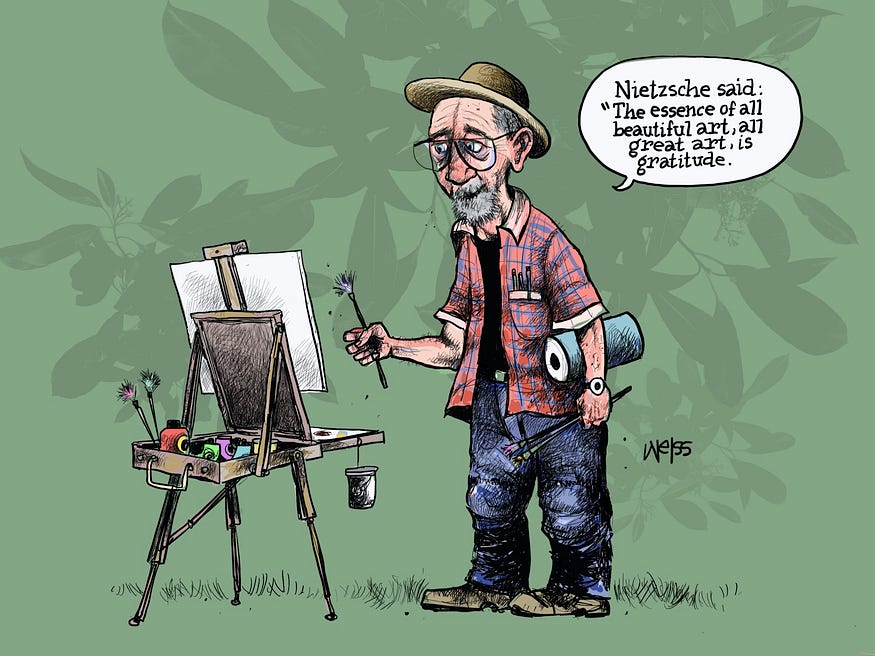
If we are to remain calm and happy on the seas of creativity, then we must lose our egos and retain our imaginations. Paint, write, and create with the same reckless abandon you had in your childhood.
Rededicate yourself to producing the best creative work you can. Study, work hard, push yourself, but stay calm and have fun along the way.
In closing, Author Kent Nerburn sums it up perfectly:
“Once you love an art enough that you can be taken up in it, you are able to experience an echo of the great creative act that mysteriously has given life to us all.
It may be the closest any of us can get to God.”
Before you go
I’m John P. Weiss. I draw cartoons, paint, and write about life. Get on my free email list here for the latest articles and artwork.
—
This post was previously published on Medium.
***
You Might Also Like These From The Good Men Project
 |
 |
 |
 |
Join The Good Men Project as a Premium Member today.
All Premium Members get to view The Good Men Project with NO ADS.
A $50 annual membership gives you an all access pass. You can be a part of every call, group, class and community.
A $25 annual membership gives you access to one class, one Social Interest group and our online communities.
A $12 annual membership gives you access to our Friday calls with the publisher, our online community.
Register New Account
Need more info? A complete list of benefits is here.
—
Artworks by John P. Weiss

