



I’ll bet you’ve seen this dozens of times at work. Something doesn’t get done or a project falls through. The accountability game begins, and the excuses fly. Fingers are pointed.

An angry George lists three times in the last month that Suzie failed to respond to his emails, and then turns on Doug, saying, “Doug was lead on this project, how come he didn’t stay on top of the deliverables?”
The only winner in this workplace dustup is Peter Flannigan, who owns the pub across the street where everyone will go after work to drink and commiserate in their respective cliques.
“Accountability separates the wishers in life from the action-takers that care enough about their future to account for their daily actions.”― John Di Lemme
Nobody likes to take responsibility when things go wrong. It’s much easier to deflect, deny, sidestep, and point the finger at others.
What’s worse, this type of behavior doesn’t just happen in the workplace. It happens at home too and in our relationships.
What is this unhealthy behavior that feels good but eventually makes us miserable?
Blame.
A negative mental state
According to an article by Chris Smith in Filevine.com, blame is contagious. Here’s an excerpt from the article:
In 2009, the Journal of Experimental Social Psychology released a study about the blame contagion. Psychologists Nathanael Fast and Larissa Tiedens conducted four experiments to determine if and why blame seems to spread from person to person. What they found was that the ‘blame contagion encourages a person to engage in blaming behaviors shortly after being exposed to another individual making a blame attribution for a failure.’ When we see someone defending themselves and blaming others, we reflexively defend ourselves as well.
We deflect and place blame on others in order to protect ourselves and our self-image. Projecting the responsibility onto others is a defense mechanism that does little to help us grow or become more effective, mature individuals.
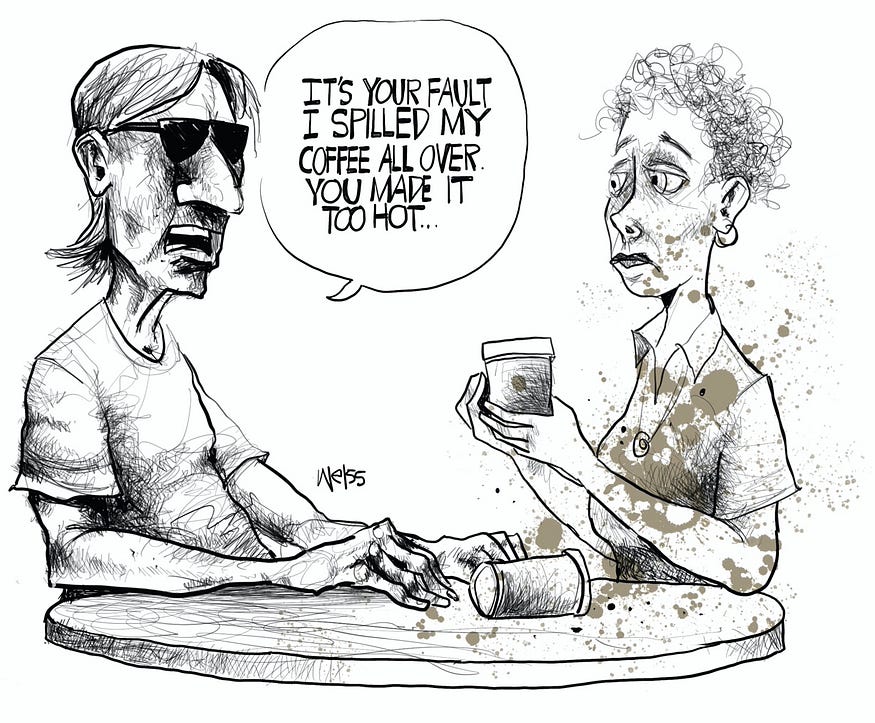
We think that blaming others will protect our reputation, but usually, it sullies our reputation. Most often people know who screwed up at work. When the guilty party fails to take responsibility by blaming others, we think less of that person.
Beyond the damage to our reputation, blaming others also damages our health. As the Filevine.com article notes:
Blaming others and holding blame inside yourself creates a negative mental state. ‘The data that negative mental states cause heart problems is just stupendous. The data is just as established as smoking, and the size of the effect is the same,’ says Dr. Charles Raison. Further, he estimates that 90% of illness originates from negative mental states caused by stress, namely — you guessed it — blame.
Resentment is like drinking poison
Beyond the workplace, blame is equally damaging in relationships. To both the blamer and the recipient.
Consider the husband who finds fault with everything you do. He complains that your job intrudes on your relationship. He belittles your hobby because he thinks you should be more focused on him.
He‘s blaming you when the real problem is his own insecurity. Rather than do the hard work of fixing himself, he blames you for everything. It’s easier than taking responsibility for his own dissatisfaction. But in the end, he’s sowing resentment in you.
“Resentment is like drinking poison and waiting for the other person to die.” -Saint Augustine
Resentments slowly build in us. We collect them like ammunition for a rainy day. And when the dark clouds billow and emotional humidity rises, we load the ammo in our defensive gun and take aim.

Then one day, after countless past resentments, the jerk husband blames us for not making the bed, and we take aim and fire repeatedly.
It feels good to us but disproportionate to our husband. “Why are you over-reacting?” he might say, oblivious to all the past blame that built up inside you.
According to the Filevine.com article:
Blaming hurts relationships. Clinical psychologist Dr. Tom Jordan has written about how blame affects relationship dynamics. Those who are blamed experience guilt and bitterness towards themselves and others, and over time, their self-esteem drops. Blaming makes it harder to communicate with each other, trust each other, and work together. Blaming also reduces kindness and intimacy.
Ideally, we shouldn’t let resentments build up. As soon as we are blamed unfairly, we need to address the issue calmly, and directly. As in the example above, the problem is not that you failed to make the bed. The problem is your husband’s insecurity.
Of course, if one’s spouse is a hopeless narcissist or abusive, your first priority is to protect yourself (and possibly end the relationship). But even in healthy relationships, the blame game can lead to serious problems.
Driving through life with your hand-break on
If we are to overcome this unhealthy behavior of blaming others, there are five things that can help.
Improve your self-esteem
How you feel about yourself has a huge impact on how you navigate the world. The good news is that you can improve low self-esteem. The bad news is that it takes work.
Start with physical exercise, sufficient sleep, and a decent diet. No, you don’t have to become a supermodel. It’s not about vanity, although we all want to look our best. Rather, it’s about good health and fitness, which leads to more energy. Regular exercise also combats depression.
“Low self-esteem is like driving through life with your hand-break on.”
– Maxwell Maltz
Surround yourself with good people rather than toxic people. Work on your assertiveness, and learn to politely say no to things. You have a right to pursue your dreams.
If there was abuse or trauma in your past, seek professional help. A good therapist can help you tame your demons, which will only increase your self-esteem more.
Achievement
The author Cal Newport, in his book “So Good They Can’t Ignore You,” wrote about the importance of developing “rare and valuable skills.” If you want to stand out from the crowd, it helps to develop expertise.
Developing rare and valuable skills means that you must have an achievement mindset. This requires good habits and routines, which are more reliable than sheer discipline.
“Great achievement is usually born of great sacrifice, and is never the result of selfishness.” -Napoleon Hill
While others are wasting time watching cat videos on social media, why not drink from the fountain of knowledge? You can be taking online courses and honing valuable skills.

For example, I know a realtor in California named Robert Aldana who consistently outperforms the competition. How does he do it?
First, he became an accomplished realtor. Then, he taught himself how to build an impressive website. Next, he learned great photography and video editing skills. He bought a drone to film overheads of the homes he sells. He even created a popular online magazine and social media links for his home town.
Robert also became involved in many community causes. As a result of all these rare and valuable skills, Robert stands out in his field. You can too.
Focus on learning rare and valuable skills that will help you stand out in your field or passion. Achievement leads to greater self-esteem.
Value character over image
We all want to be admired and liked, so we work hard to cultivate our image. Scroll through any social media feed and you’ll see plenty of vanity photos. People posting carefully curated images of themselves at the gym or running along the beach.
What social media is less likely to show you is the true character of people. The retiree who volunteers at a soup kitchen is less likely to virtue signal on social media. Helping others is the reward of the work, not showcasing it on Facebook.
“No change of circumstances can repair a defect of character.” -Ralph Waldo Emerson
Many faith traditions focus on character because we know that being a good person leads to a better life.

Whether you’re religious or not, deepening your personal character (by helping others, being less selfish, etc.) will improve your self-esteem greatly.
Accept mistakes and failure
It’s inevitable. You’re going to make mistakes. What matters is how you handle it. That’s what everybody is going to be watching.
I sought a promotion at work once, and a colleague of mine was selected over me. I told my Dad how disappointed I was, and that I felt I was the better candidate.
My father reminded me that the preparations and study I completed to prepare for the promotion will make me a better employee, and help me grow. He suggested I respectfully ask my employer where I need to improve.
Dad told me to congratulate the guy who got the promotion, attend his promotion party, and offer to help him in his new position. “People pay more attention to how we handle failure than success,” my father said.
“That which hurts, also instructs.”― Benjamin Franklin
Accept that you’ll make mistakes and experience failure, but you’ll also learn a great deal from it.
Forgive yourself
It’s bad enough to blame others all the time, but it’s even worse when we keep blaming ourselves. Redemption always has room for contrite sinners seeking forgiveness and renewal.
Live long enough and you’ll carry a few regrets and baggage. There will be people you hurt and bad choices made. Maybe a past addiction turned you into an awful person for a while. Perhaps you committed crimes, and your self-esteem is in tatters.
The thing is, you can’t give up hope. People can change in amazing ways. While some may never forgive you, if you want to overcome your past and step into the light, you have to forgive yourself.
“Forgiveness is the remission of sins. For it is by this that what has been lost, and was found, is saved from being lost again.” -Saint Augustine
Make amends where you can. Atone for your sins when and where appropriate. But then take a deep breath, and bury that emotional burden you’re carrying.
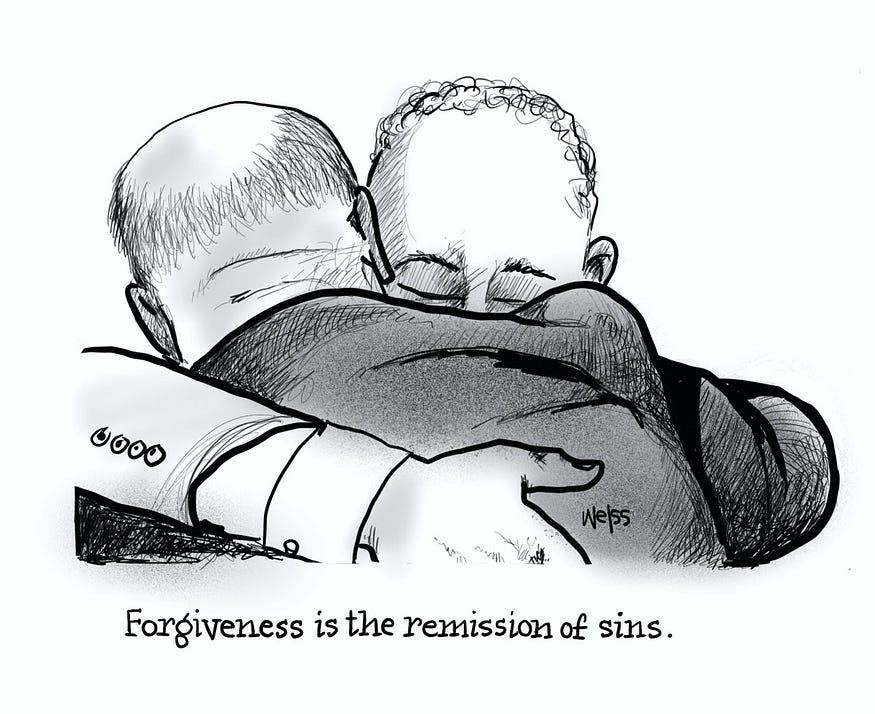
Human beings are complicated creatures. We have different backgrounds. Some of us are blessed with great families and childhoods. Others are not. But the only way to move past the blame game is to forgive yourself and work on becoming the best person you can be.
Live a richer life
Moving from a mindset of blame to one of accountability is key to finding greater success and happiness in life. I’ve always admired leaders who took responsibility, even when the mistakes were not theirs. Such behavior shows deep character.
Don’t be that finger pointer at work. Stop blaming everyone and everything. Learn to take responsibility. Accept that problems and setbacks will happen, and work around them.
Don’t collect resentments, at work or at home. And remember the five tips:
- Work on your self-esteem.
- Focus on achievement, and building rare and valuable skills.
- Value character over image.
- Accept mistakes and failures. That’s how you grow.
- Forgive yourself. Set your burdens down and renew yourself.
Blaming others may feel good, but it’s counter-productive. Take responsibility for your actions, but don’t blame yourself endlessly. Focus on your character and becoming the best person you can be.
In these ways you’ll live a richer life, win the admiration of people and inspire others by your example. You’ll also sleep better at night because letting go of blame frees the soul to explore higher planes.
Before you go

I’m John P. Weiss. I draw cartoons, paint, and write about living a better life. Get on my free email list here for the latest articles and artwork.
—
This post was previously published on Medium.
***
You Might Also Like These From The Good Men Project
 |
 |
 |
 |
Join The Good Men Project as a Premium Member today.
All Premium Members get to view The Good Men Project with NO ADS.
A $50 annual membership gives you an all access pass. You can be a part of every call, group, class and community.
A $25 annual membership gives you access to one class, one Social Interest group and our online communities.
A $12 annual membership gives you access to our Friday calls with the publisher, our online community.
Register New Account
Need more info? A complete list of benefits is here.
—
Artworks by John P. Weiss

