The oxygen flow was at maximum but it wasn’t enough to keep Aliyah alive. Her measles-damaged lungs failed in the night.
Aliyah was one of hundreds of children with measles that I looked after in a special ward of Kenya’s national hospital in 1972, before the measles vaccine was available. I saw all of the possible complications of measles, many of them life-threatening. They left me with a deep respect for this once-common viral infection of childhood.
As an infection specialist, I celebrated the gradual disappearance of measles cases in Canada following the introduction of the routine measles vaccination in the mid-1970s. Today, most physicians have never seen a case. Parents too are unfamiliar with measles, with some doubting the need to avoid it, even viewing it as a trivial illness.
Measles is not trivial. It is the most severe of the once-common childhood infections. It is highly contagious and difficult to recognize until the rash appears later in the illness.
Six decades later, I remember having measles myself as a child: the fever that lasted for days, the headache, shaking chills and drenching sweats. I recall lying on the floor beside my bed, too sick to sit in a chair, while my mother changed the sheets.
This is the normal progress of measles, which causes considerable distress to a sick child and their parents for seven to 10 days, even in the absence of complications. No antiviral drug is available to treat the illness or its complications.
The infection begins in the respiratory tract, with nasal congestion, sore throat, red eyes and increasing cough. Unlike common colds, measles gets worse over several days, causing increasingly high fever (often to 40 C or 104 F) and putting children in bed with nausea, vomiting, chills and headache.
This pre-rash phase lasts about four days, during which the infected person sheds huge numbers of viruses into their surroundings, accounting for measles being highly contagious. One person with measles can infect 75 to 90 per cent of susceptible members of a household by coughing and sneezing viruses into the air.
Communicability is especially high in group settings such as daycares and school classrooms but can also occur with just brief exposure to an infected person.
Contagious before symptoms show
Measles hides its identity. It is often not until the fifth day of illness that the distinctive rash covers the body, revealing the diagnosis of measles. Children are contagious, however, from three to four days before the rash onset, when symptoms mimic a cold or flu infection.
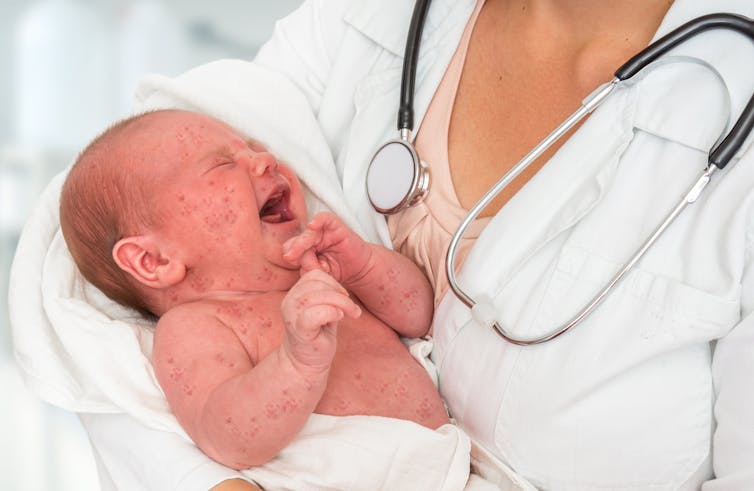
Measles can lead to pneumonia, brain damage and other complications. (Shutterstock)
Unlike colds and influenza, measles infection extends beyond the respiratory tract, spreading through the bloodstream to the skin and other organs. The rash of measles results from the child’s immune system “catching up” and attacking viruses in the skin.
When the rash appears, this marks the peak of illness and signals the beginning of recovery. The fever will soon subside although the child will still be contagious for several more days, and cough for another one to two weeks.
Encephalitis and brain damage
Hospitalization rates for measles are highest for children under five years old — ranging from nine per cent to 25 per cent in Western countries.
Complications occur in about one in three young children with measles.
In short, measles is not trivial. It is distressing at best and life-threatening at worst. Parents should fear it. The sensible alternative is to ensure children are fully immunized against measles, given the excellent safety record and protection that the measles vaccine offers.
We are proud of our SOCIAL INTEREST GROUPS—WEEKLY PHONE CALLS to discuss, gain insights, build communities— and help solve some of the most difficult challenges the world has today. Calls are for Members Only (although you can join the first call for free). Not yet a member of The Good Men Project? Join below!
All levels get to view The Good Men Project site AD-FREE.
Register New Account
Please note: If you are already a writer/contributor at The Good Men Project, log in here before registering. (Request a new password if needed).
◊♦◊
ANNUAL PLATINUM membership ($50 per year) includes:
1. AN ALL ACCESS PASS — Join ANY and ALL of our weekly calls, Social Interest Groups, classes, workshops, and private Facebook groups. We have at least one group phone call or online class every day of the week.
2. See the website with no ads when logged in!
3. MEMBER commenting badge.
*** ANNUAL GOLD membership ($25 per year) includes all the benefits above — but only ONE Weekly Social Interest Group and ONE class.
*** ANNUAL BRONZE membership ($12 per year) is great if you are not ready to join the full conversation but want to support our mission anyway. You’ll still get a BRONZE commenting badge, and you can pop into any of our weekly Friday Calls with the Publisher when you have time. This is for people who believe—like we do—that this conversation about men and changing roles and goodness in the 21st century is one of the most important conversations you can have today.
Don’t like ads? Become a supporter and enjoy The Good Men Project ad free
♦◊♦
We have pioneered the largest worldwide conversation about what it means to be a good man in the 21st century. Your support of our work is inspiring and invaluable.
—
The Conversation is an independent news and commentary website produced by academics and journalists, free for the public. Follow on Twitter @US_conversation