


I grew up in a small town in Southern Illinois where the population hovered steadily around 12,000, give or take. Our family moved into a new home that was built on the developing, east side, just beyond the town’s pride and joy public park that featured a half-dozen baseball fields, recreational areas, and the public swimming pool. At one point, the block we lived on marked the easternmost developed block in the city limits.
It was a clear advantage to walk outside and be within 50 yards of a baseball field, and a quarter-mile from tennis courts, putt-putt golf, and swimming. Impromptu recreation was at your fingertips—limited only by your imagination and the serendipity of playmates. Organized leagues were great, and all, but they weren’t mandatory.
The rich, sacred traditions and rules of pastimes like baseball and football weren’t carved in stone. Necessary tweaks—like “ghost runners on second” and “no rushing the quarterback” —were not compromises, but rather adaptability. Darwin would’ve been proud.
The boundaries of my childhood summer activities stayed well within a single square mile, but it felt like I had the whole planet to myself. When I wasn’t on a bicycle, I was running around barefoot, the soles of my feet bearing the blackened crust of the town’s signature road repairs—chipped gravel and hot tar that stubbornly clung to skin, forming calluses as tough and dark as Shawnee leather moccasins.
The elementary school was within walking distance for most students, and kids were toughened by walking to and from school, even in the brutal Illinois weather. We survived. We didn’t have a choice.
The middle school (what we called junior high) was 2.5 miles from our home, closer to the town’s center, so walking was impractical. Sometimes we rode the bus, other times I caught a ride from my older brothers, who had their own cars and were generous enough to drop me off. Getting home, however, was another matter entirely—often a patchwork of favors, improvisation, and occasional divine intervention.
But the high school was on the exact opposite side of the town from us. This was a cross-country trek of 3.5 miles. By this time, I had a driver’s license and a car—a 1974 Comet, 2-door tank with leather seats and a suspicious hunger for speed, as if it was perpetually auditioning for a Smokey and the Bandit sequel.
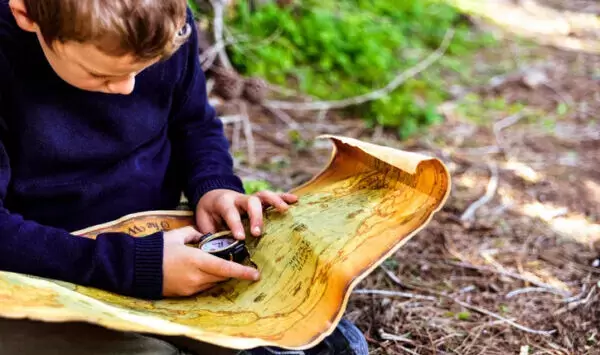
There were three main routes from my house to the high school, each with its psychological advantages in traffic depending on the time of day. I experimented with every conceivable combination of turns and shortcuts like a suburban Walter Raleigh, convinced that within the grid of drowsy streets lay a hidden passage that would shave precious minutes off my daily journey.
In the end, every route proved pretty much the same. The best I ever timed was eight minutes, although the average was closer to eleven. This fact was valuable information to me because it allowed me to leave my house at just the right time. I worked most evenings, usually closing a fast-food restaurant. I got home late, and getting up was a daily challenge. I squeezed every precious minute of sleep I could, and created a morning routine with NASA-like precision—minus the funding, ticker-tape parades, and relatively generous margins for error. Stepping into the classroom of the 1st Period just before the bell rang was a daily test that I took pride in acing. The consequences of habitual tardiness were encroachments on my liberty that I simply could not abide. There was a lot on the line.
At scale, time was micromanaged in units of minutes rather than days or hours. Every destination in my world was reachable in under fifteen minutes, so punctuality wasn’t a vague aspiration—it was a precise science. And meaningful geography? That was confined to a Rand-McNally map that was bounded by the Williamson County line, not the Atlantic and Pacific Oceans. So, it wasn’t all that hard to become acquainted with the key landmarks.
Looking back, it’s strange how normal it all felt—walking to school under a postman’s ethos, making transportation an improvisational skill, navigating town like a machete-wielding junior cartographer. Nobody thought of it as resilience or independence. It was just life.
Then, without fanfare, the baseline subtly shifted. Today, that same journey would require a School Board Guidelines handbook, strategically placed re-supply stations, and therapist dispatchers on call year-round. The roads haven’t changed, but the travelers and their hydration rituals have.
We swapped grit for granola. Horseplay now triggers an “inappropriate physical engagement” incident report. We lassoed that rambunctious “independence,” taming it into submission, and slowing the wild gallop into a tranquilized trot. We discovered new diagnoses to explain behavioral issues that were once seen as standard male traits, villainizing them as newly-awakened maladies that were better left dormant.
Kids who once walked to school in two feet of snow—uphill both ways, and with bare hands clutching heavy textbooks and a brown-bag lunch—are now fitted with ergonomic backpacks to properly distribute the weight of their alkaline water bottles, iPads, last-minute wardrobe options, and assortment of fidget spinners. A “hot breakfast and lunch” awaits them, their costs deducted from their School Lunch Account, funded by their parents, but not always. The threat to affordable car insurance premiums and the job security of school administrators—too terrified to pass on any opportunity to cancel classes for fear of “something happening”—means that education took a backseat to the bubble-wrap gospel of “safety at any cost.” And I mean any cost.
We used to measure character in ingenuity and calluses. Kids used to build forts out of broken lawn chairs, and rig a broken bike chain to get home before dark. Now it’s measured by a customized coping strategy and the number of anxiety-managing apps on their smartphones. What’s more, they get bonus points if they can diagnose a peer’s anxieties using the latest TikTok psychobabble.
And let’s be honest—this isn’t just about the younger generation. The drift toward dependence snuck up on all of us. Few of us are entirely immune. Back when I had a slew of babies to feed, I was a courier for a delivery company in Nashville. We were dispatched to handle routine deliveries from regular customers, as well as emergency parcels and envelopes that needed to get across town in a hurry. My sharp instincts and natural sense of direction helped me get good at it almost instantly. The more deliveries I made on time, the more money I could make.
This was still the age of beepers, and navigating by the stars was challenging even for someone like me, since we worked during the daytime. A few drivers had cellphones, but we were dispatched by radio. GPS devices were still in their infancy, and their features were relatively primitive. While they were indeed cost-prohibitive (a serious barrier for me), that wasn’t why I didn’t have one. I still took a sense of pride in being able to read a map or find my way on my own. I was holding the line on tried-and-true tradition.
Then, the Internet came along, and I started using MapQuest, a handy tool that helped me navigate a route, say, like for a family vacation. Once I finalized the directions, I could print them out, staple the pages, and fold them for safekeeping in my shirt pocket. No more frustrating highway maps with their origami-level folding skills requirements. It would be many years after I left that job before I got a dashboard-mounted Magellan device. But I didn’t like it, and I didn’t fully trust it. It eventually found its way into the car console, where it lay entombed until one day I tossed it. Back to trusting my inner compass.
About five years ago, I began dabbling with a few smartphone GPS apps. I wasn’t comfortable surrendering privacy to Google, so that one was quickly scratched off the list. I tried a few others, but they weren’t to my liking for one reason or another.
One day, I was forced to use Waze because a friend had moved to a new subdivision that was only found on that app. The navigation was fine, but I didn’t utilize any additional features just to get to their house. Still, I stuck with it out of convenience. Plus, my wife liked collecting “rewards points” for confirming traffic conditions while co-piloting. We’re still not sure what the points are actually for, but we’ve got a bunch.
I’ll confess that one of its most captivating features is its ability to alert me to traffic tie-ups and police sightings. So, I started using “Wazie”—as she became known— even when I was headed to a destination I could’ve found blindfolded. I became fascinated with the foresight of impediments on the horizon. I quickly grew accustomed to re-routing and let Wazie override my gut instincts and direct me on an alternate route that seemed, at first glance, counterintuitive. Gradually, my sense of direction dulled, and I noticed the surrender of my autonomy to a technology that I assumed was working for me, and me alone.
However, over time, I started to realize that Wazie was not my private benefactor as I had once believed, and that it wasn’t just reporting traffic; it was directing it. Eventually, my infatuation with my personal highway Sherpa waned, and Wazie became just another imitation soulmate playfully messing with my emotions. What started as a tool to help me locate mysteriously hidden subdivisions became a metaphor for how we all navigate life today.
So, what happened?
We didn’t just hand over our sense of direction—we outsourced decision-making. Gut instinct used to be enough. Now, we consult satellites, live data, and adaptive algorithms just to make a tricky left.
I’m not anti-technology. I’m anti-dependence-disguised-as-convenience. When apps make us forget how to think, walk, or connect without a prompt, we’re not just recalculating—we’re unraveling. We used to know where we were going. Now, we’re just following the next alert and hoping it’s right. We’ve surrendered our autonomy to nameless, faceless – sometimes soulless – entities whose proponents claim “know us better than we know ourselves.”
Our tools have gotten smarter, but we’ve gotten smaller. In a world of algorithmic photo albums and buffets of highlight reels, we’ve traded genuine connection for performative comparison and direction for a digital leash. There was a time when a young man could scout a dozen routes across town and know exactly how long it took to get from home to school—no app, no prompts, and no satellites required. And it wasn’t framed as heroic. It just was.
Instead, we’ve traded the thrill of discovery for the illusion of certainty. We haven’t just lost our sense of direction—we stopped trusting ourselves to find it.
But it isn’t gone for good. If we can stop burying our faces into our digital mirrors—our pocket-sized personas—and take one unprompted and untracked step unapproved by an app, we can recover the instincts we used to trust. Adventure hasn’t disappeared. It’s just been patiently waiting for us to look up.
—
Previously Published on substack and is republished on Medium.
—
Photo credit: iStock

