



What is your proudest accomplishment?
The answer hinges on where you are in life.A ten-year-old might point to her latest Lego creation, whereas a fifty-year-old could wax poetic about the lucrative company he built.
Stretch a little further down one’s lifespan, and pride for material accomplishments like money and career success might yield to philosophical, ethical, or religious achievements.
“I treated people well,” one might reflect, or “I lived my life with virtue.”
In my twenties I was proud of my academic achievements, having attained undergraduate and graduate degrees in criminal justice administration.
I thought I knew a lot.
 But there’s a firm divide between book smarts and real-life experience. Within a few months of becoming a police officer, I discovered how little I understood about humanity, crime, and the fragility of life.
Acing a grad school course on the etiology of crime or Western metaphysical dualism does not prepare you for the real stuff you’ll witness in a law enforcement career.
Like the desperation of poverty. The tenacious grip of addiction. The sense of hopelessness, alienation, and resignation that living on the margins of society can burn into one’s soul.
And so I let go of my academic pride.
The heart of a father
I learned to celebrate new accomplishments, like helping people in my community, and creating a sense of peace and safety I knew our citizenry deserved.
Off duty, I took pride in my artistic accomplishments. The essays and editorial cartoons I published in local media, and the landscape paintings I sold to collectors. Even today, my creative life brings a sense of fulfillment.
Naturally, I sought to be a good husband, son, brother, and friend. We all stumble at times, but mostly I feel I’ve done justice to these roles.
But now, in my sixth decade, there is one accomplishment that eclipses everything else. One achievement that fills my heart with endless joy, pride, and peace.
What is this grand achievement? This gift that has given my life its deepest fulfillment, love, and joy?
The answer is my son.
Becoming a father, raising a child, and watching him evolve into a fine young man, is one of life’s sweetest experiences and greatest achievements.
“The heart of a father is the masterpiece of nature.” — Prevost Abbe, Manon Lescaut
Of course, the accomplishment is not procreation. Rather, it’s the years of love, guidance, patience, sacrifice, and parenting that enable a child to flourish, grow, and come into his or her own as a person of character and promise.
With parenthood, the days are long but the years are short.
It’s not a question of choice
There was an evening when my son was little and I had reached the end of a very long work week. A colleague, Bruce, came over with a six-pack of beer so we could unwind together.
My son was drawing in his bedroom, occasionally strolling into the kitchen to show us his clever cartoons.
And then it was his bedtime. He changed into his pajamas, brushed his teeth, and I tucked him in. I lay down beside him, cradling him as he drifted off to slumberland.
Some time passed and Bruce, abandoned in the kitchen, came downstairs to investigate. My son and I were fast asleep.
All I remember is being gently nudged awake, and Bruce saying, “John, I’m going to leave. You two sleep well.”
And sleep well I did.
What better joy than to sleep beside your child, comfortable, safe, and warm? With that deep feeling of love and gratitude for this innocent soul that rewards you every day with his curiosity, honesty, and enthusiasm for life.
“No one is ever quite ready; everyone is always caught off guard. Parenthood chooses you. And you open your eyes, look at what you’ve got, say ‘Oh, my gosh,’ and recognize that of all the balls there ever were, this is the one you should not drop. It’s not a question of choice.” — Marisa de los Santos, Love Walked In
When my son was born, everything changed.
Suddenly, I was responsible for this little life. All my hopes and dreams became inextricably linked to him. Any success I achieved in life was less for myself and more for his well-being and future.
Also, having a son helped me better appreciate the sacrifices and loving guidance of my parents.
I could do no wrong in my mother’s eyes. She was always my biggest fan and cheerleader, even when I didn’t deserve it. Sometimes kids need that kind of unconditional support. It helps one’s self-esteem. Thus, I became embarrassingly devoted to my son like my mother was with me.
Also, one of the best things about raising a child is having the chance to experience life again through the lens of childhood. From the joy of holiday celebrations to the magic of movies like Toy Story, life with my son became an adventure.
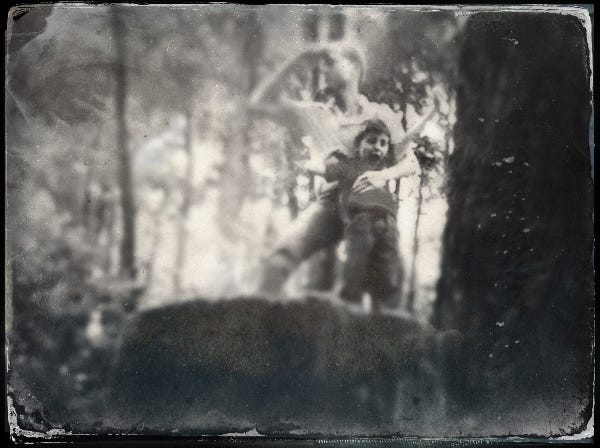
Speaking of adventure, we’d splash around the pool during summer months and explore the redwoods on my days off. Later, during his teen years, I’d take him to martial arts classes and proudly watch from the seating area beyond the matt.
I’ll never forget the day he earned his blackbelt. When your kids achieve goals in life, you feel like you’ve won too.
I have you fast in my fortress
There’s a poem titled The Children’s Hour by Henry Wadsworth Longfellow that gets me every time.
I guess that’s part of the wizardry and enchantment of great poets. They know how to craft words that capture essential truths, emotions, and the important things in life.
Reading The Children’s Hour reminds me of those special moments when my son was young. When he’d dive onto my lap and share something he was working on. Or the sound of his little feet as he padded around the house. Or the way his soft voice whispered a silly thought in my ear. Or the adorable Air Force uniform he proudly wore.
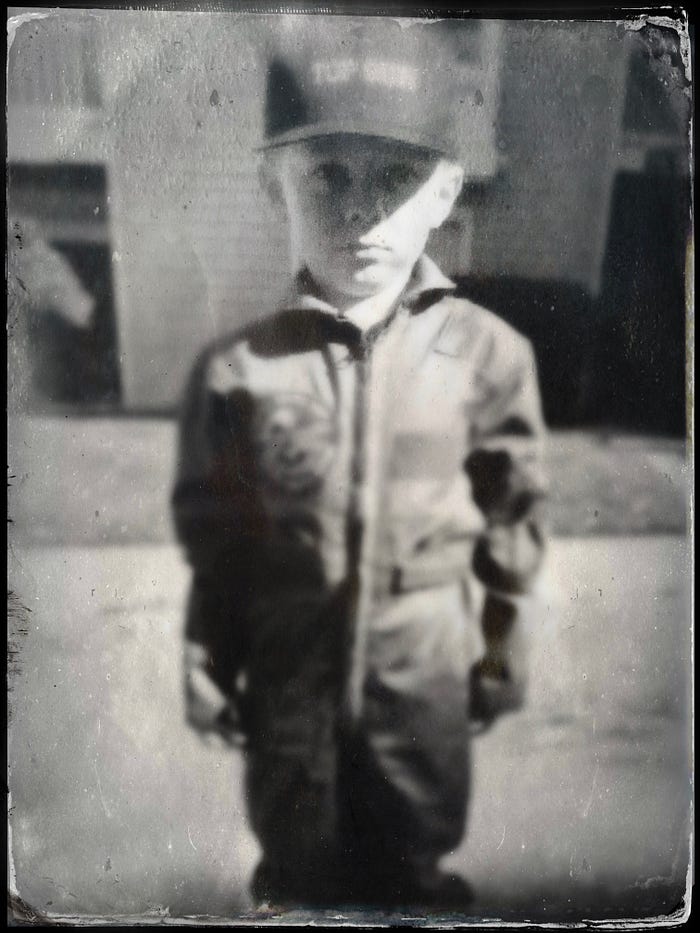
We often take these tiny moments for granted, or maybe even miss them altogether because our thoughts are consumed with adult worries, career challenges, or other preoccupations.
Read Longfellow’s poetic wisdom below, and then try hard to always welcome your children into your fortress.
The Children’s Hour
Between the dark and the daylight,
When the night is beginning to lower,
Comes a pause in the day’s occupations,
That is known as the Children’s Hour.I hear in the chamber above me
The patter of little feet,
The sound of a door that is opened,
And voices soft and sweet.From my study I see in the lamplight,
Descending the broad hall stair,
Grave Alice, and laughing Allegra,
And Edith with golden hair.A whisper, and then a silence:
Yet I know by their merry eyes
They are plotting and planning together
To take me by surprise.A sudden rush from the stairway,
A sudden raid from the hall!
By three doors left unguarded
They enter my castle wall!They climb up into my turret
O’er the arms and back of my chair;
If I try to escape, they surround me;
They seem to be everywhere.They almost devour me with kisses,
Their arms about me entwine,
Till I think of the Bishop of Bingen
In his Mouse-Tower on the Rhine!Do you think, O blue-eyed banditti,
Because you have scaled the wall,
Such an old mustache as I am
Is not a match for you all!I have you fast in my fortress,
And will not let you depart,
But put you down into the dungeon
In the round-tower of my heart.And there will I keep you forever,
Yes, forever and a day,
Till the walls shall crumble to ruin,
And moulder in dust away!
The opening of the poem’s last stanza says it all: “And there I will keep you forever.”
Terrible beauty
In my law enforcement career, I met people who failed their children in one way or another.
Some were wealthy and narcissistic, others were money insecure and struggling with mental health or addiction issues. In both cases, deep down, I believe they wanted to do better.
And sometimes parents who fall short do turn things around. They make amends, become amazing grandparents, or simply share their mistakes with others so that fewer children suffer.
It’s important to forgive oneself, and then try and make things right.
I have a book in my library titled Hitch 22: A Memoir by the late author and public intellectual Christopher Hitchens.
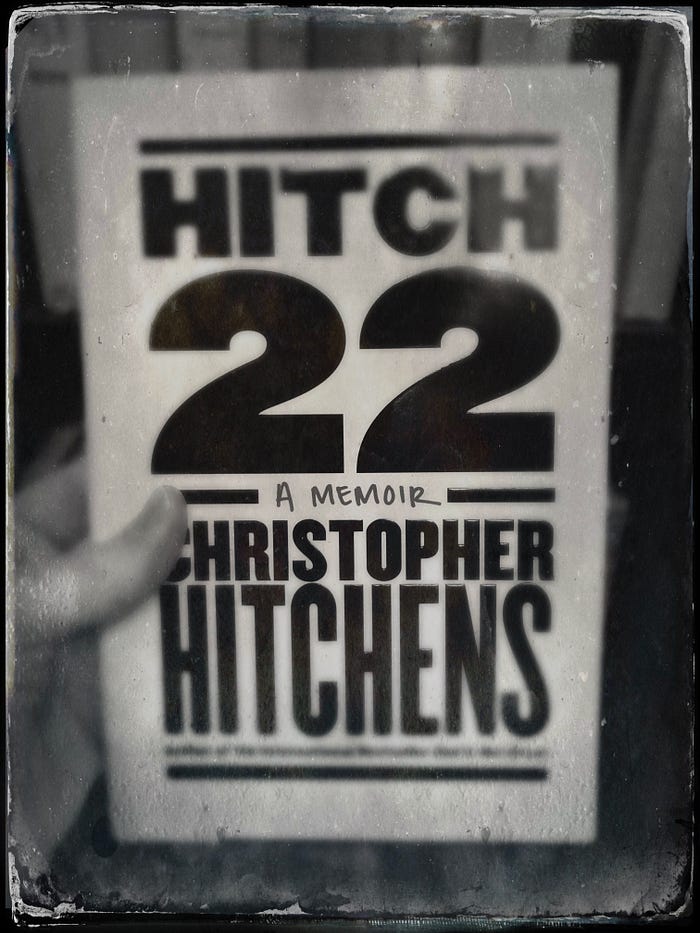
There’s a quote in the book that captures the heart of what it’s like to be a parent:
To be the father of growing daughters is to understand something of what Yeats evokes with his imperishable phrase ‘terrible beauty.’ Nothing can make one so happily exhilarated or so frightened: it’s a solid lesson in the limitations of self to realize that your heart is running around inside someone else’s body. It also makes me quite astonishingly calm at the thought of death: I know whom I would die to protect and I also understand that nobody but a lugubrious serf can possibly wish for a father who never goes away. —Christopher Hitchens, Hitch 22: A Memoir
Indeed, my heart is running around inside my son’s body. He is my proudest accomplishment. A better version of myself.
And when the hour is late, and my time on this earth comes to a close, I shall shut my eyes peacefully. Secure in the knowledge that I have a boy.
A boy who brings me endless joy, pride, and love.
In this world and the next.
Before you go
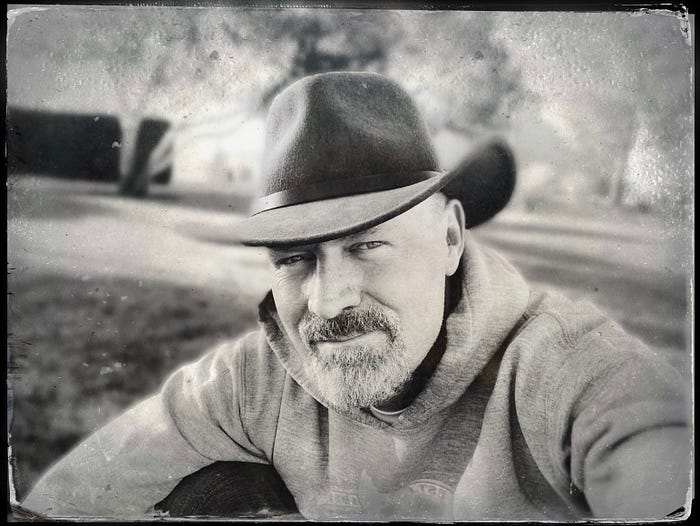
I’m John P. Weiss. I write elegant stories and essays about life. If you enjoyed this piece, check out my free weekend newsletter, The Saturday Letters.
—
This post was previously published on medium.com.
***
You Might Also Like These From The Good Men Project
 |
 |
 |
 |
Join The Good Men Project as a Premium Member today.
All Premium Members get to view The Good Men Project with NO ADS. A complete list of benefits is here.
—
The author and his son. Photo by Nic Weiss

