


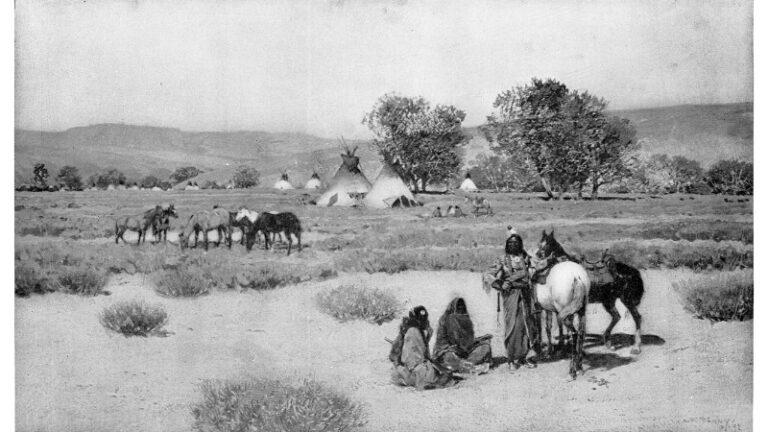
Centuries before the U.S. Constitution, Native American nations had already mastered the balance of power through advanced democratic systems. These Indigenous governance structures fostered consensus, distributed authority, and prevented tyranny with remarkable precision.
Some, like the Muscogee councils, remain among the longest-standing democracies in history. As modern societies face mounting challenges, these enduring systems offer profound lessons in preserving equity and stability.
The Power of Dispersed Authority
Native American communities intentionally created political systems that prevented power from concentrating in any single person’s hands. The Osage Nation, for example, balanced military leadership with peacetime authority, establishing a dual-chief system supported by a council of spiritual leaders known as the “Little Old Men.” (ref)
This careful distribution of power ensured that no individual could make unilateral decisions affecting the community. Leaders were selected for specific skills in addressing real community problems, serving temporarily until the issue was resolved.
Consensus Democracy in Action
Unlike modern majority-rule systems, many Native American societies practiced consensus democracy, where decisions required broad community agreement. These gatherings could involve hundreds or even thousands of participants, including men, women, and children.
The process emphasized peaceful discourse and patient deliberation, with French explorer La Salle noting in 1678 how the Haudenosaunee could conduct significant discussions without raising voices or showing anger.
The Haudenosaunee Model
The Haudenosaunee Confederacy exemplified sophisticated democratic governance. Their system featured a balance of power between genders, with women managing clan-level decisions about land use and community planning, while men served as representatives in the confederacy council.
Each council member, or royaner, was selected by a clan mother and held to extraordinarily high standards of character and conduct. The law required royaners to have “skin seven spans thick,” meaning they needed to be proof against anger, offensive actions, and criticism. (ref)
Leadership through Service
Native American leadership models differed dramatically from European concepts of authority.
Leaders lived within their communities without special privileges or distinctive dress. Their authority came from their ability to serve others and distribute resources wisely.
Political service was considered sacrificial, and leaders were expected to make “giveaways” rather than accumulate personal wealth.
Lessons for Contemporary Democracy
The Indigenous democratic traditions that flourished across North America offer valuable insights for modern governance. Their emphasis on consensus-building, distributed authority, and long-term thinking provides a compelling alternative to winner-take-all politics.
Archaeological evidence shows that these democratic innovations emerged independently in many parts of North America, with institutions promoting broad participation in political decisions appearing long before European contact.
These systems proved resilient, with some, like the Muscogee councils, continuing to function today. (ref) Their success demonstrates that effective democracy requires careful attention to power dynamics and a commitment to collective welfare over individual authority.
As contemporary societies face challenges to democratic institutions, these ancient governance systems remind us that sustainable democracy is possible when power is properly balanced and leaders remain accountable to their communities.
—
This article was published and syndicated by Viral Chatter.
***

All Premium Members get to view The Good Men Project with NO ADS. Need more info? A complete list of benefits is here.
—–
You Might Also Like These From The Good Men Project
 |
 |
 |
 |
—
 |
 |
|
 |
—
Photo credit: iStock

