


It’s been a lovely spring day here in New England. Everywhere there is evidence of new life. I have enjoyed every single sunny day we’ve had, but I also couldn’t help but start to think about what happens when it gets hot later this summer…we had a glimpse of that over the weekend. We could use some rain. We are getting long overdue.
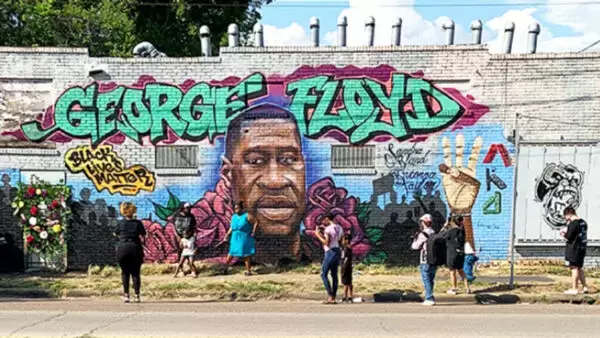
There is a lot that is long overdue. One year ago we witnessed on a recording by a witness’s cell phone video, the nearly 9 minutes of torture by a Minneapolis Police Officer, and the subsequent murder of George Floyd. The event was so obviously an act of intentional homicide, that a jury convicted that officer in one of the very few instances of accountability of its kind. That justice was long overdue. But I hesitate to wonder, what would have happened if we did not have that video recording of those nine minutes.
The event brought the disparity of what it’s like to live in this country as a black person versus a white person. The good news is that some progress is being made, the bad news is that in many places little has changed and POC continue to be killed.
So much and so little has changed since George Floyd.
Martin Luther King Jr. reminded us that the arc of justice curves slowly. Slowly indeed. Our calling is to keep bending it toward justice even when it seems futile…because it’s not futile.
The work of addressing racism is hard work for everyone, and for people who look like me, it’s a challenge because it requires a profound self-examination. We face an internal psycho/spiritual struggle as well as an external one involving laws and policy. Both are needed in this case. More than any other author, I have been helped by the work of Dr. Fanny Brewster author of the Racial Complex. Her thesis is that within the collective US American psyche/soul is a cluster of energy that challenges our ability to see clearly our personal and collective wound.
Brewster explores how racial complexes influence personality development, cultural behavior and social and political status, and how they impact contemporary American racial relations. She also investigates aspects of the racial complex including archetypal shadow as core, constellations and their expression, and cultural trauma in the African diaspora. The book concludes with a discussion of racial complexes as a continuous psychological state and how to move towards personal, cultural and collective healing.
While some may criticize this internal investigation as avoiding the external realities of injustice, I’m of the school of thought that says it’s both. We need both the internal and the external work, and in my view, sustained healing will not occur until both are resolved.
—
Previously Published on jameshazelwood.net
—
photo courtesy of author

