How parents and caregivers can help keep children with autism safe
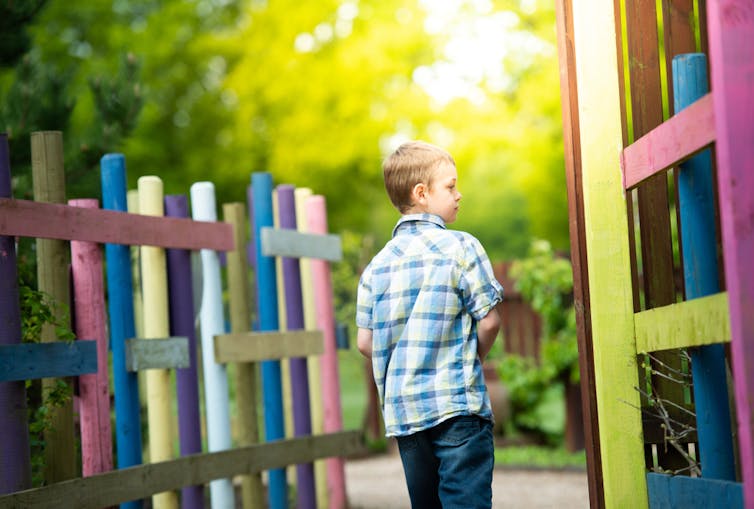
Children with ASD are particularly prone to poisoning, suffocation and wandering that can lead to death by drowning or vehicular accident. (Shutterstock)
Teaching safety skills to children with ASD at a young age is of utmost importance. However, preliminary research suggests that caregivers of children with ASD may not be comfortable teaching these safety skills themselves due to a lack of knowledge or experience.
As an associate professor at Brock University and Board Certified Behaviour Analyst-Doctoral (BCBA-D), I have been working with a community clinician and graduate students to empower caregivers to teach safety skills to their children.
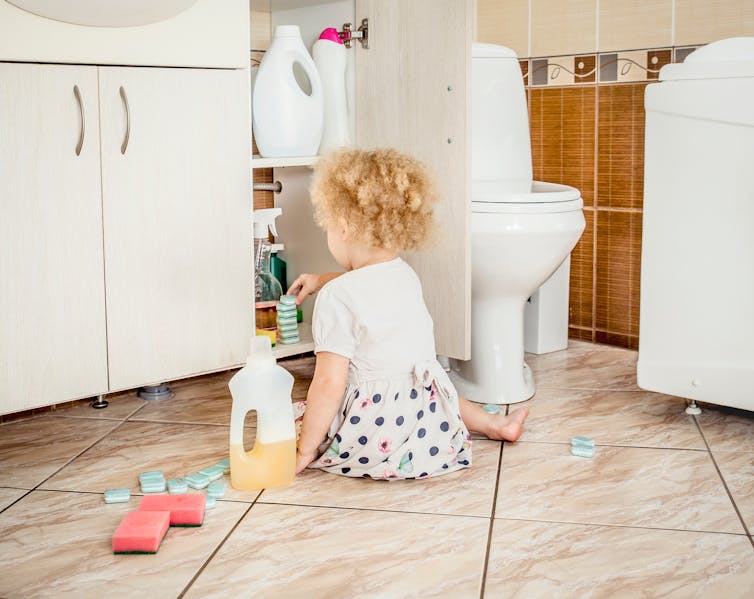
All young children are at risk around household chemicals, but those with autism may need extra training to keep themselves safe. (Shutterstock)
The model involves: (1) instructions, (2) modelling, (3) rehearsal and (4) feedback. First, the trainer provides verbal and/or written instruction on how to complete the skill, and a brief rationale. Next, the trainer models the skill by provides an accurate demonstration.
The trainer then provides the learner with the opportunity to practice the skill and offers feedback in the form of descriptive praise if the learner completes the skill accurately. If the learner does not complete the skill accurately, the trainer offers corrective feedback.
The first step to teaching safety skills is to select the behaviour you would like to teach (for example, what to do when lost). The next step involves outlining the instructions to use when implementing BST.
It is important that instructions are clear and concise. We recommend breaking the skill down into three or fewer steps. For example, when we teach children what to do if they become lost or separated from their caregiver, we teach them to: (1) call out for caregiver, (2) find a worker, (3) tell the worker they are lost.
Once you have determined the instructions, ensure that you have all of the materials required — for example, props. Also, ensure the environment adequately facilitates learning for your child by eliminating any distractions.
Follow these five steps
The following training steps can be applied to teaching a variety of safety skills.
Provide instructions relevant to the skill to your child. For example: “Sometimes when we are at the grocery store, we can get separated, which can be scary. If this happens, I want you to do three things. First, call out for me in a loud voice. Next, if I do not respond, find a worker. Then, tell the worker, ‘I’m lost.’”
Model the skill for your child, by first getting their attention, and then demonstrating all three steps in a mock scenario: “Let’s pretend we are in the store and I get separated from you.”
Ask your child to practice the three steps.
Provide feedback based on their performance, for example if your child calls out for you but in a quiet voice, you can say: “I like how you called out for me, but remember to use a loud voice.”
Continue rehearsal and feedback until you are confident that your child can perform the skill.
Practise in a natural environment
It is also important to eventually practice the skill in the environment where the skill will be needed, such as in public settings.
Teaching safety skills in public settings could safe a child’s life. (Shutterstock)
For example, can the child perform the skill if separated in a grocery store? As a safety precaution have someone “under-cover” to also watch the child and to see if they engage in the appropriate steps.
Don’t like ads? Become a supporter and enjoy The Good Men Project ad free
If the child does not engage in the appropriate steps, provide feedback and repeat until everyone is confident.
If caregivers practice teaching basic safety skills using the steps of BST at home with their child, it may help to keep them safe if dangerous situations arise.
We are proud of our SOCIAL INTEREST GROUPS—WEEKLY PHONE CALLS to discuss, gain insights, build communities— and help solve some of the most difficult challenges the world has today. Calls are for Members Only (although you can join the first call for free). Not yet a member of The Good Men Project? Join below!
All levels get to view The Good Men Project site AD-FREE.
Register New Account
Please note: If you are already a writer/contributor at The Good Men Project, log in here before registering. (Request a new password if needed).
◊♦◊
ANNUAL PLATINUM membership ($50 per year) includes:
1. AN ALL ACCESS PASS — Join ANY and ALL of our weekly calls, Social Interest Groups, classes, workshops, and private Facebook groups. We have at least one group phone call or online class every day of the week.
2. See the website with no ads when logged in!
3. MEMBER commenting badge.
*** ANNUAL GOLD membership ($25 per year) includes all the benefits above — but only ONE Weekly Social Interest Group and ONE class.
*** ANNUAL BRONZE membership ($12 per year) is great if you are not ready to join the full conversation but want to support our mission anyway. You’ll still get a BRONZE commenting badge, and you can pop into any of our weekly Friday Calls with the Publisher when you have time. This is for people who believe—like we do—that this conversation about men and changing roles and goodness in the 21st century is one of the most important conversations you can have today.
♦◊♦
We have pioneered the largest worldwide conversation about what it means to be a good man in the 21st century. Your support of our work is inspiring and invaluable.
—
The Conversation is an independent news and commentary website produced by academics and journalists, free for the public. Follow on Twitter @CA_conversation