


We are thrilled to be previewing the Human Experience Specialist Certification Course that launches in October. Join the inaugural cohort and become one of the world’s first Human Experience Specialists. Curious what this means? Come take a look!
 Last week, I raised a question: What if people sometimes need a different kind of help? What if the difficulty they are facing is not primarily a mental health problem, a relationship problem, a career problem, or a problem of motivation, but something larger and less easily categorized—a problem of living?
One reason we have difficulty providing that kind of help is that our helping professions necessarily specialize. A couples’ counselor looks at relationships. A career counselor looks at work. A physician looks at the body. A therapist may look for symptoms and psychological patterns. A coach may focus on goals, obstacles, and forward movement. These divisions make sense. Specialization creates expertise, and expertise matters.
But there is a problem. Human beings don’t specialize.
Imagine a fifty-year-old man who seeks help because he hates his job. On the surface, this sounds like a career problem. Perhaps he should investigate other careers, develop new skills, or finally start the business he has been talking about for years.
But suppose we stay with him a little longer.
We discover that his marriage has become distant. His children are leaving home. He recently lost his father. He used to paint and hasn’t touched a paintbrush in twenty years. He envies younger colleagues who still seem excited about their futures. And somewhere underneath all of this is a question he has barely admitted to himself: Have I lived the life I meant to live?
What kind of problem does he have now?
Maybe he doesn’t have a “problem” in the usual sense at all. He has a life. And everything in that life is connected to everything else.
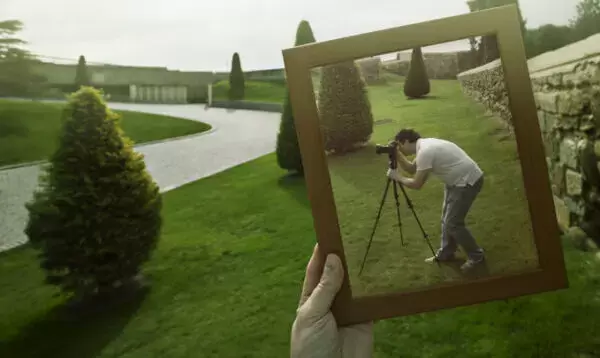
This is why one of the central ideas behind the Human Experience Specialist is helping the whole person. An HES tries not to reduce a human being to the issue that brought them through the door. The presenting concern matters, but it may be only the entrance to a much larger landscape.
If someone says, “I can’t make myself write,” for example, we don’t immediately assume that procrastination is the problem. Perhaps writing has become associated with failure. Perhaps the person no longer believes in the project. Perhaps success itself is frightening. Perhaps family responsibilities have consumed the space in which creativity once lived. Perhaps the person has changed and the writer she used to be is not the writer she now needs to become.
The point is not to manufacture complexity. Sometimes a practical problem really does require a practical solution. But we want to remain alert to the possibility that an apparently simple problem is connected to something larger.
That requires curiosity rather than certainty. It means resisting the temptation to decide too quickly what is happening. It means being willing to say, in effect, “Let’s look at your life together and see what we notice.”
That “together” matters. Helping the whole person doesn’t mean becoming the expert on someone else’s life. The person sitting across from us remains the primary witness to that life. Our role is to help them see more clearly, make connections they may not have made, recognize patterns they may have normalized, and consider possibilities they may have overlooked.
Working this way also requires a broad understanding of human nature. We need to think about personality and identity, meaning and purpose, relationships and loneliness, creativity and work, freedom and responsibility, habit and avoidance, aging and mortality, hope and despair. No single theory of human beings can encompass all of that.
This breadth is part of what makes the Human Experience Specialist idea unusual. An HES isn’t expected to know everything. No one could. But an HES develops the habit of looking widely, listening carefully, and refusing to mistake one piece of a person’s life for the whole person.
And that raises a fundamental question. If we are going to help people at this level, what sort of competence do we need? I think one answer is an old-fashioned word that has almost disappeared from professional helping language (if it was ever there to begin with).
That word? Wisdom.
Next week, we’ll consider whether wisdom can actually become a helping skill—and what it might mean to cultivate it. See you then!
Don’t miss your chance to be a part of the first ever cohort of Human Experience Specialists. There is a HUGE early bird savings available for early registrants. Make sure to take a look!
iStock image

