The beach offers a wide open playscape where children are fuelled by curiosity. Whether at the beach or elsewhere outdoors, it helps to take a moment to see the world through the lens of a child who is discovering the world anew, and slow down to be present.
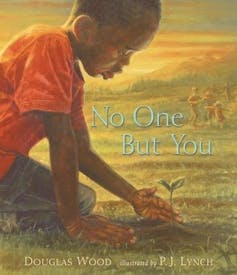
The beach landscape is ever-changing, presenting challenges to overcome — and endless choices with which to experiment. Children’s author Douglas Wood beautifully narrates the precious thrill a child experiences in his book No One But You; he explores moments where children come to understand themselves and how they are uniquely connected to the world.
‘No One But You’ by Douglas Wood. (Candlewick Press)
Design choices stretch beyond the horizon. Pools that children dig in the sand are tubs for dollies, watering holes for dinosaurs or giant castle moats. For children, the goal isn’t always a finished project. A child may be challenging themselves to dig deeper, pile higher or make winding paths for water longer.
Experiencing setbacks is a natural part of life, and when children try again or try something in a new way, they build their perseverance in addition to developing self-regulation. Learning and life are all about overcoming challenges, so understanding how to regulate oneself is foundational for psychological, physical, behavioural and educational well-being.
When a child is filling and building, chasing seagulls and otherwise exploring the varied terrain of the beach, they are managing stresses that come into play. Sand castles may falter at an unanticipated time, waves may wash away a sandy message, wind and rain might dampen a plan and bridges may collapse.
The unpredictability of problem-solving lends itself to challenges, successes and failures.
Multisensory pathways
When children can run their fastest, managing the varied risks and stressors of the terrain, they stumble, roll and recover, realizing their physical capabilities. They are developing physical literacy, building their motivation, confidence, competence and disposition to pursue being active.
The beach is an an organic symphony of sound with the wind whistling, the waves lapping and the birds calling. The open sky, always changing, invites the clouds to be watched.
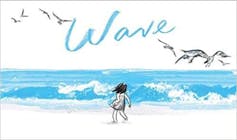
‘Wave’ by Suzy Lee. (Chronicle Books)
Suzy Lee’s wordless book Wave captures the rich drama and choreography of a child’s play day on the beach.
Don’t like ads? Become a supporter and enjoy The Good Men Project ad free
Imagination is ignited when children explore the variety of textures, shapes and sizes of nature’s gifts. Pebbles, shells, sand grains and sticks offer multiple possibilities for being manipulated and moved. Mixing in a little water adds even more choice of colour and texture to the malleable medium.
Supporting learning with talk
Undoubtedly there will be conversations carried by the breeze.
As adults around children, we can listen to and observe children’s rich talk. In a play-based learning environment, educators of young children support learning through talk. For example, the adult can linger on the sidelines, and without interrupting children’s play, when the opportunity opens up, the adult can help name what the child is demonstrating. Or alternately, the adult can invite the child to talk about their ideas. For example:
“You’ve really worked hard to dig that deep hole! I see how you worked together to keep the water out. Your faces sure look proud and you didn’t give up even when it was tricky, you tried again.”
“This looks very exciting! Can you tell me about what you are building?!”
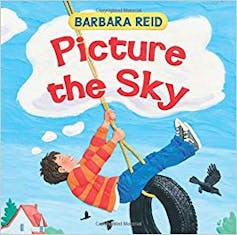
‘Picture the Sky’ by Barbara Reid. (North Winds Press)
Don’t like ads? Become a supporter and enjoy The Good Men Project ad free
Adults may notice that children are engaging in early mathematics experiences in ways that matter to them. You can help to name the math that comes to the surface in moments that won’t disrupt the flow of children’s play. For example:
“That hole looks even bigger! I wonder how many buckets of water it might take to fill it? Shall we count them together?”
Mucking around with a problem and making possible solution choices can lead to powerful learning.
Leaving the beach and at home
Even under the open sky, children are experiencing patterns as time passes and the sun’s position and shadows change.
Letting the child know it will be time to leave – for example, by setting a stopwatch alarm with your child — and talking about what needs to be done to clean up, creates time to prepare for the transition and opportunity to take ownership of a tidying role.
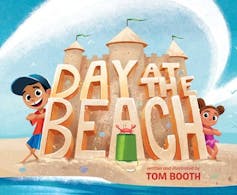
‘Day at the Beach’ by Tom Booth. (Simon and Schuster)
At home, in the days that follow, you can connect with your child as you revisit their play memories.
Tom Booths’ book Day at the Beach is sure to spark recollections of these shared moments. It explores how children find purpose and challenge themselves beyond what they know, learning along the way.
Making choices, encountering unexpected challenges and social experiences all help to build far more than sand castles!
We are proud of our SOCIAL INTEREST GROUPS—WEEKLY PHONE CALLS to discuss, gain insights, build communities— and help solve some of the most difficult challenges the world has today. Calls are for Members Only (although you can join the first call for free). Not yet a member of The Good Men Project? Join below!
All levels get to view The Good Men Project site AD-FREE.
Register New Account
Please note: If you are already a writer/contributor at The Good Men Project, log in here before registering. (Request a new password if needed).
◊♦◊
ANNUAL PLATINUM membership ($50 per year) includes:
1. AN ALL ACCESS PASS — Join ANY and ALL of our weekly calls, Social Interest Groups, classes, workshops, and private Facebook groups. We have at least one group phone call or online class every day of the week.
2. See the website with no ads when logged in!
3. MEMBER commenting badge.
*** ANNUAL GOLD membership ($25 per year) includes all the benefits above — but only ONE Weekly Social Interest Group and ONE class.
*** ANNUAL BRONZE membership ($12 per year) is great if you are not ready to join the full conversation but want to support our mission anyway. You’ll still get a BRONZE commenting badge, and you can pop into any of our weekly Friday Calls with the Publisher when you have time. This is for people who believe—like we do—that this conversation about men and changing roles and goodness in the 21st century is one of the most important conversations you can have today.
♦◊♦
We have pioneered the largest worldwide conversation about what it means to be a good man in the 21st century. Your support of our work is inspiring and invaluable.–
The Conversation is an independent news and commentary website produced by academics and journalists, free for the public. Follow on Twitter @US_conversation